
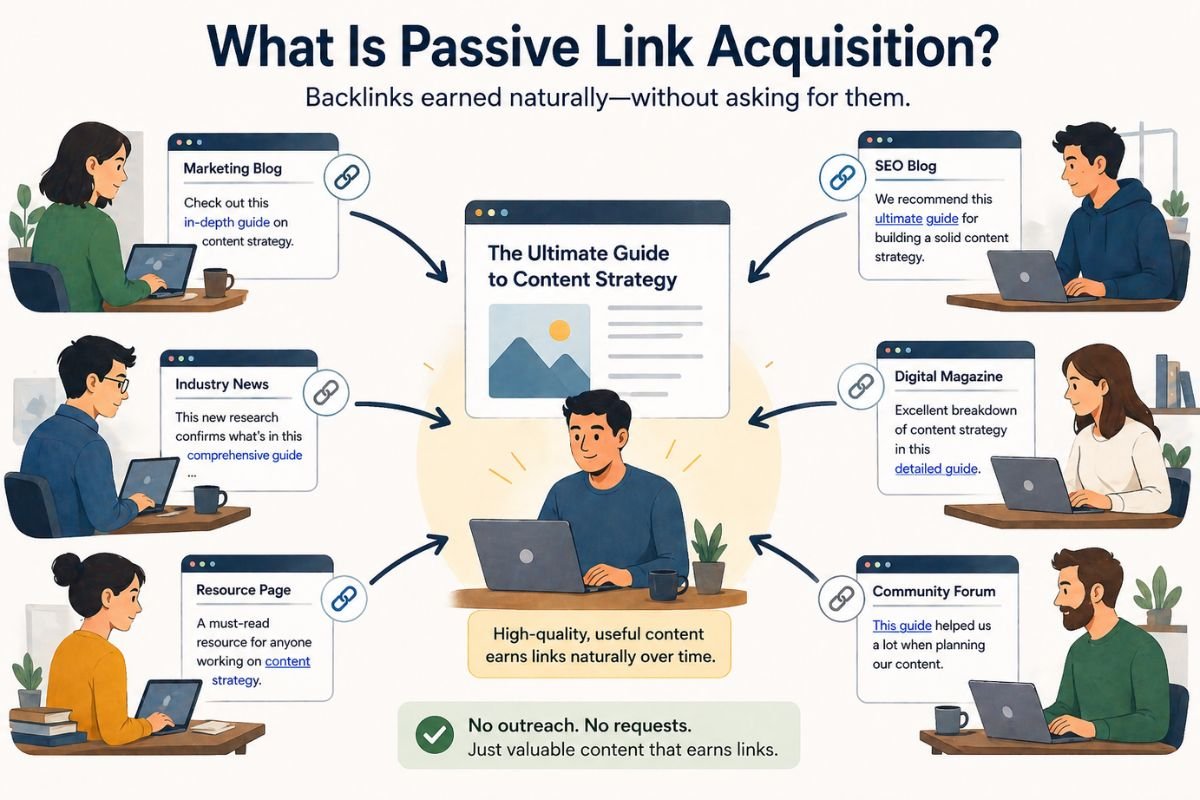

Passive link acquisition is a process where a site gets backlinks without asking for them. The link is not requested; rather, it occurs naturally because the site’s content is being used.
Passive Link Acquisition Definition
Passive link acquisition is a process where a site gets a link naturally. This is because a page is created and then published for a long time before someone finds it useful enough to cite in their content.
This is important because it shows that the link is a natural process rather than one that occurs after asking for a link.
Passive link acquisition is a process where a link is created naturally, rather than through asking for one. This is because a page is created with the intention of explaining a particular concept or idea, and then someone finds that page useful enough to cite inside their content.
Passive link acquisition is a process that occurs naturally through positioning. This is because a page is created with the intention of explaining a particular concept or idea, and then someone finds that page useful enough to cite inside their content.
How Passive Links Actually Happen
Passive link acquisition occurs naturally when a page is useful inside a particular topic rather than when someone decides to engage in link building.
Perhaps the writer is researching the subject of the page and wants to learn more about the term that is being explained on the page. Maybe another site wants to use the page as a reference to illustrate the bigger idea that they are discussing. In both cases, the backlink is being created because the page is present at the right moment.
That is the basic idea behind passive link acquisition.
It just sits there, and if the moment is right, it might be picked up as something that meets the need of another site. The need might be informational, definitional, or contextual, but the key is that the page enters the scenario without any direct urging by the site that is being linked to.
This is also the reason that passive link acquisition is misunderstood by so many people. It is seen as luck, and to some extent, it is luck, but it is also the result of creating something that remains useful after the moment that it was created.

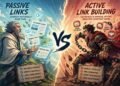

Passive Link Acquisition vs Active Link Building
It should be noted that the difference between passive and active link building is not subtle, and the reason for this is that the process is different from the beginning.
Active link building is the process of creating the link, and this might be the result of email campaigns, relationship building, PR, guest blogging, and any number of other techniques that are specifically implemented to create the link. The key is that the link is being pursued.
Passive link acquisition is different, and the key to this is that the site does not reach out to the site that is creating the link to encourage the backlink. Instead, the link is being created because the site is being adopted by the user of the second site.
That difference should help clarify why the two should not be combined in the same idea. They can produce the same result, which is a backlink, but they are different in nature. One represents a deliberate effort to acquire a link, while the other represents a link earned because the page was considered worthy of a reference.
Why the Concept Depends on Context
Just because a backlink was earned without outreach does not mean it should be considered a strong form of passive acquisition.
A link that naturally occurs because a page became a useful reference is different from a link that randomly occurs on a page with little value. They are both considered “unrequested,” but they are not the same.
This is where the idea gets watered down too much. Passive acquisition of a link is not just about the fact that the link was not requested; it is about why the link occurred.
If the link occurred because the page filled a need for information, then that is closer to the idea of passive acquisition.
Eventually, the most powerful passive link patterns tend to come from pages that continue to solve the same problem for new readers, new writers, and new contexts. The page remains usable, and the link formation continues.
Where This Often Goes Wrong
The biggest misunderstanding about passive link acquisition is to think of it as doing nothing and waiting. This is not true.
Passive link acquisition does not mean that the link is not sought. It means that the link is not requested.
The second biggest misunderstanding about passive link acquisition is to think of it as simply another term for organic link acquisition in a very general sense. The real definition of passive link acquisition is to think of it as a result of backlinks due to content relevance.
Passive link acquisition is therefore best defined as an action of link acquisition based on content relevance. It is a process that is less dramatic than link building. However, there is logic to why a link appears. It appears when a page is useful enough to enter someone else’s work without being forced to.