
Thursday, April 30, 2026
BacklinkSense
  • Anchor Text
    • Anchor Text Context
    • Anchor Text Distribution
    • Anchor Text Strategy
    • Types of Anchor Text
  • Backlink Quality and Analysis
    • Authority and Trust Signals
    • Backlink Analysis Tools
    • Link Context
    • Link Placement
    • Link Quality Signals
    • Link Relevance
  • Link Building Basics
    • How Google Ranks Links
    • Types of Backlinks
    • What Are Backlinks
    • Why Backlinks Matter
  • Link Building Methods
    • Asset-Based Link Building
    • Content-Based Link Building
    • Digital PR and Authority Mentions
    • Passive Link Acquisition
    • Resource and Reference Links
  • Link Building Risks
    • Link Penalties
    • Link Velocity
    • Low-Quality Backlinks
    • Over-Optimized Anchor Text
    • Unnatural Link Patterns
  • Link Outreach
    • Finding Outreach Targets
    • Follow Up in Outreach
    • Outreach Email Strategies
    • Outreach Personalization
    • Relationship Based Outreach
No Result
View All Result
  • Anchor Text
    • Anchor Text Context
    • Anchor Text Distribution
    • Anchor Text Strategy
    • Types of Anchor Text
  • Backlink Quality and Analysis
    • Authority and Trust Signals
    • Backlink Analysis Tools
    • Link Context
    • Link Placement
    • Link Quality Signals
    • Link Relevance
  • Link Building Basics
    • How Google Ranks Links
    • Types of Backlinks
    • What Are Backlinks
    • Why Backlinks Matter
  • Link Building Methods
    • Asset-Based Link Building
    • Content-Based Link Building
    • Digital PR and Authority Mentions
    • Passive Link Acquisition
    • Resource and Reference Links
  • Link Building Risks
    • Link Penalties
    • Link Velocity
    • Low-Quality Backlinks
    • Over-Optimized Anchor Text
    • Unnatural Link Patterns
  • Link Outreach
    • Finding Outreach Targets
    • Follow Up in Outreach
    • Outreach Email Strategies
    • Outreach Personalization
    • Relationship Based Outreach
No Result
View All Result
BacklinkSense
No Result
View All Result
ADVERTISEMENT
Backlink More Valuable

What Trust Signals Make a Backlink More Valuable?

Backlink Sense by Backlink Sense
April 23, 2026
in Authority and Trust Signals
Reading Time: 3 mins read
0
Share on FacebookShare on Twitter

Page Contents

  • 1 Natural Content Context
  • 2 Mention Within Real Editorial Content
  • 3 Related Posts
  • 4 Domain Authority vs Real Link Authority: What Truly Matters Most?
  • 5 What Makes a Website Authoritative for Backlinks?
  • 6 Do High Authority Backlinks Always Improve Rankings?
  • 7 How Many Backlinks Do You Actually Need to Rank?
  • 8 Reputation of the Linking Website
  • 9 Position within the Main Content
  • 10 Alignment Between Topic and Destination
  • 11 Natural Language Around the Link
  • 12 Interpreting Backlink Trust Signals

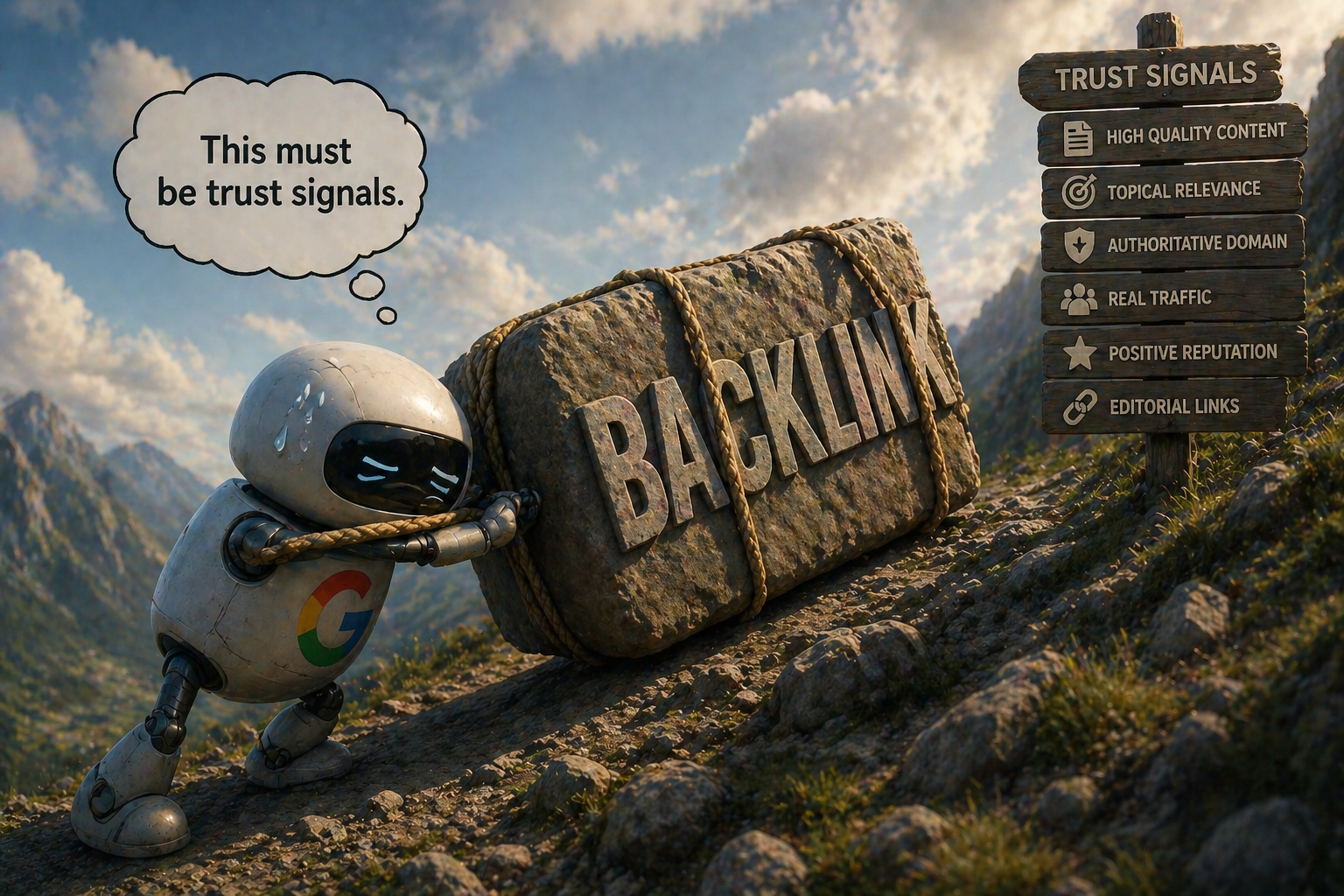
The value of a backlink is likely higher if it is embedded in natural content. Search engines interpret this through a combination of contextual clues related to the presence of the link. These clues help search engines understand whether the link appears because the page is being referenced as a useful source of information.

Natural Content Context

The context of the surrounding content is one of the strongest signals of a trustworthy link. Links embedded in a paragraph that explains a concept or idea tend to appear more natural.

In this context, the paragraph explains the idea, mentions the source of the information, and then links to that source.

When a link appears in this type of structure, its purpose is easier to interpret. Search engines can understand that the link is included as part of the information being discussed.

Because the surrounding content relates directly to the source being referenced, the link becomes a logical extension of the discussion.

Trust Signals Make a Backlink More Valuable

Mention Within Real Editorial Content

Backlinks embedded in editorial content tend to carry stronger trust signals.

Editorial content includes articles, guides, research pieces, or opinion writing created by authors. Links that appear within this type of content usually function as supporting references that help readers access additional information.

Because editorial writing is typically independent and context-driven, links included within the content often appear authentic.

Search engines can identify this structure through the page layout and the way links interact with the written content.


Related Posts

Domain Authority vs Real Link Authority

Domain Authority vs Real Link Authority: What Truly Matters Most?

April 25, 2026
Website Authoritative for Backlinks

What Makes a Website Authoritative for Backlinks?

April 23, 2026

Do High Authority Backlinks Always Improve Rankings?

March 7, 2026
How Many Backlinks Do You Actually Need to Rank?

How Many Backlinks Do You Actually Need to Rank?

February 9, 2026

Reputation of the Linking Website

The reputation of the website providing the link also contributes to how trustworthy the backlink appears.

Websites that consistently publish reliable information and maintain a clear topical focus often build a reputation over time, especially when they are referenced by other credible sources.

When a link comes from a site that has developed this kind of reputation, the reference is more likely to be interpreted as authentic.

This reputation is not simply about authority metrics but about how the site is recognized within the broader online community.

If a website is frequently referenced as a source of information, it gradually becomes associated with trust.

Position within the Main Content

The location of the link within the page also influences how trust signals are interpreted.

Links that appear within the main body of the content are usually embedded within sentences that explain the topic being discussed.

Because these links are part of the main discussion, they benefit from the surrounding context.

Links placed outside the main content, such as in footers, navigation areas, or repeated template sections, often lack this level of contextual support.

As a result, they may carry fewer contextual signals.

Alignment Between Topic and Destination

Another trust signal is the level of topical alignment between the two pages connected by the link.

When the topics of both pages are closely related, the relationship between them becomes easier to understand.

For example, if a page discussing search engine optimization links to a page discussing link building, the connection between the topics is clear.

In this case, the link appears as a natural continuation of the discussion.

If the topics are unrelated, the connection becomes harder to interpret, even if the link appears within the content.

Search engines evaluate how closely the destination page aligns with the surrounding topic.

Natural Language Around the Link

The language surrounding a link also influences how natural the link appears.

When a link is placed within sentences that make grammatical sense, it blends more easily with the structure of the content.

The anchor text and surrounding wording help explain the idea being discussed.

This natural flow allows the link to appear as a normal part of the explanation rather than something inserted into the text.

If the surrounding language feels disconnected or unusually structured, the link may appear less natural.

Search engines analyze language patterns to determine whether links appear organically within the text.

Interpreting Backlink Trust Signals

Search engines evaluate backlinks by examining several contextual clues together rather than relying on a single factor.

These clues include the position of the link within the page, the topical relevance between pages, and the reputation of the linking website.

When these signals align, the link is more likely to be interpreted as a natural part of the information structure of the web.

Tags: Authority signalsbacklink analysisSearch signalsSEO fundamentals
ShareTweetPin

Related Posts

Domain Authority vs Real Link Authority
Authority and Trust Signals

Domain Authority vs Real Link Authority: What Truly Matters Most?

by Backlink Sense
April 25, 2026
0

While Domain Authority is a measure used by SEO tools to estimate the power...

Read moreDetails
Passive Link Acquisition

What Is Passive Link Acquisition? The Hidden Advantage in SEO

April 25, 2026
Website Authoritative for Backlinks

What Makes a Website Authoritative for Backlinks?

April 23, 2026
What Is LSI Anchor Text in SEO

What Is LSI Anchor Text in SEO?

April 14, 2026

Leave a Reply Cancel reply

Your email address will not be published. Required fields are marked *

  • About Us
  • Terms of Use
  • Use of Cookies
  • Affiliate Disclosure
  • Contact
  • Privacy Policy
2026 BacklinkSense © All rights reserved.

Welcome Back!

Login to your account below

Forgotten Password?

Retrieve your password

Please enter your username or email address to reset your password.

Log In

Accessibility Toolbar

  • Powered with favoriteLove by Codenroll
No Result
View All Result
  • Anchor Text
    • Anchor Text Context
    • Anchor Text Distribution
    • Anchor Text Strategy
    • Types of Anchor Text
  • Backlink Quality and Analysis
    • Authority and Trust Signals
    • Backlink Analysis Tools
    • Link Context
    • Link Placement
    • Link Quality Signals
    • Link Relevance
  • Link Building Basics
    • How Google Ranks Links
    • Types of Backlinks
    • What Are Backlinks
    • Why Backlinks Matter
  • Link Building Methods
    • Asset-Based Link Building
    • Content-Based Link Building
    • Digital PR and Authority Mentions
    • Passive Link Acquisition
    • Resource and Reference Links
  • Link Building Risks
    • Link Penalties
    • Link Velocity
    • Low-Quality Backlinks
    • Over-Optimized Anchor Text
    • Unnatural Link Patterns
  • Link Outreach
    • Finding Outreach Targets
    • Follow Up in Outreach
    • Outreach Email Strategies
    • Outreach Personalization
    • Relationship Based Outreach

2026 BacklinkSense © All rights reserved.

This website uses cookies to improve your experience and analyze site performance. By continuing to browse, you agree to our Privacy and Cookie Policy.