Thursday, May 21, 2026
BacklinkSense
  • Anchor Text
    • Anchor Text Context
    • Anchor Text Distribution
    • Anchor Text Strategy
    • Types of Anchor Text
  • Backlink Quality and Analysis
    • Authority and Trust Signals
    • Backlink Analysis Tools
    • Link Context
    • Link Placement
    • Link Quality Signals
    • Link Relevance
  • Link Building Basics
    • How Google Ranks Links
    • Types of Backlinks
    • What Are Backlinks
    • Why Backlinks Matter
  • Link Building Methods
    • Asset-Based Link Building
    • Content-Based Link Building
    • Digital PR and Authority Mentions
    • Passive Link Acquisition
    • Resource and Reference Links
  • Link Building Risks
    • Link Penalties
    • Link Velocity
    • Low-Quality Backlinks
    • Over-Optimized Anchor Text
    • Unnatural Link Patterns
  • Link Outreach
    • Finding Outreach Targets
    • Follow Up in Outreach
    • Outreach Email Strategies
    • Outreach Personalization
    • Relationship Based Outreach
No Result
View All Result
  • Anchor Text
    • Anchor Text Context
    • Anchor Text Distribution
    • Anchor Text Strategy
    • Types of Anchor Text
  • Backlink Quality and Analysis
    • Authority and Trust Signals
    • Backlink Analysis Tools
    • Link Context
    • Link Placement
    • Link Quality Signals
    • Link Relevance
  • Link Building Basics
    • How Google Ranks Links
    • Types of Backlinks
    • What Are Backlinks
    • Why Backlinks Matter
  • Link Building Methods
    • Asset-Based Link Building
    • Content-Based Link Building
    • Digital PR and Authority Mentions
    • Passive Link Acquisition
    • Resource and Reference Links
  • Link Building Risks
    • Link Penalties
    • Link Velocity
    • Low-Quality Backlinks
    • Over-Optimized Anchor Text
    • Unnatural Link Patterns
  • Link Outreach
    • Finding Outreach Targets
    • Follow Up in Outreach
    • Outreach Email Strategies
    • Outreach Personalization
    • Relationship Based Outreach
No Result
View All Result
BacklinkSense
No Result
View All Result
ADVERTISEMENT
Content Attracts Backlinks Naturally

How Evergreen Content Attracts Backlinks Naturally

Backlink Sense by Backlink Sense
March 30, 2026
in Passive Link Acquisition
Reading Time: 3 mins read
0
Share on FacebookShare on Twitter

Page Contents

  • 1 How Evergreen Content Attracts Backlinks Naturally through Lasting Usefulness
    • 1.1 The Value of Evergreen Content
    • 1.2 Related Posts
    • 1.3 What Is Passive Link Acquisition? The Hidden Advantage in SEO
    • 1.4 What Content Generates Passive Backlinks Over Time?
    • 1.5 Passive Links vs. Active Link Building
    • 1.6 How to Earn Backlinks Without Outreach
    • 1.7 Evergreen pages stay visible for longer
    • 1.8 Evergreen content allows for the repetition of this action
    • 1.9 Where this often goes wrong

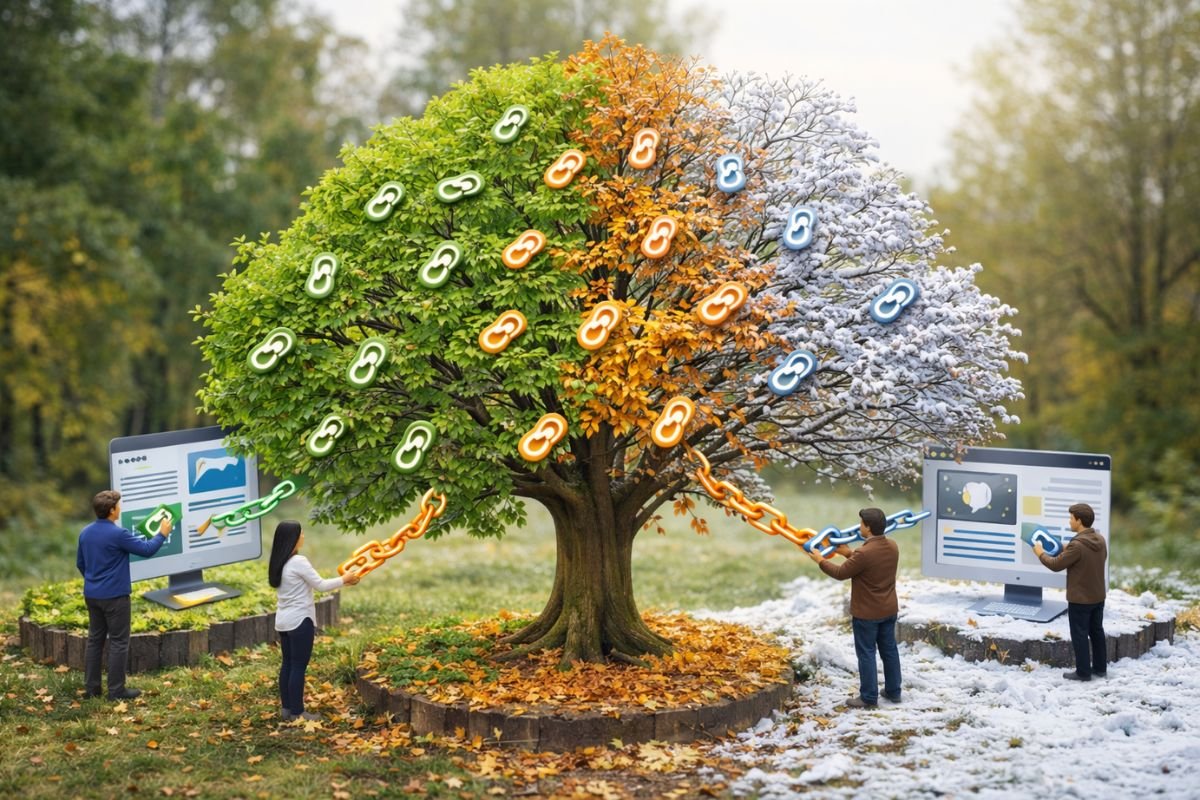
Evergreen content attracts backlinks naturally through the fact that the content will remain useful even after the content has been published. This means that the content does not rely on a fleeting news cycle, a short-lived interest spike, or a momentary occurrence. This means that the content will remain useful for a long time.

How Evergreen Content Attracts Backlinks Naturally through Lasting Usefulness

If the question is asked as to how evergreen content attracts backlinks naturally, the key point to consider is the fact that the content will remain relevant even after a long time.

This changes the entire equation.

A content piece tied to a short-lived event may be popular for a short while before it becomes irrelevant. Evergreen content does not work this way. Evergreen content will still answer the question, still describe the topic, and still be a part of the discussion months and even years after the content has been published.

This is the key point as to why the content will attract more backlinks. People are more likely to link to a content piece if they think the content will still be useful to their readers even after the content has been published. Evergreen content does this by not being tied to a short-lived window.

The Value of Evergreen Content

Evergreen content attracts backlinks naturally because the content gives people something to point to.

Stability plays a role in the backlinks that are created. A user who is adding the backlink is not only considering what is currently helping them, but also whether the page they are linking to is likely to continue to make sense in their own work.

If the page is likely to be out of date in the near future, this reduces the value of the backlink.

Evergreen content helps to solve this problem because it is more likely to be useful for longer.

It does not mean that the evergreen content does not need to be updated, but rather that the value of the page does not come from something that is only true at the moment.

Related Posts

Passive Link Acquisition

What Is Passive Link Acquisition? The Hidden Advantage in SEO

April 25, 2026
Content Generates Passive Backlinks

What Content Generates Passive Backlinks Over Time?

April 16, 2026
Passive Links vs. Active Link Building

Passive Links vs. Active Link Building

April 16, 2026
Earn Backlinks Without Outreach

How to Earn Backlinks Without Outreach

April 10, 2026

Evergreen pages stay visible for longer

Another reason that evergreen content naturally attracts backlinks is that the page has more time to be seen.

If the page is useful, it does not simply disappear after a brief period of relevance. It continues to come up in search results, on internal site navigation, during research on the topic, and in the process of discovering content over a long period of time.

This is important because natural backlinks are not typically created at once, but rather tend to be created gradually over time.

If the page is time sensitive, it may only have the opportunity to be seen by someone creating a backlink for a short period of time, whereas evergreen content has this window of opportunity open for a much longer period of time.

The longer that the page remains useful, the more opportunities it has to be included in the work of another user.

Evergreen content allows for the repetition of this action

The best naturally earned backlinks tend to come from pages that can be referred to over and over again, but in different ways.

This is precisely what makes “evergreen” content a natural fit because it has relevance beyond a single conversation. The same page could be used to clarify a point in one article, illustrate a point in a second article, and provide context for a third. The page continues to provide relevance to new editorial needs without having to depend on its own novelty.

This is one of the most visible reasons why “evergreen” content tends to earn backlinks naturally. It becomes part of the background of the topic. Not because it is well known, but because it is well used. The more a page continues to assist writers, the more it continues to give them a reason to link.

This is precisely why “evergreen” content tends to earn backlinks at a more consistent rate than content developed around short-term relevance. The build-up may not be as swift, but it is also more consistent.

Where this often goes wrong

There is a common belief that evergreen content attracts more backlinks by default simply because the content is old or has been around for a long time. This is not true.

It is possible for a web page to have been around for a long time and yet attract very few backlinks if the content is not useful for reference.

Another common mistake is believing that the content for an evergreen web page should be broad or generic. This can actually hurt the web page instead of helping it. A web page becomes an evergreen one when the content is useful for a long time.

Therefore, the right approach to understand this term is to realize that evergreen content attracts more backlinks when the content remains useful for a long time. The content does not need more attention simply because it remains useful for reference over time.
Tags: Evergreen SEOlink signalslong form contentRelevance
ShareTweetPin

Related Posts

Link Quality Signals

What Signals Indicate a Strong Backlink

by Backlink Sense
May 20, 2026
0

There are various signals that indicate a strong backlink. These signals do not include...

Read moreDetails
Passive Links vs. Active Link Building

Passive Links vs. Active Link Building

April 16, 2026
Surrounding Text Strengthens Anchor Relevance

How Surrounding Text Strengthens Anchor Relevance

April 14, 2026
Earn Backlinks Without Outreach

How to Earn Backlinks Without Outreach

April 10, 2026

Leave a Reply Cancel reply

Your email address will not be published. Required fields are marked *

  • About Us
  • Terms of Use
  • Use of Cookies
  • Affiliate Disclosure
  • Contact
  • Privacy Policy
2026 BacklinkSense © All rights reserved.

Welcome Back!

Login to your account below

Forgotten Password?

Retrieve your password

Please enter your username or email address to reset your password.

Log In

Accessibility Toolbar

  • Powered with favoriteLove by Codenroll
No Result
View All Result
  • Anchor Text
    • Anchor Text Context
    • Anchor Text Distribution
    • Anchor Text Strategy
    • Types of Anchor Text
  • Backlink Quality and Analysis
    • Authority and Trust Signals
    • Backlink Analysis Tools
    • Link Context
    • Link Placement
    • Link Quality Signals
    • Link Relevance
  • Link Building Basics
    • How Google Ranks Links
    • Types of Backlinks
    • What Are Backlinks
    • Why Backlinks Matter
  • Link Building Methods
    • Asset-Based Link Building
    • Content-Based Link Building
    • Digital PR and Authority Mentions
    • Passive Link Acquisition
    • Resource and Reference Links
  • Link Building Risks
    • Link Penalties
    • Link Velocity
    • Low-Quality Backlinks
    • Over-Optimized Anchor Text
    • Unnatural Link Patterns
  • Link Outreach
    • Finding Outreach Targets
    • Follow Up in Outreach
    • Outreach Email Strategies
    • Outreach Personalization
    • Relationship Based Outreach

2026 BacklinkSense © All rights reserved.

This website uses cookies to improve your experience and analyze site performance. By continuing to browse, you agree to our Privacy and Cookie Policy.