
Suppose you are writing an article and want to include a statistic about how much time people spend on their phones each day.
You find a company that conducted a large survey on the subject and published the complete results on its website. Instead of simply writing down the number, you may decide to link to the original research so your readers can see where the statistic came from.
Now imagine that the company had never published that research or brought it to the attention of journalists and writers. You might never have discovered it in the first place.
This is one way Digital PR can help earn backlinks.
A company creates something worth covering or referencing, such as original research, useful data, or expert information, and then works to bring it to the attention of relevant publications. If a journalist uses that material and links to the original source, the company earns a backlink.
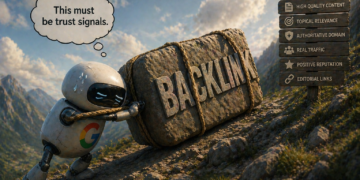
When people in SEO talk about a high authority backlink, they generally mean a backlink from a website that is considered established or influential. It is not an official Google backlink category or score.
Digital PR can create opportunities to earn these links because it puts useful original material in front of journalists and publishers who may have a genuine editorial reason to reference it.
The important word is opportunities. Digital PR does not make a publication link to you, and appearing in a well-known publication does not automatically cause other websites to start linking to you. To understand why some campaigns earn strong backlinks while others mainly earn publicity, we need to look at what gives a journalist a reason to link in the first place.
Give Journalists Something They Can Use
Journalists rarely need a backlink. They need information for the story they are writing.
That difference is central to Digital PR.
Think again about the phone usage survey. A journalist writing about screen habits might need a recent statistic to support a point. Your research gives them something useful for that specific job.
Other campaigns might provide different material. A journalist could use an expert comment to explain a complicated subject, original data to show how something is changing, or a useful resource that gives readers more information than the article can include.
This is where Digital PR creates the opportunity. Instead of beginning with “How can we get this website to link to us?”, it begins with “What can we provide that could genuinely contribute to a story?”
When the original source is useful to the article or its readers, the journalist has a practical reason to consider linking to it.
Put the Original Information on Your Website
Useful information cannot earn a backlink to your website if there is no useful page for the link to reach.
Suppose your company conducts the phone usage survey but sends all of the results to journalists in an email. A journalist might quote one of the statistics, but readers have nowhere on your website to view the original research.
Publishing the research on your own website changes that.
The page could contain the results, explain how the survey was conducted, and provide the information needed to understand the findings. A journalist can still use one statistic in an article, but now there is also an original source they can link to.
This is one reason research, reports, useful resources, and other referenceable material often play an important role in Digital PR. They give the coverage somewhere meaningful to point.
Reach Publications That Cover the Subject
Creating a useful source is only one half of the process. The right people also need to discover it.
A new survey about smartphone habits may be relevant to a journalist covering technology, consumer behavior, or digital culture. Sending the same research to someone who writes exclusively about professional football gives them little reason to care.
Digital PR tries to connect the material with journalists and publications for whom the subject actually makes sense.
That relevance matters because the goal is not simply to appear on the largest website possible. The goal is to become a useful source within a story that publication has a reason to cover.
This is also why journalists can create backlinks through their normal work. When they research a story, they may find and reference outside sources that help them explain it.
Why Well-Known Publications Can Create Valuable Opportunities
Digital PR campaigns often try to earn coverage from established publications because those publications can have large audiences and strong visibility online.
From an SEO perspective, however, it is important not to turn that idea into a simple rule that says “bigger publication equals better backlink.”
Google does not provide a public “authority” score that tells us the value of every website or backlink. Third-party SEO tools may calculate their own authority metrics, but those should not be confused with a Google metric.
What we can say is that Google uses links as part of its ranking systems and analyzes relationships between pages. Relevance, the linking page, and the circumstances in which a link appears are therefore more useful concepts than treating website authority as a single number.
For Digital PR, the practical lesson is simple: getting useful material into relevant, established publications can create valuable backlink opportunities, but the name of the publication alone does not tell you exactly how much SEO value a resulting link will have.
One Piece of Coverage Can Sometimes Lead to More Discovery
A successful story does not necessarily stop with the first publication.
Imagine that a technology publication reports on your phone usage survey. A writer at another website later encounters the research while working on a related article. That writer might visit the original study and decide to reference it too.
You could then earn another backlink without directly contacting the second writer.
This can happen when research or another useful source continues to be discovered after the first piece of coverage appears. But it is important not to treat this as an automatic chain reaction.
One publication mentioning your research does not guarantee that other publications will repeat it or link to it. Each writer makes a separate editorial decision about which sources are useful for their own article.
Digital PR can increase discovery. The source itself still needs to be worth referencing.
A Media Mention Does Not Automatically Become a Backlink
Suppose a major publication writes about your research and names your company but does not link to the study.
You received coverage, but you did not receive a backlink from that article.
This distinction matters because media mentions do not always turn into backlinks.
A journalist may decide that naming the company is enough. A publication may have its own linking policies. In another story, the original source may be useful enough that including a link helps readers understand or verify what is being discussed.
Digital PR can influence what material journalists discover and make useful source pages available to them. It cannot control every publication’s final linking decision.
What Makes a Digital PR Campaign More Linkable?
At this point, the pattern becomes easier to see.
A campaign has a stronger reason to receive backlinks when there is something on the website that another writer can actually reference.
Consider the difference:
| What the journalist finds | What they can use | Is there a clear reason to visit the original source? |
|---|---|---|
| A company announcement | The news itself | Maybe |
| An expert comment | A useful explanation or quote | Sometimes |
| Original research | Findings or statistics | Often, especially when readers may want the full research |
| A useful resource | Information that extends the article | Often, if the resource helps the reader |
These are not rules about whether a backlink will appear. They simply show why some types of material provide a clearer reason to reference the original page than others.
The same principle applies to a successful Digital PR campaign: publicity and backlinks can overlap, but they are not the same result.
Digital PR helps earn high authority backlinks by creating useful original material, putting it in front of relevant journalists and publications, and giving those publications a meaningful page they can choose to reference.
The backlink is not guaranteed. What Digital PR creates is the reason and the opportunity for an editorial link to happen.