A journalist is writing a story and needs one missing piece: a fact, statistic, comparison, or finding that makes the story stronger.
Then a company publishes exactly that.
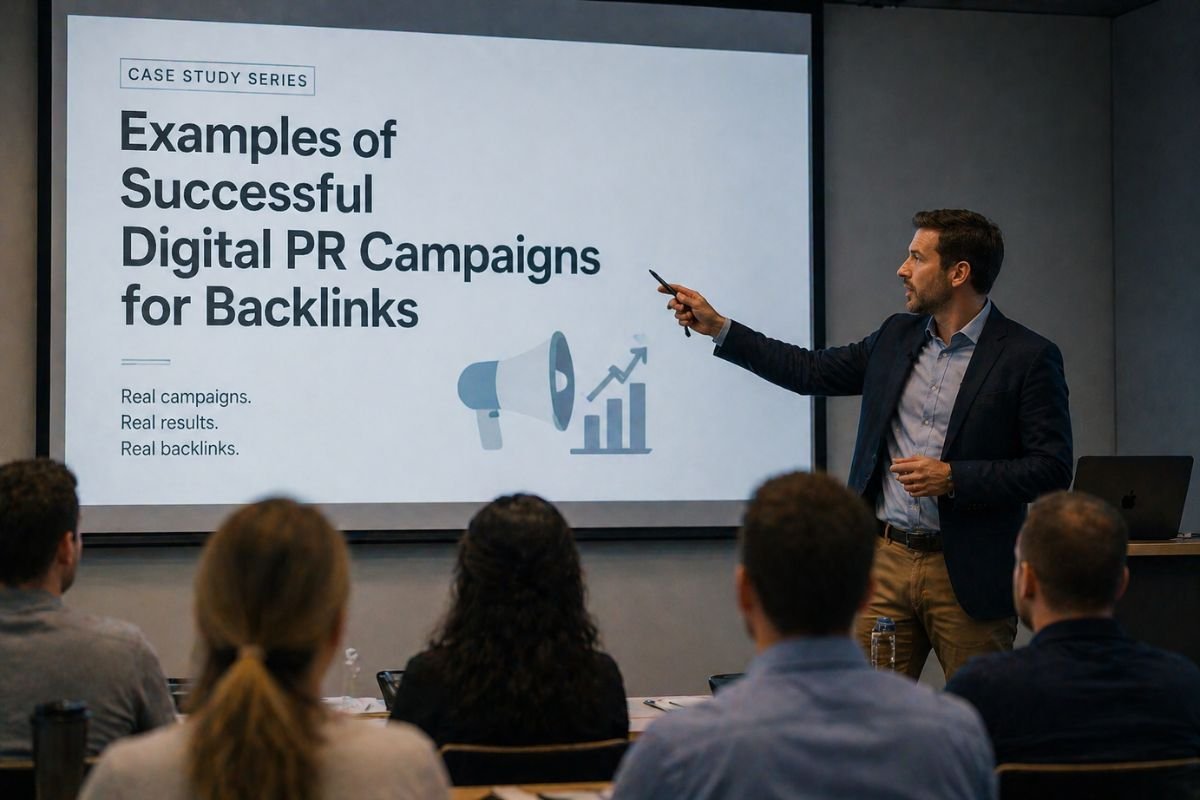
This is where some of the strongest Digital PR campaigns become useful for understanding backlinks.
Digital PR uses stories, research, data, expert information, or creative campaigns to earn attention from publications and other websites. When a publication uses that material and links back to its source, the campaign can earn a backlink.
The interesting part is seeing what gave journalists a reason to use the campaign in the first place.
Zillow Turned a Housing Problem Into Original Data
Zillow surveyed 1,815 homeowners about a problem affecting the housing market: people with low mortgage rates were reluctant to sell their homes and give up those rates.
The research produced a clear finding. Homeowners with lower mortgage rates were twice as likely to say they planned to remain in their homes.
That gave journalists something concrete to work with.
The research could support stories about mortgage rates, homeowners delaying moves, housing supply, and conditions in the wider property market.
According to an analysis by Ahrefs, the campaign earned 235 backlinks, including links from publications such as Bloomberg, Fox Business, Yahoo, and Money.com.
Why did the Zillow campaign work?
Zillow did not simply tell journalists that the housing market was difficult.
It gave them new information about what homeowners were actually doing.
That distinction matters.
A journalist covering the housing market could quote one of the survey findings and identify Zillow as the source. Different journalists could also select different findings depending on the story they were writing.
One piece of research therefore created several possible reasons to reference the original source.
A Road Sign Survey Created More Than 30 Editorial Links
Another campaign started with something almost anyone who drives encounters: road signs.
For vehicle registration company Click4reg, a survey tested whether people could correctly identify different road signs.
The results gave the campaign an immediate question that publications could turn into a story:
How well do drivers actually know the signs they see on the road?
The campaign was then presented differently depending on the publication. Some journalists received findings showing which signs respondents struggled to identify, while automotive publications could use an interactive quiz version.
According to the campaign’s case study, it earned more than 30 editorially credited links, including coverage from What Car?, iNews, Express, and other publications.
What made a simple survey useful?
The results did not need a long explanation before a journalist could do something with them. One publication could report that many drivers failed to recognize a particular sign, another could invite its readers to try the quiz, while a regional publication could focus on findings relevant to its own audience.
The research provided the raw material, but each publication could use that material differently and turn it into a story that suited its own readers.
One Video Game Study Connected Two Very Different Subjects
A Digital PR campaign for SaveOnEnergy took a less obvious route.
The campaign examined the environmental impact associated with playing some of the world’s best-selling video games.
That combination gave the research several possible directions.
Gaming publications had a reason to care because the campaign involved popular games. Sustainability and energy provided another angle. Technology publications could approach the findings from yet another direction.
The campaign’s case study reports that more than half of the resulting media placements contained links, with coverage appearing across publications in several European countries.
Why is this example different?
The campaign did not depend only on one surprising statistic.
It created a connection between subjects that do not normally appear together: popular video games and energy use.
That gave journalists a recognizable subject, gaming, with a less familiar angle they could build a story around.
The lesson is not that every Digital PR campaign needs an unusual combination of topics. It is that the campaign still needs to give a publication something it can actually turn into content.
Spotify Wrapped Shows Another Side of the Same Idea
Spotify Wrapped works differently.
Every year, Spotify turns listening activity into stories people can understand and share, including personal listening summaries and wider information about the artists, songs, podcasts, and trends that shaped the year.
Spotify reported that its 2025 Wrapped reached more than 300 million engaged users and generated more than 630 million social shares.
Those numbers demonstrate enormous attention, but attention is not the part that matters most for understanding Digital PR.
Look at what Spotify has created for someone writing about music.
There are top artists.
Top songs.
Streaming figures.
Changes in genres and listening behavior.
Global and regional trends.
A music journalist does not have to invent a story around the existence of Spotify. There is already information available that can become part of stories about what people listened to during the year.
That is an important distinction because a campaign can be highly visible without every mention becoming a backlink. What makes the campaign useful for our purposes is seeing how proprietary data can create material that publishers can reference.
What Do These Campaigns Have in Common?
Zillow studied homeowners. Click4reg tested knowledge of road signs. SaveOnEnergy analyzed video games through an energy and environmental angle, while Spotify turned listening behavior into stories about a year in music.
The subjects are completely different, but underneath them is the same useful pattern: each campaign gave publishers something they did not have before. It was not simply a company announcement or a request to mention a brand. It was something that could become part of another story, whether that was a statistic, survey result, ranking, comparison, trend, or finding.
This is one reason Digital PR can create opportunities for backlinks. When some part of a publication’s story depends on information that originated with the campaign, the publication has a natural reason to reference the original source.
Does a Creative Idea Automatically Earn Backlinks?
No.
A campaign can be funny, surprising, beautiful, or widely shared without giving a journalist much reason to link to its source.
Creativity can attract attention.
But if backlinks are the goal, another question becomes important:
What can a writer actually take from this campaign and use in a story?
That might be the most useful question to ask before launching one.
If the answer is a clear statistic, new finding, useful dataset, original comparison, or another piece of information worth attributing, the campaign has created a possible reason for a source link.
If the answer is simply “people will think this is interesting,” attention may still come, but the reason for a backlink is less clear.
That distinction gets to the heart of how Digital PR works in SEO.
The strongest lesson from these campaigns is not that there is one formula to copy. Zillow, Spotify, Click4reg, and SaveOnEnergy did very different things.
What they show is much simpler: successful Digital PR gives publishers something worth talking about, and when that story depends on information from the original source, there can be a natural reason to link back to it.