
When a business has something interesting or useful to share, it naturally wants more people to hear about it. Publishing that information on its own website is a good start, but people who don’t visit the website may never come across it.
One way to reach a wider audience is to share the information with journalists who write about the subject. If a journalist finds it useful for a story, they might mention the business in an article or include a link to the original information on its website.
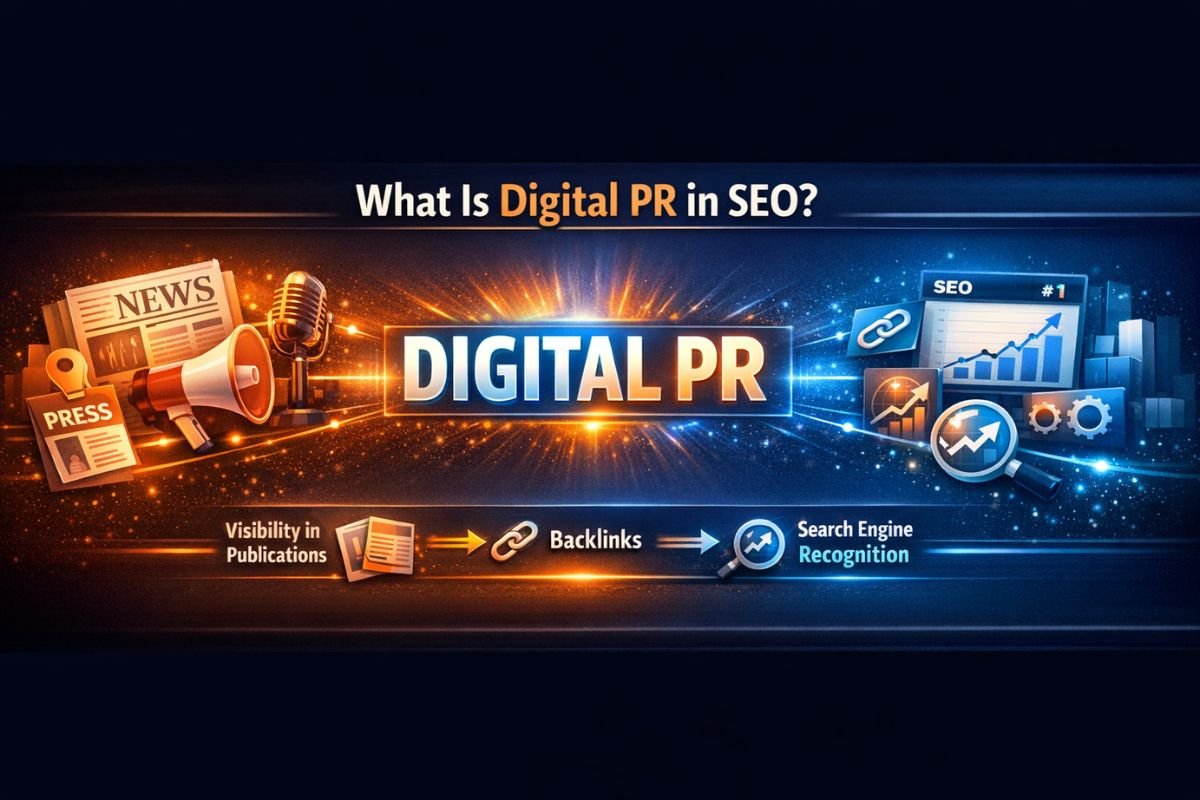
This is where digital PR in SEO comes in. It involves earning attention and coverage from online publications, which can sometimes lead to backlinks. These links give readers a way to visit the original source and may also contribute to the website’s visibility in search engines.
What Does Digital PR Actually Involve?
Digital PR begins with finding something that other people might genuinely want to know about. That could be original research, an interesting discovery, expert knowledge, or news about a business that matters to a particular audience.
Imagine a company that helps homeowners improve their energy efficiency. It conducts a survey about the challenges people face when trying to reduce their electricity bills.
Instead of keeping the findings on its own website, the company shares them with journalists who cover home improvement, energy costs, or consumer issues.
A journalist might find one of the findings relevant to a story and decide to include it. If the publication also links to the original survey, the company receives a backlink.
This example shows how Digital PR works: a business provides information that could contribute to a story, brings it to the attention of relevant publications, and gives journalists the freedom to decide whether to use it.
Why Do Journalists Link to Websites?
Journalists often need information from outside sources to support their reporting. They may look for reliable statistics, expert explanations, original documents, or findings that help them tell a story accurately.
Sometimes mentioning the source is enough. In other situations, readers may benefit from being able to examine the original information themselves.
Consider the survey in our earlier example. A journalist might include one finding about homeowners’ electricity costs, while the company’s website provides the complete results, including how the survey was conducted.
Linking to that page would allow interested readers to explore the research rather than relying only on the information included in the news article.
This is why publishing original material on an accessible webpage matters. If the information exists only in an email sent to journalists, there may be no useful page for readers to visit.
The original source needs to offer something worth seeing beyond the brief information presented in the published story.
Is a Media Mention the Same as a Backlink?
A media mention happens when a publication refers to a business, person, product, or research project. It does not necessarily include a link.
For example, an online newspaper might report on a company’s research and identify the company by name without linking to its website.
The business has received publicity, but no backlink from that article.
If the newspaper includes a clickable link leading to the original research, the company has received both a media mention and a backlink.
This distinction matters because Digital PR can succeed in attracting public attention without necessarily producing backlinks. Both outcomes may be valuable, but they should not be confused when evaluating an SEO campaign.
How Can Digital PR Help SEO?
Google uses links as part of its systems for understanding webpages and evaluating their relevance. When Digital PR leads to a backlink from another website, it may therefore contribute to SEO.
However, the publication’s reputation alone does not tell us how valuable a particular link will be.
In SEO, people sometimes describe backlinks from established publications as high-authority backlinks. This is an industry term, not an official category or fixed score assigned by Google.
A backlink from a well-known news website might appear attractive, but it is still important to consider the page containing the link, its relevance to the subject, and the context in which the link appears.
For a company publishing research about household energy costs, coverage from a publication that regularly discusses energy or consumer finance may be especially relevant.
The benefit also extends beyond search rankings. Readers may discover the business through the article, visit its website, or become familiar with its work.
These benefits can be meaningful even when there is no measurable improvement in Google rankings.
Digital PR vs. Traditional PR and Link Building
Digital PR shares many principles with traditional public relations. Both involve creating newsworthy stories, communicating with journalists, and helping businesses reach people beyond their existing audience.
The main distinction is the environment in which the coverage appears. Traditional PR can involve newspapers, television, radio, and other media, while Digital PR focuses on online coverage, where readers may be able to follow links directly to the original source.
Digital PR also overlaps with traditional link building, but their starting points can differ.
Many link-building activities begin with an existing webpage and the goal of finding relevant websites that might link to it. Digital PR generally begins with a story, research, or other material that journalists may find worth covering.
The differences become easier to see when you compare what each approach usually focuses on.
| Approach | Main Focus | Example |
|---|---|---|
| Digital PR | Earning coverage from online publications through newsworthy information. | Sharing original survey findings with online journalists. |
| Traditional PR | Building public awareness and relationships through media coverage and communication. | Arranging a television interview about the survey findings. |
| Link Building | Earning or acquiring relevant links from other websites. | Introducing a useful research page to websites that cover the subject. |
In both cases, the website publishing the link makes the final decision. Neither approach automatically produces a better backlink simply because of the method used.
Can One Digital PR Campaign Earn Multiple Backlinks?
A useful story or research project may interest more than one publication, particularly when its findings relate to several subjects.
For example, research about changing commuting habits could interest journalists covering transportation, employment, or city planning. Each writer might focus on a different part of the findings.
That creates opportunities for several publications to reference the same original source.
Coverage from one publication may also help another writer discover the research. However, the second publication still needs its own reason to use the information. Media attention does not automatically create a chain of backlinks.
What Can You Control in Digital PR?
A business can choose what information to publish, how clearly to present it, and which journalists or publications to contact.
It can also make the original material easy to access, explain how research was conducted, and ensure that the information it shares is accurate.
What it cannot control is whether a journalist decides to cover the story, how that story is written, or whether a backlink appears in the finished article.
Digital PR works best when the information serves a genuine editorial purpose. A journalist needs something that helps with the story, and readers need a reason to care about it.
When those needs are met, online coverage may bring visibility, visitors, and valuable backlinks. The links are a possible result of useful coverage, not something the publication is obligated to provide.