Thursday, April 30, 2026
BacklinkSense
  • Anchor Text
    • Anchor Text Context
    • Anchor Text Distribution
    • Anchor Text Strategy
    • Types of Anchor Text
  • Backlink Quality and Analysis
    • Authority and Trust Signals
    • Backlink Analysis Tools
    • Link Context
    • Link Placement
    • Link Quality Signals
    • Link Relevance
  • Link Building Basics
    • How Google Ranks Links
    • Types of Backlinks
    • What Are Backlinks
    • Why Backlinks Matter
  • Link Building Methods
    • Asset-Based Link Building
    • Content-Based Link Building
    • Digital PR and Authority Mentions
    • Passive Link Acquisition
    • Resource and Reference Links
  • Link Building Risks
    • Link Penalties
    • Link Velocity
    • Low-Quality Backlinks
    • Over-Optimized Anchor Text
    • Unnatural Link Patterns
  • Link Outreach
    • Finding Outreach Targets
    • Follow Up in Outreach
    • Outreach Email Strategies
    • Outreach Personalization
    • Relationship Based Outreach
No Result
View All Result
  • Anchor Text
    • Anchor Text Context
    • Anchor Text Distribution
    • Anchor Text Strategy
    • Types of Anchor Text
  • Backlink Quality and Analysis
    • Authority and Trust Signals
    • Backlink Analysis Tools
    • Link Context
    • Link Placement
    • Link Quality Signals
    • Link Relevance
  • Link Building Basics
    • How Google Ranks Links
    • Types of Backlinks
    • What Are Backlinks
    • Why Backlinks Matter
  • Link Building Methods
    • Asset-Based Link Building
    • Content-Based Link Building
    • Digital PR and Authority Mentions
    • Passive Link Acquisition
    • Resource and Reference Links
  • Link Building Risks
    • Link Penalties
    • Link Velocity
    • Low-Quality Backlinks
    • Over-Optimized Anchor Text
    • Unnatural Link Patterns
  • Link Outreach
    • Finding Outreach Targets
    • Follow Up in Outreach
    • Outreach Email Strategies
    • Outreach Personalization
    • Relationship Based Outreach
No Result
View All Result
BacklinkSense
No Result
View All Result
ADVERTISEMENT
Website Authoritative for Backlinks

What Makes a Website Authoritative for Backlinks?

Backlink Sense by Backlink Sense
April 23, 2026
in Authority and Trust Signals
Reading Time: 3 mins read
0
Share on FacebookShare on Twitter

Page Contents

  • 1 Depth of Content
  • 2 Demonstrated Expertise
  • 3 Related Posts
  • 4 Domain Authority vs Real Link Authority: What Truly Matters Most?
  • 5 What Trust Signals Make a Backlink More Valuable?
  • 6 Do High Authority Backlinks Always Improve Rankings?
  • 7 How Many Backlinks Do You Actually Need to Rank?
  • 8 A Natural Backlink Environment
  • 9 Trust from Users
  • 10 Mentions from Recognized Sources
  • 11 Consistency Over Time
  • 12 Authority as a Recognition Process

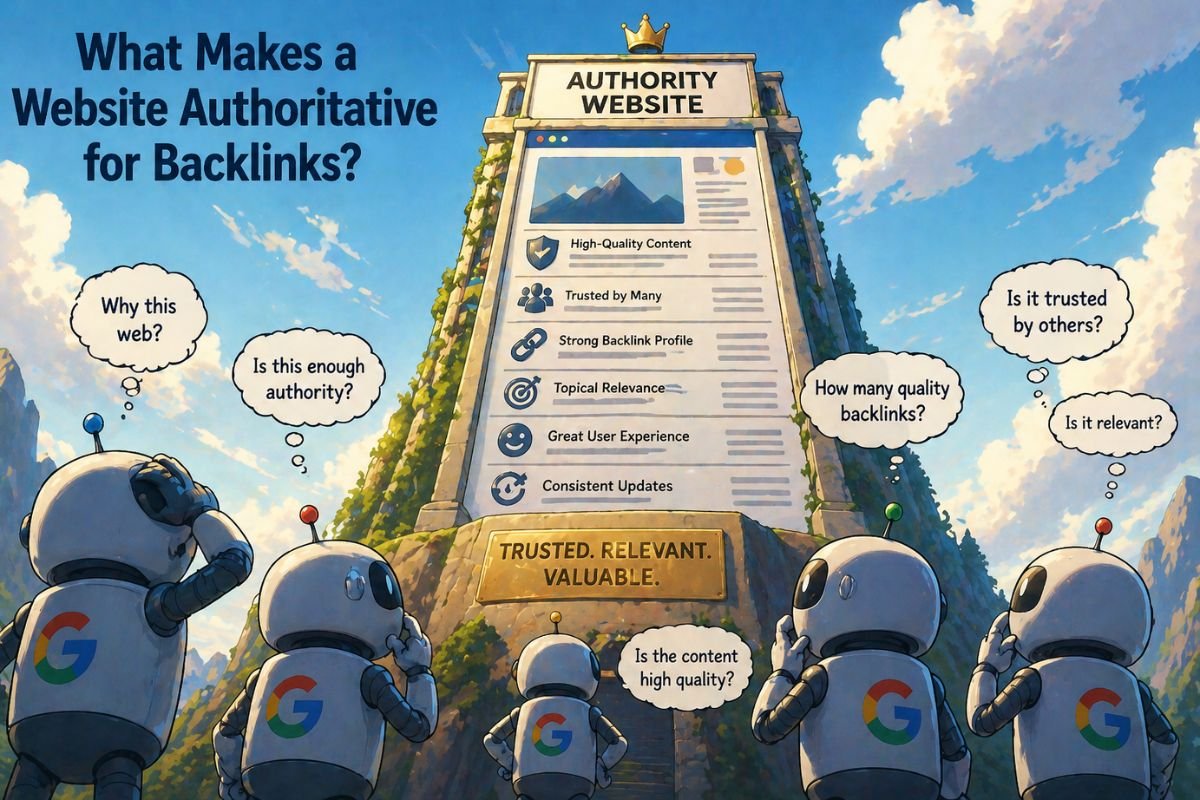
A website is authoritative for backlinks if the information provided is reliable, the site demonstrates expertise, and the site is recognized by other authoritative sources. Authority does not rely on one or two factors, but rather on the accumulation of several factors that show the site’s credibility, expertise, and trustworthiness.

Authority develops gradually as the information provided on the website is repeatedly used and referenced by other sites.

Depth of Content

One of the first things that can be noticed about authoritative websites is the depth of the content provided.

Authoritative sources usually provide content that goes beyond surface level information. Their posts discuss the topic in depth, explain the concepts, and give context that helps the reader understand the topic better.

The depth of the content indicates that the site is not just presenting information but contributing to the knowledge surrounding the topic.

Because of this, other writers are more likely to link to these sources when they need to reference material that explains the subject clearly.

When a website consistently provides this level of depth, the chances of it being cited by other writers increase.

Demonstrated Expertise

Authority is closely related to expertise. Websites that consistently discuss a topic in depth and provide reliable information gradually become recognized as knowledgeable sources.

Expertise can appear in several ways.

Some sites include research or detailed explanations that require subject knowledge. Others provide long term coverage of a specific field or industry. Some include contributions from professionals who share insights from their area of expertise.

Related Posts

Domain Authority vs Real Link Authority

Domain Authority vs Real Link Authority: What Truly Matters Most?

April 25, 2026
Backlink More Valuable

What Trust Signals Make a Backlink More Valuable?

April 23, 2026

Do High Authority Backlinks Always Improve Rankings?

March 7, 2026
How Many Backlinks Do You Actually Need to Rank?

How Many Backlinks Do You Actually Need to Rank?

February 9, 2026

When readers and other writers recognize that a website understands the subject it presents, trust begins to develop over time.

This recognition often results in other websites referencing the site when discussing the same subject.

A Natural Backlink Environment

Another aspect of authoritative websites is the backlink profile, which develops through natural referencing from different sources.

When a website becomes recognized for the information it provides, other sites may reference it in articles, research discussions, or resource pages.

These backlinks can come from many contexts and domains, including industry websites, blogs, academic content, and community discussions.

This type of referencing pattern is considered natural because the links appear independently from different contexts rather than through coordinated placement.

Over time, this pattern reinforces the perception that the website is a reliable source of information.

Trust from Users

Another element of authority is trust from the audience.

Websites that provide reliable information over long periods often develop strong relationships with their readers. Users return to these sites when they need explanations or information related to the topic.

As this trust grows, the reputation of the website grows with it.

This trust can also influence how writers and researchers choose their references. Sources that readers already trust are more likely to be cited in articles, research, or reports.

In this way, user trust indirectly contributes to the recognition of authority.

Mentions from Recognized Sources

Authority can also grow when a website is referenced by well known publications, research institutions, or organizations.

These mentions can appear in the form of references, quotations, or links to the source.

When recognized sources include a website in their discussions, it strengthens the perception that the site is a credible source of information.

Over time, this recognition spreads across the web as more writers discover and reference the same source.

Consistency Over Time

Authority is rarely built quickly. It usually develops through consistent publication, reliable information, and recognition over time.

Websites that focus on a specific subject and continue publishing valuable content about that subject gradually build credibility.

As the site continues contributing useful information, its reputation grows within the field.

Because authority is closely tied to reputation, time becomes an important factor in this process.

A website that demonstrates expertise and reliability over many years is more likely to become a reference source within its niche.

Authority as a Recognition Process

Authority ultimately develops through recognition.

When writers reference a website in their work, when users trust the information it provides, and when publications mention it as a source, the site gradually becomes recognized as a reference within its niche.

This process does not depend on a single factor or technical signal. It emerges from a combination of expertise, consistency, references, and trust built over time.

Tags: Authority signalsBacklink QualitySEO fundamentalsTrust Signals
ShareTweetPin

Related Posts

Domain Authority vs Real Link Authority
Authority and Trust Signals

Domain Authority vs Real Link Authority: What Truly Matters Most?

by Backlink Sense
April 25, 2026
0

While Domain Authority is a measure used by SEO tools to estimate the power...

Read moreDetails
Passive Link Acquisition

What Is Passive Link Acquisition? The Hidden Advantage in SEO

April 25, 2026
Backlink More Valuable

What Trust Signals Make a Backlink More Valuable?

April 23, 2026
What Is LSI Anchor Text in SEO

What Is LSI Anchor Text in SEO?

April 14, 2026

Leave a Reply Cancel reply

Your email address will not be published. Required fields are marked *

  • About Us
  • Terms of Use
  • Use of Cookies
  • Affiliate Disclosure
  • Contact
  • Privacy Policy
2026 BacklinkSense © All rights reserved.

Welcome Back!

Login to your account below

Forgotten Password?

Retrieve your password

Please enter your username or email address to reset your password.

Log In

Accessibility Toolbar

  • Powered with favoriteLove by Codenroll
No Result
View All Result
  • Anchor Text
    • Anchor Text Context
    • Anchor Text Distribution
    • Anchor Text Strategy
    • Types of Anchor Text
  • Backlink Quality and Analysis
    • Authority and Trust Signals
    • Backlink Analysis Tools
    • Link Context
    • Link Placement
    • Link Quality Signals
    • Link Relevance
  • Link Building Basics
    • How Google Ranks Links
    • Types of Backlinks
    • What Are Backlinks
    • Why Backlinks Matter
  • Link Building Methods
    • Asset-Based Link Building
    • Content-Based Link Building
    • Digital PR and Authority Mentions
    • Passive Link Acquisition
    • Resource and Reference Links
  • Link Building Risks
    • Link Penalties
    • Link Velocity
    • Low-Quality Backlinks
    • Over-Optimized Anchor Text
    • Unnatural Link Patterns
  • Link Outreach
    • Finding Outreach Targets
    • Follow Up in Outreach
    • Outreach Email Strategies
    • Outreach Personalization
    • Relationship Based Outreach

2026 BacklinkSense © All rights reserved.

This website uses cookies to improve your experience and analyze site performance. By continuing to browse, you agree to our Privacy and Cookie Policy.