
When someone recommends something to you, it’s natural to wonder why. If they know the subject well and can explain their recommendation, you may feel more comfortable trusting their advice.
Something similar happens on websites. A writer might include a link to another website because it has helpful information about the subject they’re discussing. But not every link comes from a website that understands the topic, and not every link has a clear reason to be there.
When another website links to yours, you receive a backlink. To understand how trustworthy that link might be, it helps to look at where it comes from. Does the website provide reliable information? Does the page discuss a related subject? And does the link make sense within what the writer is explaining?
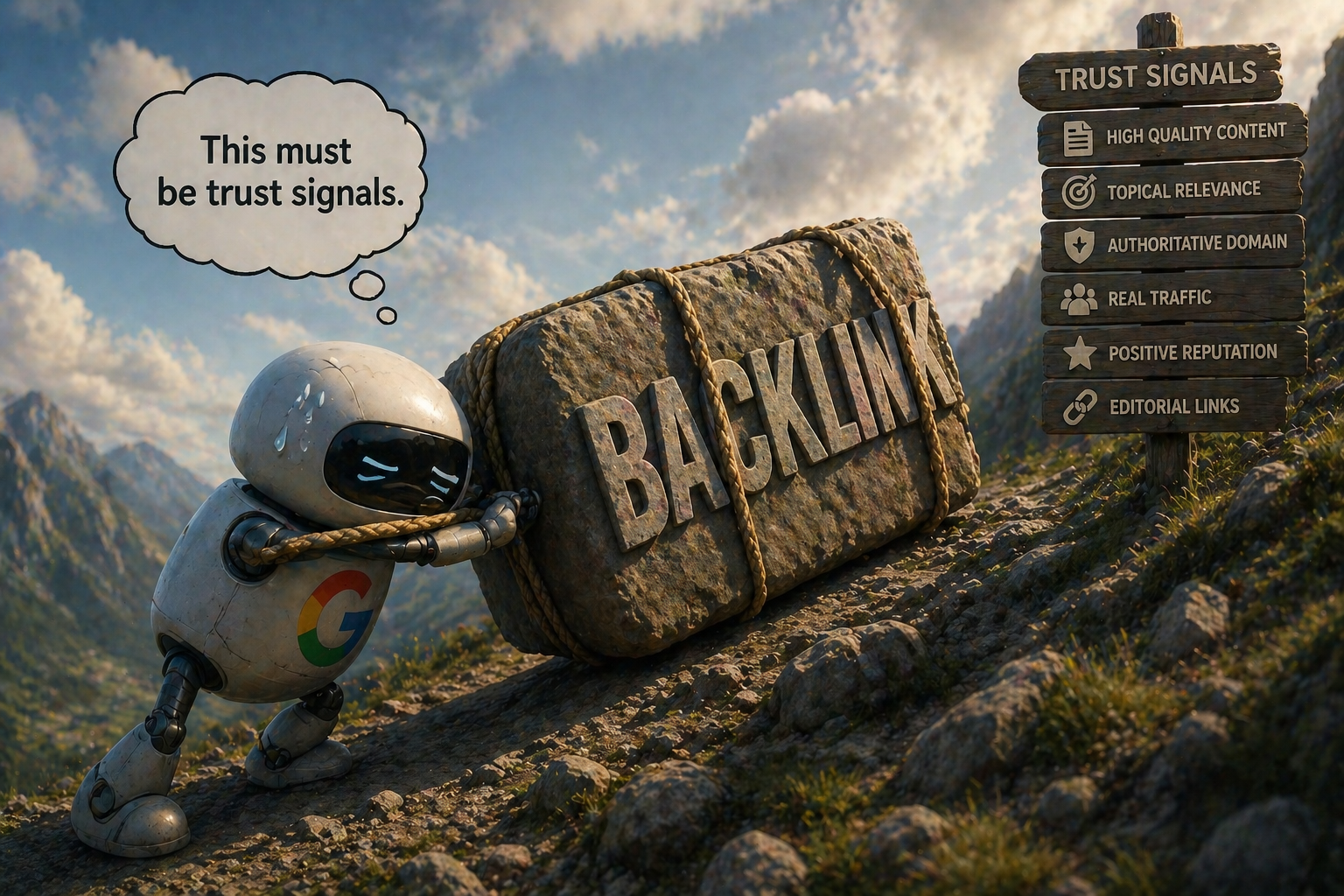
In SEO, these clues are often called backlink trust signals. They can help you understand whether a backlink represents a genuine, useful recommendation, although they aren’t an official Google checklist or a guarantee of better rankings.
Start With the Page That Links to You
A website can contain many different types of pages, and they don’t all serve the same purpose.
For example, a technology website might publish carefully researched articles about smartphones alongside author profiles, community discussions, and other pages where visitors can share information.
Suppose the website links to your guide about improving phone battery life. Before assuming the backlink is valuable because it comes from a familiar website, look at the specific page containing it.
A link included by the writer in an article explaining common battery problems tells you something different from a link added to a user profile.
The distinction matters because the website’s reputation alone doesn’t explain who selected the link or why it appears there.
Can You Trust the People Behind the Content?
Once you understand where the backlink appears, the next question is whether the information on that page deserves your confidence.
A helpful starting point is to look at who wrote the content and who is responsible for publishing it.
Someone explaining smartphone battery problems might have experience repairing phones, testing devices, or researching consumer technology. A writer who can demonstrate relevant experience gives you more to evaluate than someone who simply describes themselves as an expert.
An author biography or About page may help you understand that background, but the information shouldn’t be accepted without question. Look for work, experience, or other evidence that supports what the publisher says about itself.
Can You Verify the Information?
Even a convincing explanation can contain mistakes, so it’s worth checking how important claims are supported.
If the technology article recommends changing a particular phone setting, does it explain what the setting does? Does it refer to reliable instructions, documented testing, or information that readers can examine themselves?
A link to an outside source is useful only when that source actually supports the claim being made.
The amount of evidence needed also depends on the subject. A casual suggestion about organizing your home screen is different from technical instructions that could affect how a device works.
Does the Website Have a Credible Track Record?
One good article doesn’t tell you everything about the website behind it.
Look at a few other pages covering related subjects. Do they provide similarly careful explanations? Is outdated information corrected when necessary? Does the publisher consistently help readers understand the subjects it covers?
You can also look beyond the website itself.
If independent publications reference its research, discuss its findings, or consult its writers about subjects they understand, those references may help you assess its reputation.
But recognition needs context. A positive customer review, for example, doesn’t necessarily establish that a company’s technical advice is accurate.
These observations help you form a more informed judgment about the publisher rather than relying on its name, size, or age alone.
Why Does the Link Appear in That Particular Article?
Return to the article about smartphone battery problems. If the writer mentions that certain apps can consume considerable power and links to your guide explaining how to check battery usage, the connection is easy to follow.
Your page provides information that helps readers take the next step.
The words surrounding the link should help establish that relationship. They tell readers why the destination is relevant and what they can expect to find.
A link placed among unrelated recommendations would need a closer look, even if it appears on the same reputable website.
This doesn’t mean that every useful backlink must appear inside a paragraph. A carefully organized list of troubleshooting resources can also help readers find information.
What matters is the purpose the link serves, not simply its position on the page.
Does Your Page Deliver What the Link Promises?
The website providing the link is only one side of the relationship. The page receiving it matters too.
If the article promises readers instructions for checking their phone’s battery usage, the linked page should make those instructions easy to find.
A general homepage that leaves visitors searching for the information would be less helpful in that situation.
The destination also needs to remain useful over time. Instructions can become outdated, pages can be removed, and redirects can lead visitors somewhere unrelated to the original recommendation.
Checking the destination helps you understand whether the backlink still serves the purpose for which it was included.
Do Backlink Trust Signals Guarantee Better Rankings?
No. Finding a backlink from a credible website, surrounded by relevant information, doesn’t tell you exactly how Google will evaluate it.
Google uses multiple systems and signals to understand and rank webpages. It doesn’t provide a public formula that lets website owners calculate the ranking value of an individual backlink.
The same caution applies to authority scores from SEO tools. Those measurements can help with comparisons, but they aren’t official Google trust scores.
It’s also important to consider how the link was obtained. A link can appear relevant while still being part of an arrangement intended primarily to manipulate search rankings. Buying links that pass ranking credit or participating in excessive link exchanges can violate Google’s spam policies.
When evaluating a backlink, the most useful approach is to examine the actual evidence. Look at the publisher, the reliability of its information, the page containing the link, and the reason readers are being directed to your website.
Together, these observations help you distinguish a meaningful editorial reference from a link that has little genuine purpose for readers.