
Saturday, August 8, 2026
BacklinkSense
  • Anchor Text
    • Anchor Text Context
    • Anchor Text Distribution
    • Anchor Text Strategy
    • Types of Anchor Text
  • Backlink Quality and Analysis
    • Authority and Trust Signals
    • Backlink Analysis Tools
    • Link Context
    • Link Placement
    • Link Quality Signals
    • Link Relevance
  • Link Building Basics
    • How Google Ranks Links
    • Types of Backlinks
    • What Are Backlinks
    • Why Backlinks Matter
  • Link Building Methods
    • Asset-Based Link Building
    • Content-Based Link Building
    • Digital PR and Authority Mentions
    • Passive Link Acquisition
    • Resource and Reference Links
  • Link Building Risks
    • Link Penalties
    • Link Velocity
    • Low-Quality Backlinks
    • Over-Optimized Anchor Text
    • Unnatural Link Patterns
  • Link Outreach
    • Finding Outreach Targets
    • Follow Up in Outreach
    • Outreach Email Strategies
No Result
View All Result
  • Anchor Text
    • Anchor Text Context
    • Anchor Text Distribution
    • Anchor Text Strategy
    • Types of Anchor Text
  • Backlink Quality and Analysis
    • Authority and Trust Signals
    • Backlink Analysis Tools
    • Link Context
    • Link Placement
    • Link Quality Signals
    • Link Relevance
  • Link Building Basics
    • How Google Ranks Links
    • Types of Backlinks
    • What Are Backlinks
    • Why Backlinks Matter
  • Link Building Methods
    • Asset-Based Link Building
    • Content-Based Link Building
    • Digital PR and Authority Mentions
    • Passive Link Acquisition
    • Resource and Reference Links
  • Link Building Risks
    • Link Penalties
    • Link Velocity
    • Low-Quality Backlinks
    • Over-Optimized Anchor Text
    • Unnatural Link Patterns
  • Link Outreach
    • Finding Outreach Targets
    • Follow Up in Outreach
    • Outreach Email Strategies
No Result
View All Result
BacklinkSense
No Result
View All Result

Home - Link Building Methods - Content-Based Link Building - What Is Content-Based Link Building?

Content-Based Link Building

What Is Content-Based Link Building?

Backlink Sense by Backlink Sense
February 13, 2026
in Content-Based Link Building
Reading Time: 4 mins read
Share On FacebookShare On Reddit

Page Contents

  • 1. How It Differs From Outreach-Based Link Building
  • 2. How It Differs From Asset-Based Link Building
  • 3. Related Posts
  • 4. Why Useful Content Attracts More Backlinks Than Promotional Content
  • 5. Reasons Why Original Research Gets Backlinks
  • 6. Why Do Some Articles Attract Links and Others Don’t?
  • 7. Why Content-Based Link Building Works
  • 8. The Long-Term Compounding Effect
  • 9. A Structural Way to Think About It
  • 10. What It Is Not
  • 11. Why It Matters Strategically

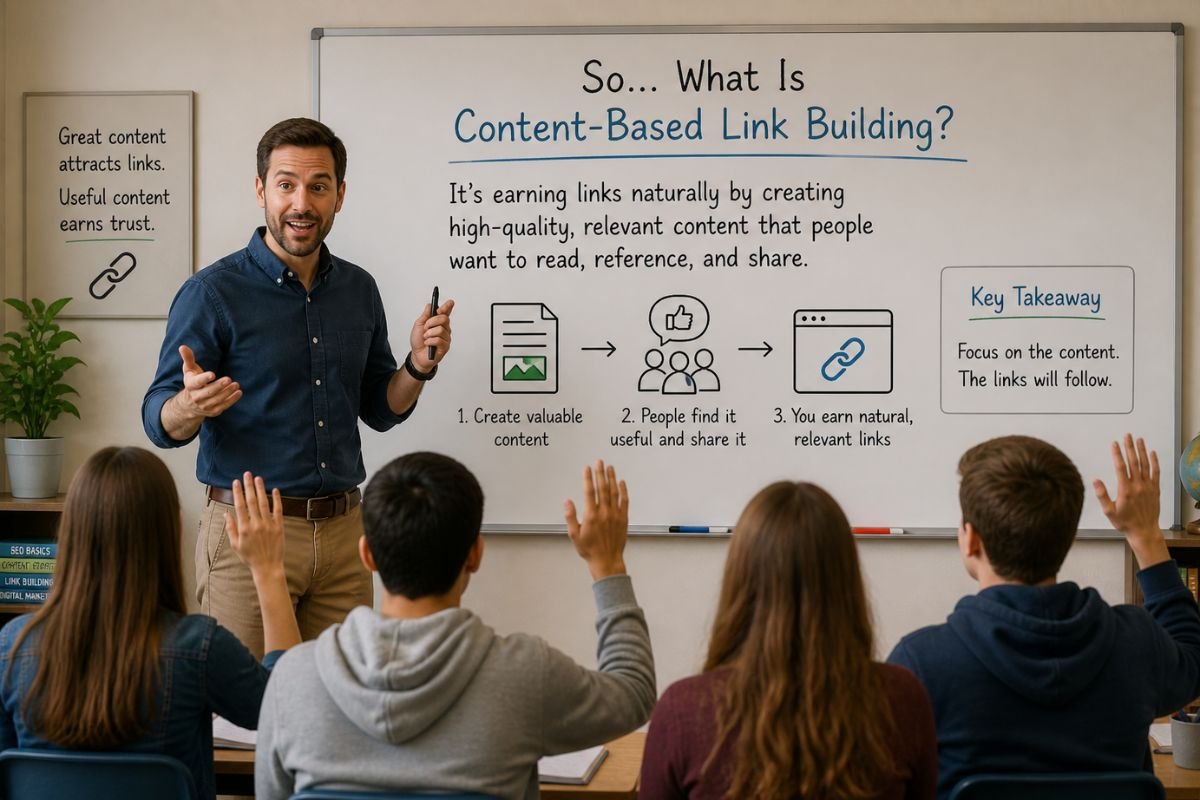
Content-based link building is a model in which backlinks are acquired through the intrinsic value of the content itself, rather than through direct outreach, incentives, or negotiated placements. The content is not a vehicle for link acquisition. It is the reason the link exists.

This approach is rooted in value creation rather than direct link pursuit.

Content-based link building occurs when a website earns backlinks because its content is structurally useful, analytically meaningful, or clarifying within a specific subject area. The link is a byproduct of relevance and usefulness, not the result of persuasion.

The central idea is simple: create content that is worth citing.

How It Differs From Outreach-Based Link Building

Outreach-based link building relies on direct communication. A potential linking opportunity is identified, and contact is initiated in order to secure placement.

Content-based link building operates differently. There is little to no direct engagement involved in the acquisition process. Instead, the focus remains on producing content that becomes reference-worthy within its topic.

In outreach-driven models, the link is the objective. In content-based models, credibility is the objective, and links emerge as a consequence.

The distinction is structural: one model pursues links directly, the other builds something worth linking to.

How It Differs From Asset-Based Link Building

Asset-based link building typically involves creating a specific linkable asset, such as a study, tool, infographic, or proprietary resource, with the intention of generating links.

Content-based link building is broader and more continuous. It does not require a single standout asset. Instead, it involves consistently producing content that organizes, clarifies, or advances understanding within a topic.


Related Posts

Useful content attracts more backlinks by helping people find trusted information, while promotional sales messages compete for attention without offering real value.

Why Useful Content Attracts More Backlinks Than Promotional Content

June 28, 2026
Original research gets backlinks as researchers uncover new evidence, documenting original discoveries that provide valuable information others naturally reference.

Reasons Why Original Research Gets Backlinks

June 28, 2026
Articles Attract Links

Why Do Some Articles Attract Links and Others Don’t?

February 13, 2026

Assets often earn links due to uniqueness.
Content earns links due to intellectual utility.

Why Content-Based Link Building Works

Citation on the web is driven by relevance. When authors publish content, they link to sources that help them:

  • Define terminology

  • Provide conceptual structure

  • Offer frameworks

  • Add credibility

When a page becomes a definitional reference within a subject area, it begins to accumulate citations naturally, allowing content to earn backlinks naturally. Educational, analytical, and explanatory pages often demonstrate this pattern. They become anchor points in the discourse.

This accumulation is not forced; it is aligned.

The Long-Term Compounding Effect

Content-based link building has a compounding dynamic. It may not produce immediate link growth, but as coverage deepens across a topic cluster, recognition increases.

As the site becomes associated with clarity and structured thinking within a subject area, it becomes more likely to be cited in adjacent discussions. Over time, the domain becomes referable.

Because these links are earned rather than negotiated, they are structurally more durable. They are not dependent on ongoing outreach cycles.

The emphasis shifts from acquiring links to becoming a source.

A Structural Way to Think About It

Instead of asking, “How do we get links for this page?” the more productive question becomes:

“What would make this page worth referencing?”

This shift reframes the entire strategy.

The emphasis moves toward:

  • Conceptual clarity

  • Depth of explanation

  • Internal consistency across related pages

  • Clear positioning within a broader topic landscape

Links become a validation signal, not a target metric.

What It Is Not

Content-based link building is not simply writing long articles. Length does not equal referability. It is not a tactic designed to manipulate anchor text or induce artificial sharing.

It is not restricted to one content format. It can apply to guides, frameworks, research, definitions, or analytical commentary. The only consistent requirement is independence: the content must stand on its own merit.

Why It Matters Strategically

When asking, “What is content-based link building?” the deeper question is whether links can be earned through sustained structural value.

The answer is yes, but only when that value consistently contributes to the subject matter.

This approach does not reject outreach entirely. It changes the foundation of link acquisition. Authority is built first. Links follow.

Rather than building links to create authority, content-based link building builds authority and allows links to emerge as recognition.

Tags: backlink strategyLink acquisition analysislink building modelsSEO fundamentals
ShareShareShareShareSend

Related Posts

Illustration showing why contextual backlinks are stronger, with relevant content surrounding a connected backlink compared to a weaker non contextual link.
Link Context

Why Contextual Backlinks Are Stronger Than Non Contextual Links

by Backlink Sense
March 15, 2026
Types of Anchor Text

What Is Branded Anchor Text?

by Backlink Sense
March 9, 2026
What Is a Dofollow Backlink?
Types of Backlinks

What Is a Dofollow Backlink?

by Backlink Sense
February 17, 2026
Backlink Analysis Tools

How to Monitor New Backlinks Automatically

by Backlink Sense
May 13, 2026
A PR team celebrates successful news coverage, showing how Media Mentions That Turn into Backlinks can connect brand visibility with valuable editorial links.
Digital PR and Authority Mentions

How to Get Media Mentions That Turn into Backlinks

by Backlink Sense
March 21, 2026
Load More
  • About Us
  • Terms of Use
  • Use of Cookies
  • Affiliate Disclosure
  • Contact
  • Privacy Policy
2026 BacklinkSense © All rights reserved.

Welcome Back!

Login to your account below

Forgotten Password?

Retrieve your password

Please enter your username or email address to reset your password.

Log In

Accessibility Toolbar

  • Powered with favoriteLove by Codenroll
No Result
View All Result
  • Anchor Text
    • Anchor Text Context
    • Anchor Text Distribution
    • Anchor Text Strategy
    • Types of Anchor Text
  • Backlink Quality and Analysis
    • Authority and Trust Signals
    • Backlink Analysis Tools
    • Link Context
    • Link Placement
    • Link Quality Signals
    • Link Relevance
  • Link Building Basics
    • How Google Ranks Links
    • Types of Backlinks
    • What Are Backlinks
    • Why Backlinks Matter
  • Link Building Methods
    • Asset-Based Link Building
    • Content-Based Link Building
    • Digital PR and Authority Mentions
    • Passive Link Acquisition
    • Resource and Reference Links
  • Link Building Risks
    • Link Penalties
    • Link Velocity
    • Low-Quality Backlinks
    • Over-Optimized Anchor Text
    • Unnatural Link Patterns
  • Link Outreach
    • Finding Outreach Targets
    • Follow Up in Outreach
    • Outreach Email Strategies

2026 BacklinkSense © All rights reserved.

This website uses cookies to improve your experience and analyze site performance. By continuing to browse, you agree to our Privacy and Cookie Policy.