
Thursday, May 14, 2026
BacklinkSense
  • Anchor Text
    • Anchor Text Context
    • Anchor Text Distribution
    • Anchor Text Strategy
    • Types of Anchor Text
  • Backlink Quality and Analysis
    • Authority and Trust Signals
    • Backlink Analysis Tools
    • Link Context
    • Link Placement
    • Link Quality Signals
    • Link Relevance
  • Link Building Basics
    • How Google Ranks Links
    • Types of Backlinks
    • What Are Backlinks
    • Why Backlinks Matter
  • Link Building Methods
    • Asset-Based Link Building
    • Content-Based Link Building
    • Digital PR and Authority Mentions
    • Passive Link Acquisition
    • Resource and Reference Links
  • Link Building Risks
    • Link Penalties
    • Link Velocity
    • Low-Quality Backlinks
    • Over-Optimized Anchor Text
    • Unnatural Link Patterns
  • Link Outreach
    • Finding Outreach Targets
    • Follow Up in Outreach
    • Outreach Email Strategies
    • Outreach Personalization
    • Relationship Based Outreach
No Result
View All Result
  • Anchor Text
    • Anchor Text Context
    • Anchor Text Distribution
    • Anchor Text Strategy
    • Types of Anchor Text
  • Backlink Quality and Analysis
    • Authority and Trust Signals
    • Backlink Analysis Tools
    • Link Context
    • Link Placement
    • Link Quality Signals
    • Link Relevance
  • Link Building Basics
    • How Google Ranks Links
    • Types of Backlinks
    • What Are Backlinks
    • Why Backlinks Matter
  • Link Building Methods
    • Asset-Based Link Building
    • Content-Based Link Building
    • Digital PR and Authority Mentions
    • Passive Link Acquisition
    • Resource and Reference Links
  • Link Building Risks
    • Link Penalties
    • Link Velocity
    • Low-Quality Backlinks
    • Over-Optimized Anchor Text
    • Unnatural Link Patterns
  • Link Outreach
    • Finding Outreach Targets
    • Follow Up in Outreach
    • Outreach Email Strategies
    • Outreach Personalization
    • Relationship Based Outreach
No Result
View All Result
BacklinkSense
No Result
View All Result
ADVERTISEMENT

How to Promote a Linkable Asset for Backlinks

Backlink Sense by Backlink Sense
May 12, 2026
in Asset-Based Link Building
Reading Time: 3 mins read
0
Share on FacebookShare on Twitter

Page Contents

  • 1 Why Promotion Relies on Context
  • 2 Why Exposure Is Not Enough
  • 3 Related Posts
  • 4 What Types of Linkable Assets Attract the Most Backlinks?
  • 5 Why Data Studies Are Powerful Linkable Assets
  • 6 How to Create a Linkable Asset That Earns Natural Links
  • 7 Examples of Successful Linkable Assets in SEO
  • 8 Outreach as Context Matching Instead of Requesting Backlinks
  • 9 Distribution and Exposure Across Existing Channels
  • 10 How Links Form Through Relevance
  • 11 A Simple Example of Promotion in Practice
  • 12 Why Exposure Alone Will Not Get Links
  • 13 Where This Often Goes Wrong

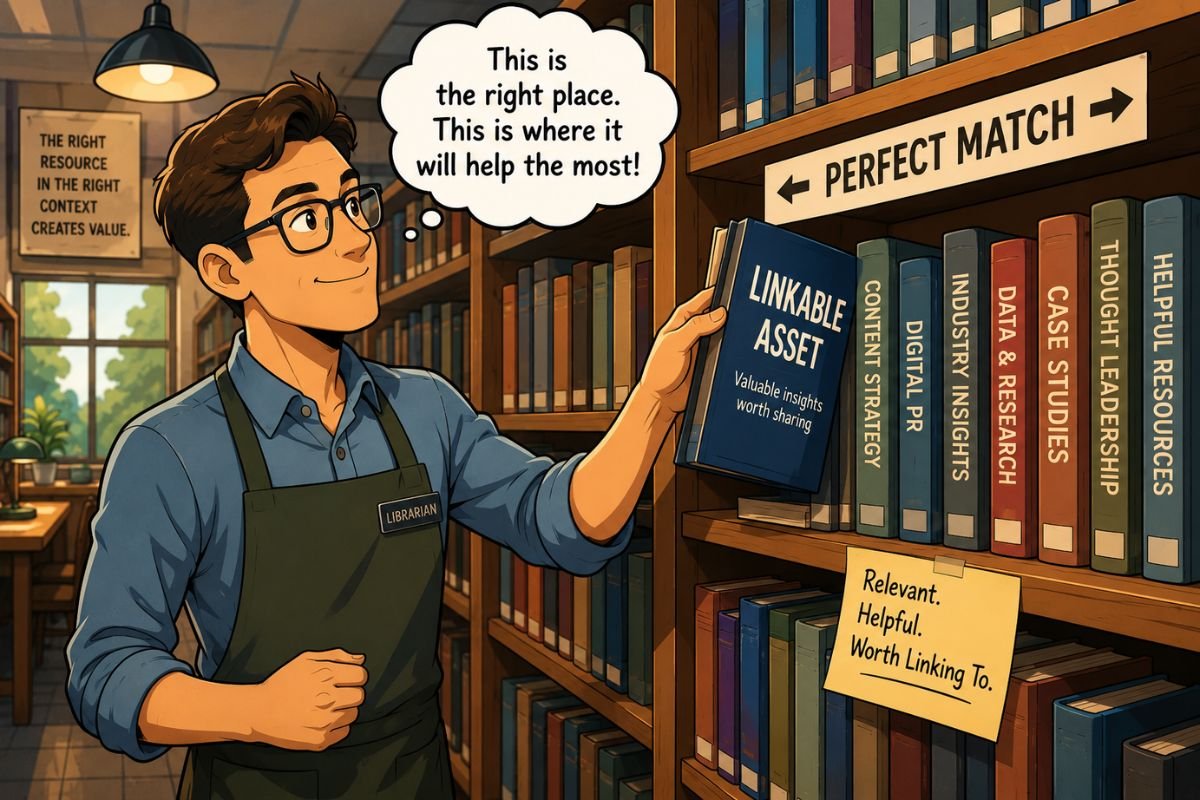
Promotion of a linkable asset with the goal of acquiring backlinks means making sure the asset is presented to the right pages at the right time, when it becomes relevant to the content those pages are already producing.

It is not about placing the asset everywhere. It is about placing it where the link can naturally exist.

Why Promotion Relies on Context

The same asset can generate backlinks or remain invisible depending on the context in which it appears.

Some pages are frequently updated and open to adding references, while others are static and less likely to change.

Some authors already reference external sources, while others rarely do.

This is why promotion depends on context, not just on the asset itself.

Why Exposure Is Not Enough

Exposure alone is not enough to generate backlinks.

Visibility only matters when the asset is shown to pages that are actually capable of linking.

If the asset reaches the wrong environment, it may be seen but never used.

Promotion is not just about being visible. It is about being visible in the right place.

Related Posts

What Types of Linkable Assets Attract the Most Backlinks?

April 10, 2026
Data Studies Are Powerful Linkable

Why Data Studies Are Powerful Linkable Assets

March 21, 2026
Create a Linkable Asset That Earns Natural Links

How to Create a Linkable Asset That Earns Natural Links

March 21, 2026
Successful Linkable Assets in SEO

Examples of Successful Linkable Assets in SEO

March 19, 2026

Outreach as Context Matching Instead of Requesting Backlinks

Outreach works best when it matches context rather than asks for links.

It is about positioning the asset as something that fits naturally within existing content, not something that needs to be added.


This changes the entire approach.

Outreach focuses on:

  • Pages that already reference similar ideas
  • Pages that have gaps where the asset can fit
  • Authors who actively update or expand their content

When this alignment exists, the link feels like an extension of the content rather than an addition.

Distribution and Exposure Across Existing Channels

Promotion also includes distribution, but the goal here is different.

Distribution is not about directly creating links. It is about creating conditions where links are more likely to happen.

When an asset appears in spaces where content is actively being explored, the chances of it being referenced increase.

When it reaches environments where writers are actively searching for material, it becomes easier to use.

The difference is simple:

Promotion targets specific opportunities.
Distribution increases the likelihood of future opportunities.

How Links Form Through Relevance

A link is created when an asset is needed within a piece of content.

Promotion increases the chances of this happening, but it does not create the link itself.

For a link to occur, three elements need to align:

  • The topic of the page matches the asset
  • The structure of the page allows a link to exist
  • The author sees the asset as a natural extension

Promotion works by increasing the number of situations where these conditions align.

A Simple Example of Promotion in Practice

Consider an asset that explains a concept in depth.

If a page briefly introduces that concept, adding a link can provide further clarity. In this case, outreach is not about persuasion, but about relevance.

Now consider a page that discusses a different aspect and does not require further explanation.

In that situation, the asset may not fit, regardless of its quality.

The result depends on whether the asset completes something within the content, not on the asset alone.

Why Exposure Alone Will Not Get Links

A common assumption is that more exposure leads to more backlinks.

However, exposure does not guarantee that the audience is in a position to link.

People may see the asset, share it, or even find it useful, but they may not be creating or updating content.

This is why targeted exposure performs differently from broad visibility.

The goal is not maximum visibility, but the right visibility at the right moment.

Where This Often Goes Wrong

One mistake is treating promotion as a volume-based process.

This leads to sending the same message to many pages without considering whether the asset fits, resulting in low response rates.

Another mistake is treating promotion as purely visibility-based.

This creates the assumption that more visibility will automatically lead to more links, which is not the case.

There is also a belief that a strong asset will naturally gain visibility without promotion.

While this can happen in some cases, it is not consistent.

The issue is not the method itself, but the lack of alignment between the asset and the environment in which it is presented.


Tags: backlink acquisitionContent DistributionSEO fundamentals
ShareTweetPin

Related Posts

Backlink Analysis Tools

How to Monitor New Backlinks Automatically

by Backlink Sense
May 13, 2026
0

Monitoring new backlinks means tracking new websites that link to your site or specific...

Read moreDetails
Why Do High Authority Backlinks Matter More?

Why Do High Authority Backlinks Matter More?

May 4, 2026
the difference between a backlink and an external link

What is the difference between a backlink and an external link?

May 4, 2026
What Is a Referring Domain?

What Is a Referring Domain?

May 4, 2026

Leave a Reply Cancel reply

Your email address will not be published. Required fields are marked *

  • About Us
  • Terms of Use
  • Use of Cookies
  • Affiliate Disclosure
  • Contact
  • Privacy Policy
2026 BacklinkSense © All rights reserved.

Welcome Back!

Login to your account below

Forgotten Password?

Retrieve your password

Please enter your username or email address to reset your password.

Log In

Accessibility Toolbar

  • Powered with favoriteLove by Codenroll
No Result
View All Result
  • Anchor Text
    • Anchor Text Context
    • Anchor Text Distribution
    • Anchor Text Strategy
    • Types of Anchor Text
  • Backlink Quality and Analysis
    • Authority and Trust Signals
    • Backlink Analysis Tools
    • Link Context
    • Link Placement
    • Link Quality Signals
    • Link Relevance
  • Link Building Basics
    • How Google Ranks Links
    • Types of Backlinks
    • What Are Backlinks
    • Why Backlinks Matter
  • Link Building Methods
    • Asset-Based Link Building
    • Content-Based Link Building
    • Digital PR and Authority Mentions
    • Passive Link Acquisition
    • Resource and Reference Links
  • Link Building Risks
    • Link Penalties
    • Link Velocity
    • Low-Quality Backlinks
    • Over-Optimized Anchor Text
    • Unnatural Link Patterns
  • Link Outreach
    • Finding Outreach Targets
    • Follow Up in Outreach
    • Outreach Email Strategies
    • Outreach Personalization
    • Relationship Based Outreach

2026 BacklinkSense © All rights reserved.

This website uses cookies to improve your experience and analyze site performance. By continuing to browse, you agree to our Privacy and Cookie Policy.