


Wednesday, May 20, 2026
BacklinkSense
  • Anchor Text
    • Anchor Text Context
    • Anchor Text Distribution
    • Anchor Text Strategy
    • Types of Anchor Text
  • Backlink Quality and Analysis
    • Authority and Trust Signals
    • Backlink Analysis Tools
    • Link Context
    • Link Placement
    • Link Quality Signals
    • Link Relevance
  • Link Building Basics
    • How Google Ranks Links
    • Types of Backlinks
    • What Are Backlinks
    • Why Backlinks Matter
  • Link Building Methods
    • Asset-Based Link Building
    • Content-Based Link Building
    • Digital PR and Authority Mentions
    • Passive Link Acquisition
    • Resource and Reference Links
  • Link Building Risks
    • Link Penalties
    • Link Velocity
    • Low-Quality Backlinks
    • Over-Optimized Anchor Text
    • Unnatural Link Patterns
  • Link Outreach
    • Finding Outreach Targets
    • Follow Up in Outreach
    • Outreach Email Strategies
    • Outreach Personalization
    • Relationship Based Outreach
No Result
View All Result
  • Anchor Text
    • Anchor Text Context
    • Anchor Text Distribution
    • Anchor Text Strategy
    • Types of Anchor Text
  • Backlink Quality and Analysis
    • Authority and Trust Signals
    • Backlink Analysis Tools
    • Link Context
    • Link Placement
    • Link Quality Signals
    • Link Relevance
  • Link Building Basics
    • How Google Ranks Links
    • Types of Backlinks
    • What Are Backlinks
    • Why Backlinks Matter
  • Link Building Methods
    • Asset-Based Link Building
    • Content-Based Link Building
    • Digital PR and Authority Mentions
    • Passive Link Acquisition
    • Resource and Reference Links
  • Link Building Risks
    • Link Penalties
    • Link Velocity
    • Low-Quality Backlinks
    • Over-Optimized Anchor Text
    • Unnatural Link Patterns
  • Link Outreach
    • Finding Outreach Targets
    • Follow Up in Outreach
    • Outreach Email Strategies
    • Outreach Personalization
    • Relationship Based Outreach
No Result
View All Result
BacklinkSense
No Result
View All Result
ADVERTISEMENT

How to Identify High Quality Backlinks

Backlink Sense by Backlink Sense
May 20, 2026
in Link Quality Signals
Reading Time: 3 mins read
0
Share on FacebookShare on Twitter

Page Contents

  • 1 Relevance of the Linking Website
  • 2 Content Context Around the Link
  • 3 Related Posts
  • 4 What Signals Indicate a Strong Backlink
  • 5 How to Evaluate Backlink Quality
  • 6 How Google Determines Link Quality
  • 7 High Quality vs Low Quality Backlinks
  • 8 Placement of the Link Within the Page
  • 9 Trust and Credibility of the Domain
  • 10 How These Signals Work Together
  • 11 Where Identification Often Goes Wrong
  • 12 A Practical Perspective

A high-quality backlink is one that is appropriate within a content space, has context within that space, and comes from a website that is trustworthy within that space.

The identification of such a backlink is not based on specific numbers but rather on how that backlink behaves within that space.

There are a few practical ways to determine whether a backlink is a high-quality one.

Relevance of the Linking Website

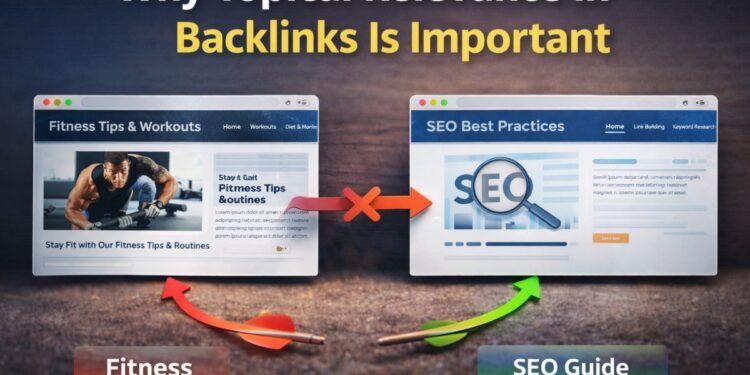
The first signal to examine is the relevance of the website that is providing the backlink.

The strength of a backlink is increased by its origin on a website that is within the same general subject space as the page that is being linked to.

It does not have to be within the same specific space, but there should be a general sense that both sites are connected by their subject matter.

For example, a website that is focused on SEO, marketing, or analysis is naturally within the subject space of a page that is focused on backlink analysis.

If a backlink is coming from a website that is not within that space, then there is not as clear a connection. The backlink is still present, but it is not being supported by a shared subject space.

Content Context Around the Link

The second signal is the content that surrounds the link.

For the link to be of high quality, it must be present in the content of the paragraph, and the content must be relevant to the topic of the destination page.

Related Posts

What Signals Indicate a Strong Backlink

May 20, 2026

How to Evaluate Backlink Quality

May 20, 2026

How Google Determines Link Quality

May 20, 2026

High Quality vs Low Quality Backlinks

May 20, 2026

For example, if the content of the paragraph explains the methods of evaluating links, and the link to the page that explains the analysis of the backlink is present, it would be relevant to the topic.

If the content of the paragraph explains another topic, the link would not be as relevant.

By analyzing the content that surrounds the link, it is possible to determine whether the link is relevant or not.

Placement of the Link Within the Page

Another way to determine the quality of the link would be by analyzing the placement of the link within the page.

If the link is present in the body of the article, it is easier to determine that the link is connected to the topic.

For the link to be relevant, it must be present in the content of the article.

If the link is not present in the body of the article, it becomes more difficult to understand the topic that the link is referring to, since it is not part of the main content.

Trust and Credibility of the Domain

Another important factor is the credibility of the domain.

A good quality backlink is usually obtained from a website that has shown consistency in the information presented, has a clear focus, and has been well organized.

Some of the signs of credibility of a website may include:

  • The website has been consistent in the information presented.
  • The website has been well organized.
  • The website has been clear about the authors.
  • The website has not been filled with many links.

When a website shows these signs of credibility, the links obtained from it are more grounded.

When a website has not been consistent in the information presented, the credibility of the links may not be clear.

How These Signals Work Together

A good quality backlink is not determined by a single factor; the combination of several factors is necessary.

A link that comes from a relevant website, appears in relevant content, is placed within the main content, and comes from a credible website forms a coherent structure.

When any of these elements are missing, the link may still exist, but the overall picture may not be coherent.

For example, a relevant website may have a confusing link if it appears in irrelevant content. Another example is that a correctly placed link may be less trustworthy if the website does not have a clear subject focus.

Evaluating backlinks requires analyzing the interaction of these factors rather than relying on a single factor.

Where Identification Often Goes Wrong

One of the common mistakes in identifying backlinks is relying on isolated or surface-level factors.

For example, relying solely on numerical data or domain metrics does not show how the backlink fits into the content.

It is possible for a backlink to be technically correct according to external factors but still not relevant or aligned in terms of content.

Another mistake is ignoring the content itself. A backlink may be technically correct but still not aligned with the discussion in which it appears.

Focusing on only one aspect of the backlink leads to an incomplete evaluation.

A Practical Perspective

Evaluating backlinks correctly requires analyzing how the backlink fits into its environment.

The factors that contribute to the structure of the backlink are the relevance of the website, the alignment of the content, the placement of the link, and the credibility of the domain.

When these factors are aligned, the backlink exists in a clear and consistent context.

Tags: backlink analysisBacklink evaluationBacklink QualitySEO ConceptsTopical Relevance
ShareTweetPin

Related Posts

Link Quality Signals

What Signals Indicate a Strong Backlink

by Backlink Sense
May 20, 2026
0

There are various signals that indicate a strong backlink. These signals do not include...

Read moreDetails

How to Evaluate Backlink Quality

May 20, 2026

How Google Determines Link Quality

May 20, 2026

High Quality vs Low Quality Backlinks

May 20, 2026

Leave a Reply Cancel reply

Your email address will not be published. Required fields are marked *

  • About Us
  • Terms of Use
  • Use of Cookies
  • Affiliate Disclosure
  • Contact
  • Privacy Policy
2026 BacklinkSense © All rights reserved.

Welcome Back!

Login to your account below

Forgotten Password?

Retrieve your password

Please enter your username or email address to reset your password.

Log In

Accessibility Toolbar

  • Powered with favoriteLove by Codenroll
No Result
View All Result
  • Anchor Text
    • Anchor Text Context
    • Anchor Text Distribution
    • Anchor Text Strategy
    • Types of Anchor Text
  • Backlink Quality and Analysis
    • Authority and Trust Signals
    • Backlink Analysis Tools
    • Link Context
    • Link Placement
    • Link Quality Signals
    • Link Relevance
  • Link Building Basics
    • How Google Ranks Links
    • Types of Backlinks
    • What Are Backlinks
    • Why Backlinks Matter
  • Link Building Methods
    • Asset-Based Link Building
    • Content-Based Link Building
    • Digital PR and Authority Mentions
    • Passive Link Acquisition
    • Resource and Reference Links
  • Link Building Risks
    • Link Penalties
    • Link Velocity
    • Low-Quality Backlinks
    • Over-Optimized Anchor Text
    • Unnatural Link Patterns
  • Link Outreach
    • Finding Outreach Targets
    • Follow Up in Outreach
    • Outreach Email Strategies
    • Outreach Personalization
    • Relationship Based Outreach

2026 BacklinkSense © All rights reserved.

This website uses cookies to improve your experience and analyze site performance. By continuing to browse, you agree to our Privacy and Cookie Policy.