
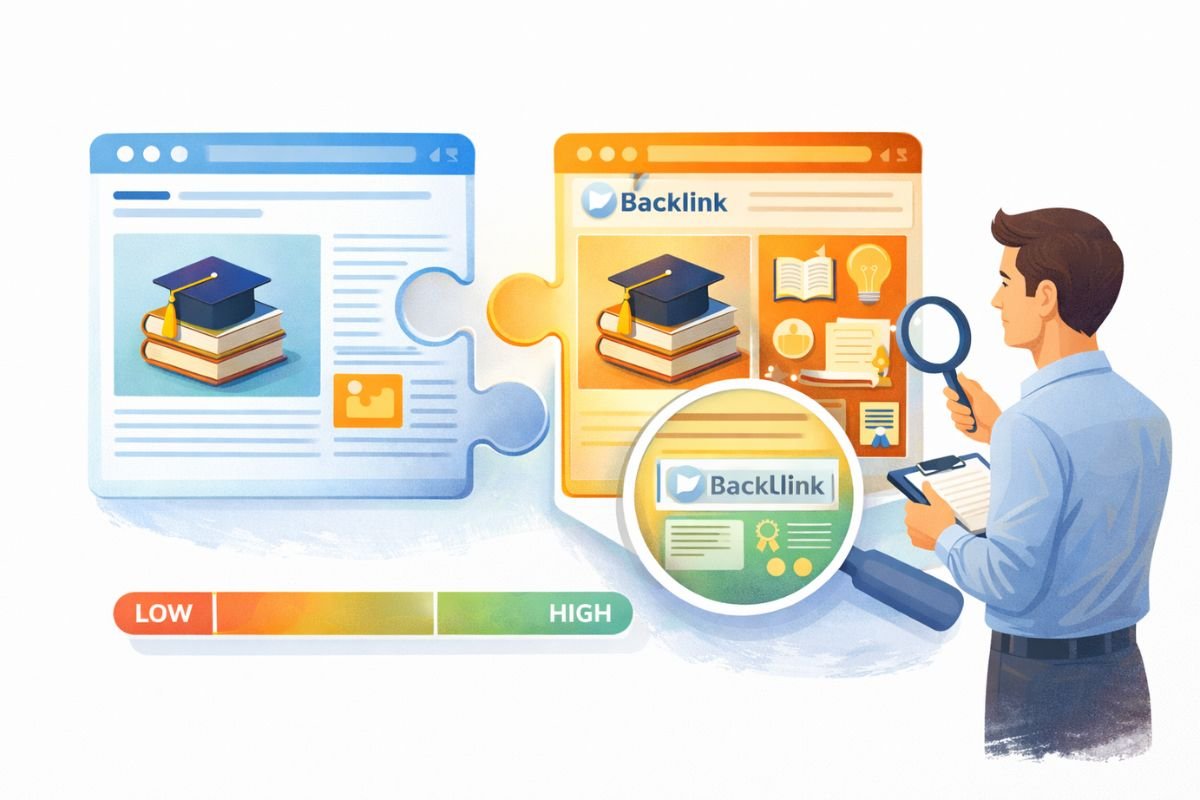

Evaluating the relevance of a backlink entails assessing the level of similarity between the backlink environment and the subject of the destination page.
This is not based on one factor but on the subject of the website, the subject of the page containing the backlink, and the content of the area near the backlink.
Start with the Topic of the Website
The initial step is to assess the subject of the website.
A website with content revolving around one subject or within one domain is considered stable. If the subject of the website is related to SEO, marketing, or digital growth strategies, then the backlink to the backlinks page falls within the domain of relevance.
If the content of the website is scattered across different domains or topics with no defined subject or domain hierarchy, the relevance is not very clear.
This step is the initial evaluation of the backlink relevance.
Examine the Focus of the Linking Page
The next step is to assess the relevance of the backlink based on the subject of the page containing the backlink.
A website with relevant content can have different pages with different subjects. Therefore, the subject of the page containing the backlink can vary.
Assess the subject of the page:
- What is the subject of the page?
- What is the problem or subject being addressed?
- Does the content of the page stay within the same subject?
If the page is directly related to the destination topic, then the link is in a relevant context. If it is discussing a different subject, the relevance is lower.


This step is an evaluation based on relevance at the page level instead of the domain level.
Analyze the Content Around the Link
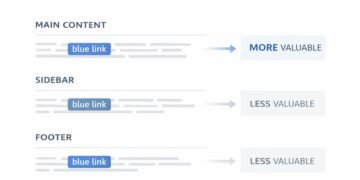
The most important factor is the content surrounding the link. If the link is within a paragraph that is discussing a related subject, it is part of that discussion. The paragraphs surrounding the link support the discussion and are related to the subject of the destination page.
To analyze this:
- Read the paragraph where the link is located
- Identify the subject that is being discussed in that paragraph
- Evaluate whether the link extends to that subject
If the paragraph is directly related to the destination topic, then the link is in a relevant context. If it is discussing a different subject, the relevance is lower.
This is an evaluation based on the placement of the link in the content.
Compare the Destination Page with the Linking Context
After completing the analysis of the linking context, compare it with the destination page. This evaluation is based on comparing the two and determining whether there is a relationship.
To compare:
- Does the linking page relate to the same subject as the destination page
- Does the paragraph where the link is located relate to the destination topic
- Does the transition between the two pages feel natural
If the transition between the two pages is direct and consistent, the relevance is high. If there is a change in subject, the relevance is lower.
This is a compilation of the previous steps.
Look for Consistency Across All Levels
The more consistency there is with relevance across all levels, the stronger the relevance is.
These levels include:
- The overall subject of the website
- The subject of the page that contains the link
- The subject of the paragraph that contains the link
If all three levels are consistent with each other, then the link is within a relevant environment.
If one level is not consistent with the others, overall relevance is compromised. For example, if the domain is relevant but the page is not, then relevance is compromised. If the page is relevant but the paragraph is not, the same applies.
Where Evaluation Often Goes Off Track
The biggest problem with evaluating relevance is that people tend to rely on just one level.
For example, when evaluating a domain’s relevance, people tend to rely on the overall subject of the domain.
The problem with this is that not all content on a domain is always relevant to a specific subject. The domain as a whole may be relevant, but individual pages within that domain may not be.
Another problem is that people tend to evaluate links without reading the content that surrounds them. While a link may look relevant on a quick glance, this is not always true when reading the paragraph that contains that link.
Relevance is not visible unless all levels are taken into consideration.
A Structured Approach to Evaluating Relevance
Evaluating backlink relevance is not a straightforward task but rather requires a structured approach.
The steps that need to be followed include:
- Identifying the subject of the website
- Identifying the subject of the page
- Identifying the subject of the paragraph
- Comparing all three with each other