
A website about gardening links to a guide about choosing soil for indoor plants. That connection probably makes sense to you immediately.
Now take the same gardening article and give it a link to a guide about car insurance. The link still works. You can click it and reach the other page, but you would probably wonder why it is there.
That simple difference is the idea behind link relevance in SEO. A backlink is relevant when there is a meaningful connection between the content providing the link and the page receiving it.
The connection can come from several places. The two pages may discuss related subjects, the paragraph around the backlink may explain why the destination is useful, or both may happen at the same time. Looking at these relationships helps us understand whether the backlink naturally belongs in the discussion.
How Do You Recognize a Relevant Backlink?
Start with the subjects of the two pages.
If an article about analyzing backlinks links to a guide about evaluating backlink quality, you can understand why someone reading the first page might want to visit the second. The subjects are not identical, but they are closely related.
This relationship is commonly called topical relevance. It describes whether the subjects connected by the backlink make sense together.
The important point is that two pages do not need to use exactly the same words or answer exactly the same question. They need a relationship that makes sense to someone reading the content.
What Does the Content Around the Link Tell You?
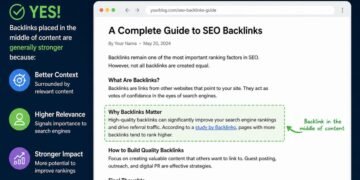
The subjects of the pages give you part of the picture, but you can look more closely by reading the paragraph containing the backlink.
A paragraph explaining how to judge backlink quality could naturally reference a more detailed guide about evaluating links. The surrounding discussion gives the reader a reason for following that link.
Put the same backlink inside a paragraph discussing an unrelated subject, and that reason becomes much harder to see.
This is why content relevance around the link matters. The paragraph does not merely contain the backlink; it can help explain what the connection between the two pages actually is.
Does the Whole Website Need to Cover the Same Topic?
No. Link relevance does not require two entire websites to belong to exactly the same niche.
A broad business publication, for example, might publish an article specifically about SEO. If that article discusses backlinks and links to a detailed backlink guide, the connection can be clear even though most of the website covers other business subjects.
This distinction is useful because it keeps link relevance separate from simply asking whether two websites have the same industry label. The particular page and the discussion containing the backlink can provide a much more specific connection.