Thursday, April 30, 2026
BacklinkSense
  • Anchor Text
    • Anchor Text Context
    • Anchor Text Distribution
    • Anchor Text Strategy
    • Types of Anchor Text
  • Backlink Quality and Analysis
    • Authority and Trust Signals
    • Backlink Analysis Tools
    • Link Context
    • Link Placement
    • Link Quality Signals
    • Link Relevance
  • Link Building Basics
    • How Google Ranks Links
    • Types of Backlinks
    • What Are Backlinks
    • Why Backlinks Matter
  • Link Building Methods
    • Asset-Based Link Building
    • Content-Based Link Building
    • Digital PR and Authority Mentions
    • Passive Link Acquisition
    • Resource and Reference Links
  • Link Building Risks
    • Link Penalties
    • Link Velocity
    • Low-Quality Backlinks
    • Over-Optimized Anchor Text
    • Unnatural Link Patterns
  • Link Outreach
    • Finding Outreach Targets
    • Follow Up in Outreach
    • Outreach Email Strategies
    • Outreach Personalization
    • Relationship Based Outreach
No Result
View All Result
  • Anchor Text
    • Anchor Text Context
    • Anchor Text Distribution
    • Anchor Text Strategy
    • Types of Anchor Text
  • Backlink Quality and Analysis
    • Authority and Trust Signals
    • Backlink Analysis Tools
    • Link Context
    • Link Placement
    • Link Quality Signals
    • Link Relevance
  • Link Building Basics
    • How Google Ranks Links
    • Types of Backlinks
    • What Are Backlinks
    • Why Backlinks Matter
  • Link Building Methods
    • Asset-Based Link Building
    • Content-Based Link Building
    • Digital PR and Authority Mentions
    • Passive Link Acquisition
    • Resource and Reference Links
  • Link Building Risks
    • Link Penalties
    • Link Velocity
    • Low-Quality Backlinks
    • Over-Optimized Anchor Text
    • Unnatural Link Patterns
  • Link Outreach
    • Finding Outreach Targets
    • Follow Up in Outreach
    • Outreach Email Strategies
    • Outreach Personalization
    • Relationship Based Outreach
No Result
View All Result
BacklinkSense
No Result
View All Result
ADVERTISEMENT
How Backlinks Help Google Discover New Pages

How Backlinks Help Google Discover New Pages

Backlink Sense by Backlink Sense
March 21, 2026
in Why Backlinks Matter
Reading Time: 3 mins read
0
Share on FacebookShare on Twitter

Page Contents

  • 1 Crawling Through Links
  • 2 The Role of Backlinks as a Discovery Path
  • 3 Related Posts
  • 4 Do Backlinks Affect Website Authority?
  • 5 Do Backlinks Still Work in 2026?
  • 6 Can I Rank Without Backlinks?
  • 7 Connecting Isolated Pages
  • 8 From Discovery to Indexing
  • 9 Multiple Paths Increase Crawl Efficiency
  • 10 Where Discovery Is Often Misunderstood

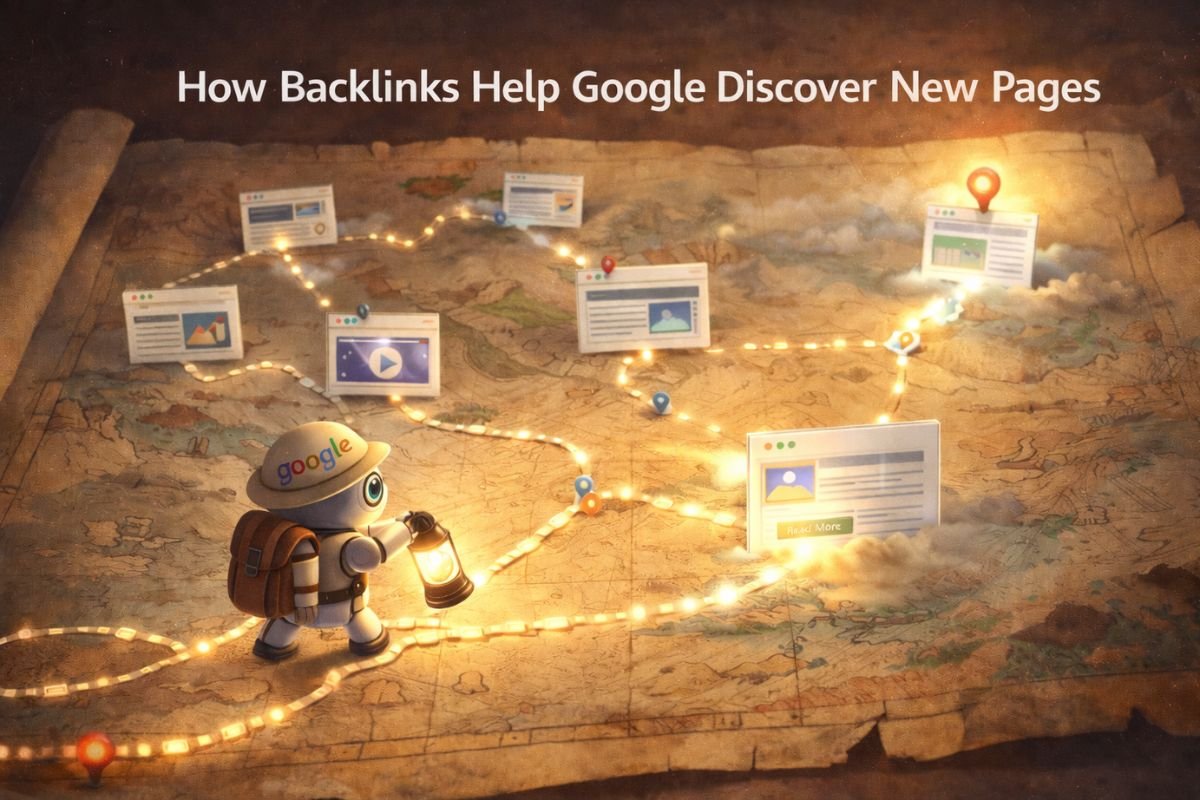
Backlinks assist Google in discovering new pages by providing a path that links one page to another.

Google crawlers traverse the internet by following links. When a page has a backlink to another page, it creates a path that can be followed by the crawlers.

Crawling Through Links

The crawlers that Google uses are automated.

These crawlers start with pages that are already known by Google and then move through the links found on those pages. Each backlink serves as a path that leads to another URL.

The crawlers move from one page to another through these links, continuing as long as they find backlinks on each page.

Without backlinks, this process is not possible, as there would be no paths to follow.

The Role of Backlinks as a Discovery Path

A backlink serves as a discovery path.

When a page is linked by another page that is already known by Google, it becomes easier for the crawlers to discover it.

The backlink provides a path that can be followed directly by the crawlers.

The more links a page has, the easier it becomes to be discovered.

Related Posts

Do Backlinks Affect Website Authority

Do Backlinks Affect Website Authority?

March 21, 2026
Do Backlinks Still Work in 2026?

Do Backlinks Still Work in 2026?

February 8, 2026
Can I Rank Without Backlinks?

Can I Rank Without Backlinks?

February 8, 2026

Connecting Isolated Pages

A page that is not linked from any source is difficult for crawlers to find. It exists outside the structure of the web.

When a backlink is added to such a page, it becomes part of the network. It is now accessible because the crawler can reach it by following a link from another page.

A page that was previously not accessible becomes part of the structure of the web.

From Discovery to Indexing

Once a page is discovered through a backlink, it can be processed for indexing.

The first step is discovery, where the crawler becomes aware of the page’s existence. The content is then analyzed for possible inclusion in search results.

Backlinks do not guarantee indexing, but they enable discovery, which is required before indexing can occur, and is an essential part of how backlinks work in search engines.

Without discovery, indexing cannot take place.

Multiple Paths Increase Crawl Efficiency

A page that is linked from multiple sources is easier for crawlers to find.

If a crawler does not reach the page through one path, it may find it through another.

This creates redundancy within the structure of the web. Pages that are connected through multiple paths are more likely to be discovered.

This network of paths helps ensure that pages remain accessible.

Where Discovery Is Often Misunderstood

Discovery is sometimes assumed to happen automatically for all pages.

In reality, crawlers find pages through a network of links.

Another misunderstanding is that links are optional for discovery. While there are other methods, backlinks remain one of the primary ways crawlers move between pages.

They determine how accessible a page is within the network.
Tags: Authority signalsbacklink diagnosticsBacklink growthCrawlingGoogle Search Operators
ShareTweetPin

Related Posts

Domain Authority vs Real Link Authority
Authority and Trust Signals

Domain Authority vs Real Link Authority: What Truly Matters Most?

by Backlink Sense
April 25, 2026
0

While Domain Authority is a measure used by SEO tools to estimate the power...

Read moreDetails
Powerful Resource Pages for Link Building

How to Find Powerful Resource Pages for Link Building

April 25, 2026
Website Authoritative for Backlinks

What Makes a Website Authoritative for Backlinks?

April 23, 2026
Backlink More Valuable

What Trust Signals Make a Backlink More Valuable?

April 23, 2026

Leave a Reply Cancel reply

Your email address will not be published. Required fields are marked *

  • About Us
  • Terms of Use
  • Use of Cookies
  • Affiliate Disclosure
  • Contact
  • Privacy Policy
2026 BacklinkSense © All rights reserved.

Welcome Back!

Login to your account below

Forgotten Password?

Retrieve your password

Please enter your username or email address to reset your password.

Log In

Accessibility Toolbar

  • Powered with favoriteLove by Codenroll
No Result
View All Result
  • Anchor Text
    • Anchor Text Context
    • Anchor Text Distribution
    • Anchor Text Strategy
    • Types of Anchor Text
  • Backlink Quality and Analysis
    • Authority and Trust Signals
    • Backlink Analysis Tools
    • Link Context
    • Link Placement
    • Link Quality Signals
    • Link Relevance
  • Link Building Basics
    • How Google Ranks Links
    • Types of Backlinks
    • What Are Backlinks
    • Why Backlinks Matter
  • Link Building Methods
    • Asset-Based Link Building
    • Content-Based Link Building
    • Digital PR and Authority Mentions
    • Passive Link Acquisition
    • Resource and Reference Links
  • Link Building Risks
    • Link Penalties
    • Link Velocity
    • Low-Quality Backlinks
    • Over-Optimized Anchor Text
    • Unnatural Link Patterns
  • Link Outreach
    • Finding Outreach Targets
    • Follow Up in Outreach
    • Outreach Email Strategies
    • Outreach Personalization
    • Relationship Based Outreach

2026 BacklinkSense © All rights reserved.

This website uses cookies to improve your experience and analyze site performance. By continuing to browse, you agree to our Privacy and Cookie Policy.