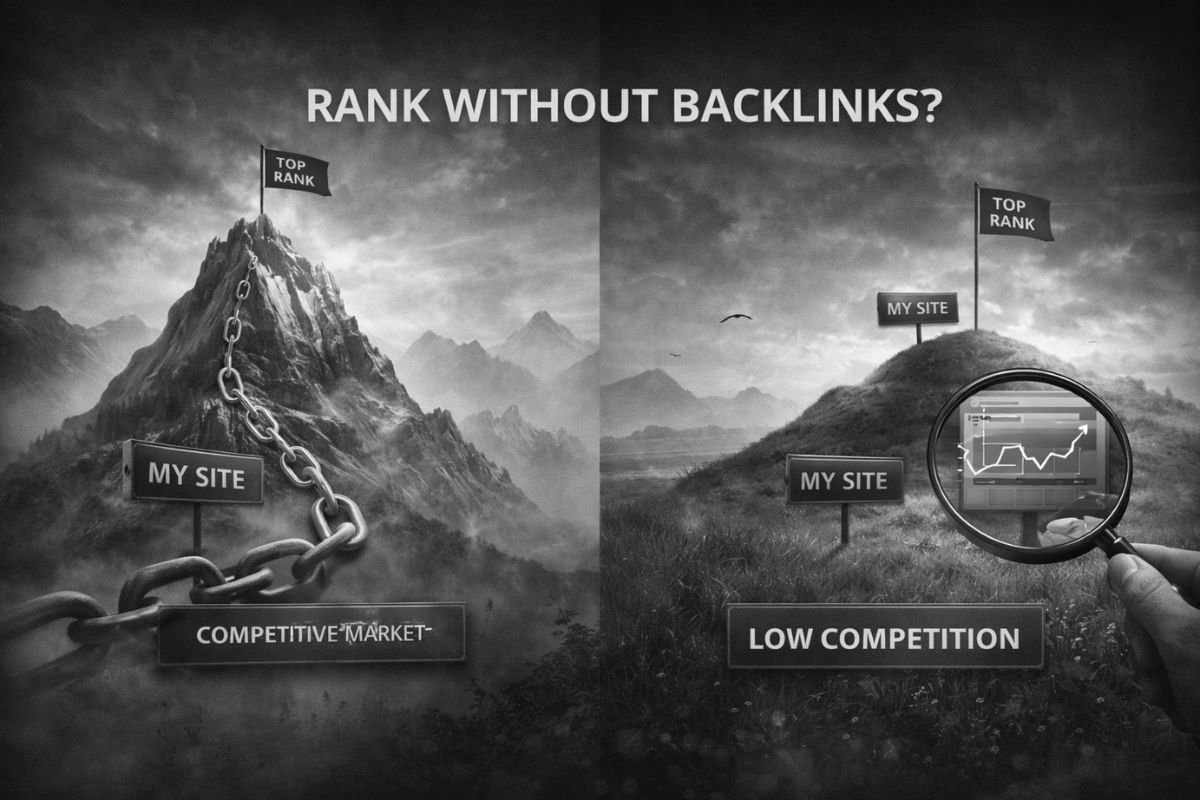

A page can rank in Google without having backlinks pointing directly to it.
That does not mean backlinks have stopped mattering. Google still uses links as part of its ranking systems, including systems that analyze how pages link to one another.
The important distinction is that backlinks are part of ranking, not a requirement that every ranking page must satisfy.
Google does not publish a rule saying that a page needs one backlink, ten backlinks, or any particular number before it can rank.
So the more useful question is: when can a page compete successfully without relying on them?
Why Can a Page Rank Without Backlinks?
Google does not rank pages using backlinks alone.
Its automated ranking systems consider many factors and signals when trying to return relevant and useful results. A page can therefore potentially be the best result for a search even when no external website links directly to it.
Imagine someone searches for a very specific question and only a handful of pages answer it well.
One page gives the searcher exactly what they need. Another barely addresses the question. A third discusses the general subject but misses the specific problem.
The first page does not become ineligible simply because nobody has linked to it.
Backlinks are links from other websites to yours, so they provide Google with information beyond what exists on the destination page itself. Their absence, however, does not automatically prevent that page from ranking.
Then Why Do Backlinks Matter?
Because links provide information that the page cannot provide entirely on its own.
Google says it uses links as a signal when determining page relevance, and its link analysis systems examine how pages link to one another to help understand what pages are about and which may be useful.
This is why backlinks remain important for SEO without becoming an absolute requirement for every page that ranks.
What If You Are Competing Against Excellent Pages?
This is where the answer becomes less predictable.
If your page is one of the few useful answers available, it may have an easier path to visibility than a page entering search results already filled with strong alternatives.
When many pages satisfy the search well, Google has more candidates to choose from. Links can provide additional information that its ranking systems may use when evaluating those pages.
But there is no published Google formula saying:
More competition = more backlinks required.
Google also does not provide a backlink threshold for competitive keywords. Numbers shown by SEO tools as “keyword difficulty” or estimated backlink requirements are third-party measurements, not Google requirements.
So competition matters to the practical difficulty of ranking, but we cannot convert that into a universal backlink rule.
Does That Mean You Should Ignore Backlinks?
Treating backlinks as unnecessary would go too far in the other direction.
Google explicitly continues to use link analysis systems. At the same time, it does not say that every page needs backlinks before it can rank.
The useful distinction is therefore between requirement and advantage.
A backlink is not a ticket that a page must possess to enter Google’s results. It is one source of information available to Google’s ranking systems.
That is why there can be no reliable answer such as “you need 20 backlinks to rank.” Backlinks operate alongside other ranking information, and the circumstances surrounding each page and search are different.
So, can you rank without backlinks? Yes.
Whether you can compete successfully without the additional information that relevant backlinks may provide is the part that cannot be reduced to a universal rule, even though backlinks still play a role in Search in 2026.