

A backlink may look like nothing more than something you click, but Google can use links for several different purposes.
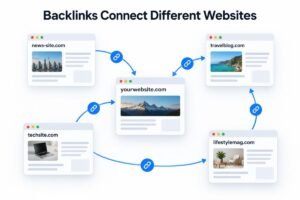
When one website links to a page on another website, Google can encounter that connection while crawling the web. The link may lead Google to the destination page, provide information about what that page is about, and become part of the link information Google’s ranking systems analyze.
So when we ask how backlinks work in search engines, we are not describing one single action. A backlink can play a role at different stages of how Google finds, understands, and evaluates pages.
First, How Does Google Encounter a Backlink?
Google uses an automated crawler called Googlebot to visit pages on the web.
While Googlebot is crawling a page it already knows, it can encounter links on that page. If one of those links points to another website, Google now has a route to the URL at the other end.
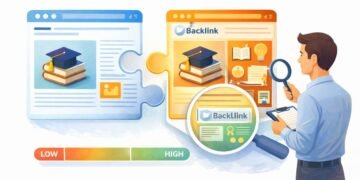
For example, a gardening website publishes an article about keeping basil alive indoors and links to a university page explaining how different light levels affect plant growth.
Googlebot can encounter that link while crawling the gardening article and use it as a route to the university page.
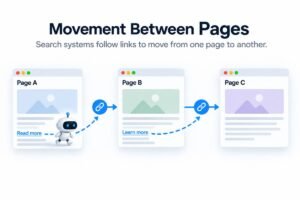
This is one way links help Google move between pages and discover URLs it may not have encountered before.
Discovery is not the same as indexing or ranking. Finding the link gives Google a way to encounter the destination URL, but it does not guarantee that the destination page will be indexed or appear in search results.
What Can the Backlink Tell Google About the Destination?
Finding the destination is only one part of what a link can do.
Go back to the gardening article. The link to the university page does not appear in empty space. It sits inside a page discussing basil and plant growth, and the clickable words in the link, known as anchor text, may also describe what the reader will find after clicking.
Those pieces of information can provide context about the connection between the two pages.
This helps explain why Google says its link analysis systems can understand how pages link to each other as part of determining what pages are about and which may be useful for a search.
A backlink is therefore more than a route from Page A to Page B. The pages being connected and the way the connection appears can provide information too.
If you want to go deeper into that evaluation process, our explanation of how Google can evaluate backlinks algorithmically continues from this point.
Does Google Use Backlinks for Rankings Too?
Yes, links are also part of Google’s ranking systems.
The clearest documented example is PageRank, which Google describes as a system for understanding how pages link to each other as one way of determining what pages are about and which may be most helpful in response to a query.
PageRank has changed significantly since Google’s early years, and links are only part of a much larger ranking process. Google uses many systems and signals when deciding what to show for a search.
This means a backlink should not be thought of as a fixed number of ranking points.
Receiving one backlink does not guarantee that a page will move up, and receiving ten backlinks does not tell us how much its rankings will change. Google does not publish a formula that assigns a predictable ranking increase to each backlink.
For readers still building the fundamentals behind these connections, our What Are Backlinks resources provide a broader foundation.
Why Doesn’t Google Treat Every Backlink the Same?
Consider what would happen if every backlink counted exactly the same.
A link placed naturally inside a carefully researched article would have to be treated like a link automatically created across hundreds of unrelated pages. Simply producing more links could then become an easy way to influence search results.
Google’s own spam policies make clear that links created primarily to manipulate rankings can be considered link spam.
That alone tells us why “Google counts backlinks” is an incomplete explanation of how backlinks work.
The existence of a link matters, but so can the information surrounding that connection and the systems evaluating it. This is also why pages that earn backlinks naturally should not be understood in the same way as links manufactured solely to influence rankings.
What Happens From Link to Search Result?
The easiest way to put the process together is to follow one backlink from beginning to end.
A page contains a link to another page. Googlebot may encounter that link while crawling. The link can give Google a route to the destination URL and provide information about the connection between the two pages.
If Google crawls the destination, that page can then be processed for possible indexing. If it becomes part of Google’s index, Google’s ranking systems can evaluate it alongside many other pages and signals when deciding what may be useful for a particular search.
A backlink therefore does not perform one magical SEO action. It can participate in different parts of the process, and links are only one source of information within Google’s much larger search system.
Looking at those connections collectively is also where the idea of a backlink profile becomes useful, because it moves the discussion from one backlink to the broader set of links pointing to a website.