

Tuesday, April 21, 2026
BacklinkSense
  • Anchor Text
    • Anchor Text Context
    • Anchor Text Distribution
    • Anchor Text Strategy
    • Types of Anchor Text
  • Backlink Quality and Analysis
    • Authority and Trust Signals
    • Backlink Analysis Tools
    • Link Context
    • Link Placement
    • Link Quality Signals
    • Link Relevance
  • Link Building Basics
    • How Google Ranks Links
    • Types of Backlinks
    • What Are Backlinks
    • Why Backlinks Matter
  • Link Building Methods
    • Asset-Based Link Building
    • Content-Based Link Building
    • Digital PR and Authority Mentions
    • Passive Link Acquisition
    • Resource and Reference Links
  • Link Building Risks
    • Link Penalties
    • Link Velocity
    • Low-Quality Backlinks
    • Over-Optimized Anchor Text
    • Unnatural Link Patterns
  • Link Outreach
    • Finding Outreach Targets
    • Follow Up in Outreach
    • Outreach Email Strategies
    • Outreach Personalization
    • Relationship Based Outreach
No Result
View All Result
  • Anchor Text
    • Anchor Text Context
    • Anchor Text Distribution
    • Anchor Text Strategy
    • Types of Anchor Text
  • Backlink Quality and Analysis
    • Authority and Trust Signals
    • Backlink Analysis Tools
    • Link Context
    • Link Placement
    • Link Quality Signals
    • Link Relevance
  • Link Building Basics
    • How Google Ranks Links
    • Types of Backlinks
    • What Are Backlinks
    • Why Backlinks Matter
  • Link Building Methods
    • Asset-Based Link Building
    • Content-Based Link Building
    • Digital PR and Authority Mentions
    • Passive Link Acquisition
    • Resource and Reference Links
  • Link Building Risks
    • Link Penalties
    • Link Velocity
    • Low-Quality Backlinks
    • Over-Optimized Anchor Text
    • Unnatural Link Patterns
  • Link Outreach
    • Finding Outreach Targets
    • Follow Up in Outreach
    • Outreach Email Strategies
    • Outreach Personalization
    • Relationship Based Outreach
No Result
View All Result
BacklinkSense
No Result
View All Result
ADVERTISEMENT
What Is Digital PR in SEO

What Is Digital PR in SEO?

Backlink Sense by Backlink Sense
March 21, 2026
in Digital PR and Authority Mentions
Reading Time: 3 mins read
0
Share on FacebookShare on Twitter

Page Contents

  • 1 What Digital PR in SEO Actually Includes
    • 1.1 Why These Mentions Matter
    • 1.2 Why Digital PR Matters
    • 1.3 Digital PR vs. traditional link building
    • 1.4 Related Posts
    • 1.5 How Journalists Create Backlinks Through Digital PR
    • 1.6 How to Get Media Mentions That Turn into Backlinks
    • 1.7 How Digital PR Helps in Earning High Authority Backlinks
    • 1.8 Digital PR vs Traditional Link Building
    • 1.9 How Digital PR is different from traditional PR
    • 1.10 Where Digital PR signals are strongest
    • 1.11 Where this concept of Digital PR in SEO gets most misunderstood

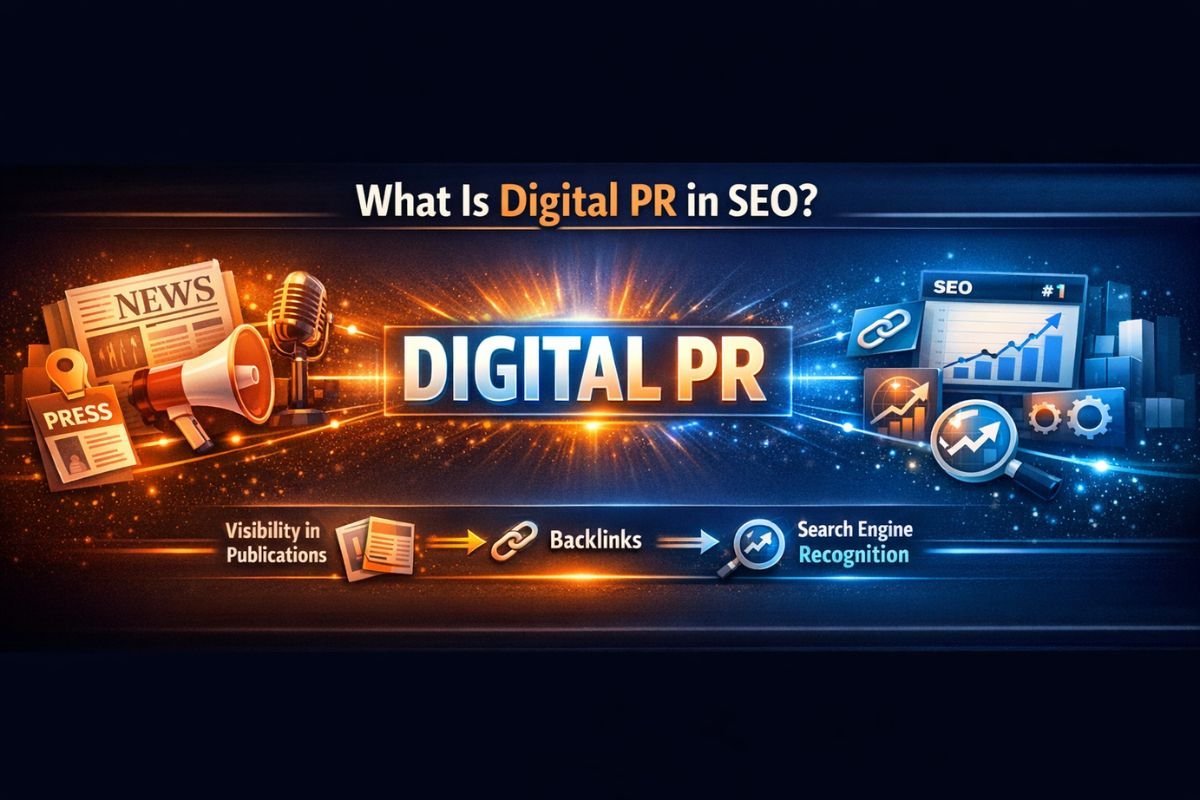
Digital PR in SEO is the process of attaining visibility in publications. In most cases, these publications have the ability to provide backlinks. Digital PR is the crossroads of traditional public relations and SEO. However, the end result differs. It is no longer simply attaining visibility, but rather the process of attaining visibility that search engines recognize.

What Digital PR in SEO Actually Includes

At its core, Digital PR is the process of attaining references from sources that have already attained credibility.

This includes:

  • Being mentioned in online publications
  • Being featured in publications
  • Being quoted or featured as a contributor to a publication
  • Being featured as a brand, specifically as it relates to a particular publication or trend

In most cases, these publications have the ability to provide backlinks. However, the end result of the backlink differs. It is no longer simply attaining a backlink, but rather attaining a backlink from a source that has already attained credibility.

Why These Mentions Matter

In SEO, search engines recognize the environment of the link. In other words, the link does not simply exist as a standalone entity. It exists within the environment of the publication. In the case of Digital PR, the publication has already attained credibility.

Why Digital PR Matters

Digital PR matters as a way of attaining SEO. It matters as a way of attaining credibility. It matters as a way of attaining visibility.

However, the end result of attaining visibility differs. It is no longer simply attaining visibility, but rather attaining visibility from a source that has already attained credibility. It is no longer simply attaining visibility, but rather attaining visibility as a contributor or as a featured presence within a publication.

Digital PR vs. traditional link building

Digital PR in the context of SEO is often similar to link building. However, it is not the same process and outcome.

In the case of traditional link building, the link is often inserted with a specific intent.

In the case of Digital PR, the link is a secondary outcome. The primary outcome is to be featured on the page. The inclusion of a link will depend on the way the publication handles references.


Related Posts

Journalists Create Backlinks

How Journalists Create Backlinks Through Digital PR

March 21, 2026
Media Mentions That Turn into Backlinks

How to Get Media Mentions That Turn into Backlinks

March 21, 2026
Digital PR Helps in Earning High Authority Backlinks

How Digital PR Helps in Earning High Authority Backlinks

March 19, 2026

Digital PR vs Traditional Link Building

March 19, 2026

The difference between the two types of links is that:

  • traditional links can look structured
  • Digital PR links look more organic

The difference between the two is not the quality of the link, but the way it is implemented on the page.

How Digital PR is different from traditional PR

Digital PR for SEO is similar to traditional PR. However, the objective is not the same.

In the case of traditional PR, the objective is to increase the perception of the brand, the number of people the brand can reach, and the way the brand is perceived.

In the case of Digital PR, the above factors are the same. However, the following additional factors are considered:

  • Whether the publication will include a link
  • How the page will be perceived
  • How the publication will increase visibility

Thus, Digital PR is a form of PR with a focus on SEO.

Where Digital PR signals are strongest

Not all publications are equal.

Being mentioned in passing is different from being used as a source in an article. Being used as a source in an article is different from having your link used to support your argument in that same article.

The strength of Digital PR in SEO generally increases in situations where:

  • The brand is part of the main narrative
  • The mention supports the subject of the article
  • The link naturally connects to the content that is being discussed

These are more about the context in which you are used rather than the link itself.

Where this concept of Digital PR in SEO gets most misunderstood

The concept of Digital PR in SEO is most commonly used as a way to get high-quality links. However, this is more about how you get them rather than how you are used in the context of getting them.

The idea that getting mentioned in the press automatically gives you better SEO is where this gets most confusing.

Some mentions are going to give you strong signals, while others are just brand awareness and do not necessarily contribute to your SEO.

As time goes on, Digital PR in SEO becomes easier to understand. It is no longer about getting links, but more about getting mentioned in the conversation where links can become part of that.


Tags: Authority modelingAuthority signalslink signalsSEO fundamentals
ShareTweetPin

Related Posts

Passive Link Acquisition

Passive Links vs. Active Link Building

by Backlink Sense
April 16, 2026
0

Passive links and active link building both result in backlinks. However, they do so...

Read moreDetails

What Is LSI Anchor Text in SEO?

April 14, 2026

What Is Long Tail Anchor Text?

April 14, 2026

How Surrounding Text Strengthens Anchor Relevance

April 14, 2026

Leave a Reply Cancel reply

Your email address will not be published. Required fields are marked *

  • About Us
  • Terms of Use
  • Use of Cookies
  • Affiliate Disclosure
  • Contact
  • Privacy Policy
2026 BacklinkSense © All rights reserved.

Welcome Back!

Login to your account below

Forgotten Password?

Retrieve your password

Please enter your username or email address to reset your password.

Log In

Accessibility Toolbar

  • Powered with favoriteLove by Codenroll
No Result
View All Result
  • Anchor Text
    • Anchor Text Context
    • Anchor Text Distribution
    • Anchor Text Strategy
    • Types of Anchor Text
  • Backlink Quality and Analysis
    • Authority and Trust Signals
    • Backlink Analysis Tools
    • Link Context
    • Link Placement
    • Link Quality Signals
    • Link Relevance
  • Link Building Basics
    • How Google Ranks Links
    • Types of Backlinks
    • What Are Backlinks
    • Why Backlinks Matter
  • Link Building Methods
    • Asset-Based Link Building
    • Content-Based Link Building
    • Digital PR and Authority Mentions
    • Passive Link Acquisition
    • Resource and Reference Links
  • Link Building Risks
    • Link Penalties
    • Link Velocity
    • Low-Quality Backlinks
    • Over-Optimized Anchor Text
    • Unnatural Link Patterns
  • Link Outreach
    • Finding Outreach Targets
    • Follow Up in Outreach
    • Outreach Email Strategies
    • Outreach Personalization
    • Relationship Based Outreach

2026 BacklinkSense © All rights reserved.

This website uses cookies to improve your experience and analyze site performance. By continuing to browse, you agree to our Privacy and Cookie Policy.