
Friday, August 7, 2026
BacklinkSense
  • Anchor Text
    • Anchor Text Context
    • Anchor Text Distribution
    • Anchor Text Strategy
    • Types of Anchor Text
  • Backlink Quality and Analysis
    • Authority and Trust Signals
    • Backlink Analysis Tools
    • Link Context
    • Link Placement
    • Link Quality Signals
    • Link Relevance
  • Link Building Basics
    • How Google Ranks Links
    • Types of Backlinks
    • What Are Backlinks
    • Why Backlinks Matter
  • Link Building Methods
    • Asset-Based Link Building
    • Content-Based Link Building
    • Digital PR and Authority Mentions
    • Passive Link Acquisition
    • Resource and Reference Links
  • Link Building Risks
    • Link Penalties
    • Link Velocity
    • Low-Quality Backlinks
    • Over-Optimized Anchor Text
    • Unnatural Link Patterns
  • Link Outreach
    • Finding Outreach Targets
    • Follow Up in Outreach
    • Outreach Email Strategies
No Result
View All Result
  • Anchor Text
    • Anchor Text Context
    • Anchor Text Distribution
    • Anchor Text Strategy
    • Types of Anchor Text
  • Backlink Quality and Analysis
    • Authority and Trust Signals
    • Backlink Analysis Tools
    • Link Context
    • Link Placement
    • Link Quality Signals
    • Link Relevance
  • Link Building Basics
    • How Google Ranks Links
    • Types of Backlinks
    • What Are Backlinks
    • Why Backlinks Matter
  • Link Building Methods
    • Asset-Based Link Building
    • Content-Based Link Building
    • Digital PR and Authority Mentions
    • Passive Link Acquisition
    • Resource and Reference Links
  • Link Building Risks
    • Link Penalties
    • Link Velocity
    • Low-Quality Backlinks
    • Over-Optimized Anchor Text
    • Unnatural Link Patterns
  • Link Outreach
    • Finding Outreach Targets
    • Follow Up in Outreach
    • Outreach Email Strategies
No Result
View All Result
BacklinkSense
No Result
View All Result

Home - Link Building Risks - Low-Quality Backlinks - Can You Remove Backlinks?

Can You Remove Backlinks?

Can You Remove Backlinks?

Backlink Sense by Backlink Sense
February 8, 2026
in Low-Quality Backlinks
Reading Time: 3 mins read
Share On FacebookShare On Reddit

Page Contents

  • 1. Physical Removal of Backlinks
  • 2. Disavow: Not the Same as Removal
  • 3. Related Posts
  • 4. How Do Search Engines Evaluate Low-Quality Backlinks?
  • 5. Can Competitors Create Damaging Backlinks?
  • 6. When Is Removal Necessary?
  • 7. The Risk of Acting Too Fast
  • 8. When Is Disavow Most Relevant?
  • 9. Removal vs. Neutralization
  • 10. A Measured Perspective

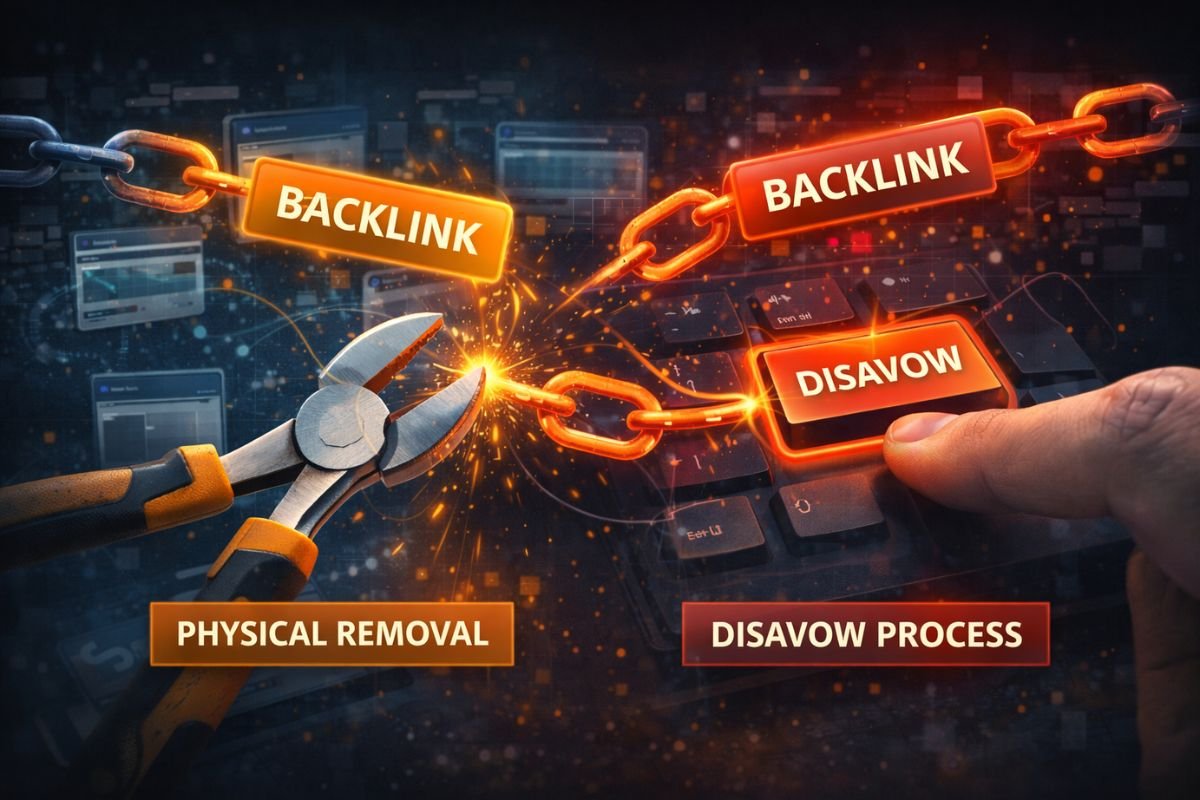
Yes, you can remove backlinks, but only in certain ways and not necessarily directly. There are two ways to address backlinks: physical removal or through a disavow process. There is a clear distinction between the two, especially from a risk perspective.

Backlinks are located on other sites, and that defines the limitation. They are not under your direct control.

Physical Removal of Backlinks

Physical removal means removing the backlink from the site where it exists.

If a backlink was established on:

  • A guest post
  • A directory
  • A forum thread
  • A partner site

The only way to remove it is for that site to delete or edit the link.

You cannot remove a backlink from your own site because the link does not live there. The referring site controls its content.

Physical removal is possible if:

  • You originally placed the backlink
  • The site owner or administrator is responsive
  • The backlink was created through collaboration

However, some backlinks cannot be easily removed, especially if the referring site is inactive, unresponsive, or low quality.

Disavow: Not the Same as Removal

Using a disavow process does not remove the backlink.

Disavow means asking Google or other search engines to disregard specific links pointing to your site.


Related Posts

How Do Search Engines Evaluate Low-Quality Backlinks?

July 27, 2026

Can Competitors Create Damaging Backlinks?

July 27, 2026

The link still exists.
Users can still click it.
But you are signaling that you do not endorse that connection.

Disavow is signal-based, not physical.

It does not delete history or content from the web. It changes how search engines interpret certain links.

When Is Removal Necessary?

The question “Can you remove backlinks?” is usually tied to risk.

Backlinks may become a concern when:

  • They are clearly manipulative
  • They originate from spam sites
  • They come from bulk networks that are irrelevant
  • They result from aggressive link-building practices

In these situations, removal or disavowal may be considered.

However, not all low-quality backlinks need action. Search engines are increasingly capable of ignoring many irrelevant or spammy links automatically. Attempting to remove every questionable backlink can be unnecessary and disruptive.

The Risk of Acting Too Fast

One common mistake is reacting too quickly.

Seeing unfamiliar or low quality backlinks does not automatically mean you are under negative SEO. Many sites accumulate poor backlinks and continue performing normally.

Disavowing or removing links without proper analysis can:

  • Eliminate positive signals
  • Reduce link diversity
  • Disrupt historical patterns

Risk evaluation should be measured and pattern-based.

If the overall backlink profile appears natural and stable, a small number of weak links may not justify intervention.

When Is Disavow Most Relevant?

Disavow becomes most relevant when:

You receive a manual action for unnatural links
There is clear evidence of past link schemes
Large scale manipulative link building occurred historically

Even then, disavow should be precise.

Disavowing domains without proper review may eliminate legitimate citations. The tool exists to mitigate risk, not to cosmetically clean a profile.

It is not routine maintenance.

Removal vs. Neutralization

To clarify the difference:

Physical Removal
The link is deleted from the source. It no longer exists.

Disavow
The link remains live, but you request that search engines ignore it.

One changes reality.
The other changes the interpretation. Understanding this distinction prevents unnecessary action.

A Measured Perspective

Yes, you can remove backlinks, but only if you control the referring site or obtain cooperation from its owner. In most other cases, the practical option is disavow.

Backlink analysis is increasingly complex. Removal or disavow should be based on consistent risk patterns, not fear of isolated links.

Backlinks operate within a broader trust system. Intervening in that system should be deliberate, not reactive.


Tags: Backlink evaluationBacklink removalDisavow strategySEO risk managementUnnatural links
ShareShareShareShareSend

Related Posts

Anchor Text Influence Rankings
Anchor Text Strategy

How Does Anchor Text Influence Rankings?

by Backlink Sense
February 9, 2026
Do Backlinks Still Work in 2026?
Why Backlinks Matter

Do Backlinks Still Work in 2026?

by Backlink Sense
February 8, 2026
Link Context

Does Content Relevance around the Link Matter for SEO?

by Backlink Sense
March 6, 2026
Sci-fi illustration showing how Google determines link quality, as two aliens study a glowing orb representing multiple ranking signals
Link Quality Signals

How Google Determines Link Quality

by Backlink Sense
May 20, 2026
Structural Errors in Link Prospecting Logic
Finding Outreach Targets

Structural Errors in Link Prospecting Logic: A Quiet Risk Analysis

by Backlink Sense
February 28, 2026
Load More
  • About Us
  • Terms of Use
  • Use of Cookies
  • Affiliate Disclosure
  • Contact
  • Privacy Policy
2026 BacklinkSense © All rights reserved.

Welcome Back!

Login to your account below

Forgotten Password?

Retrieve your password

Please enter your username or email address to reset your password.

Log In

Accessibility Toolbar

  • Powered with favoriteLove by Codenroll
No Result
View All Result
  • Anchor Text
    • Anchor Text Context
    • Anchor Text Distribution
    • Anchor Text Strategy
    • Types of Anchor Text
  • Backlink Quality and Analysis
    • Authority and Trust Signals
    • Backlink Analysis Tools
    • Link Context
    • Link Placement
    • Link Quality Signals
    • Link Relevance
  • Link Building Basics
    • How Google Ranks Links
    • Types of Backlinks
    • What Are Backlinks
    • Why Backlinks Matter
  • Link Building Methods
    • Asset-Based Link Building
    • Content-Based Link Building
    • Digital PR and Authority Mentions
    • Passive Link Acquisition
    • Resource and Reference Links
  • Link Building Risks
    • Link Penalties
    • Link Velocity
    • Low-Quality Backlinks
    • Over-Optimized Anchor Text
    • Unnatural Link Patterns
  • Link Outreach
    • Finding Outreach Targets
    • Follow Up in Outreach
    • Outreach Email Strategies

2026 BacklinkSense © All rights reserved.

This website uses cookies to improve your experience and analyze site performance. By continuing to browse, you agree to our Privacy and Cookie Policy.