

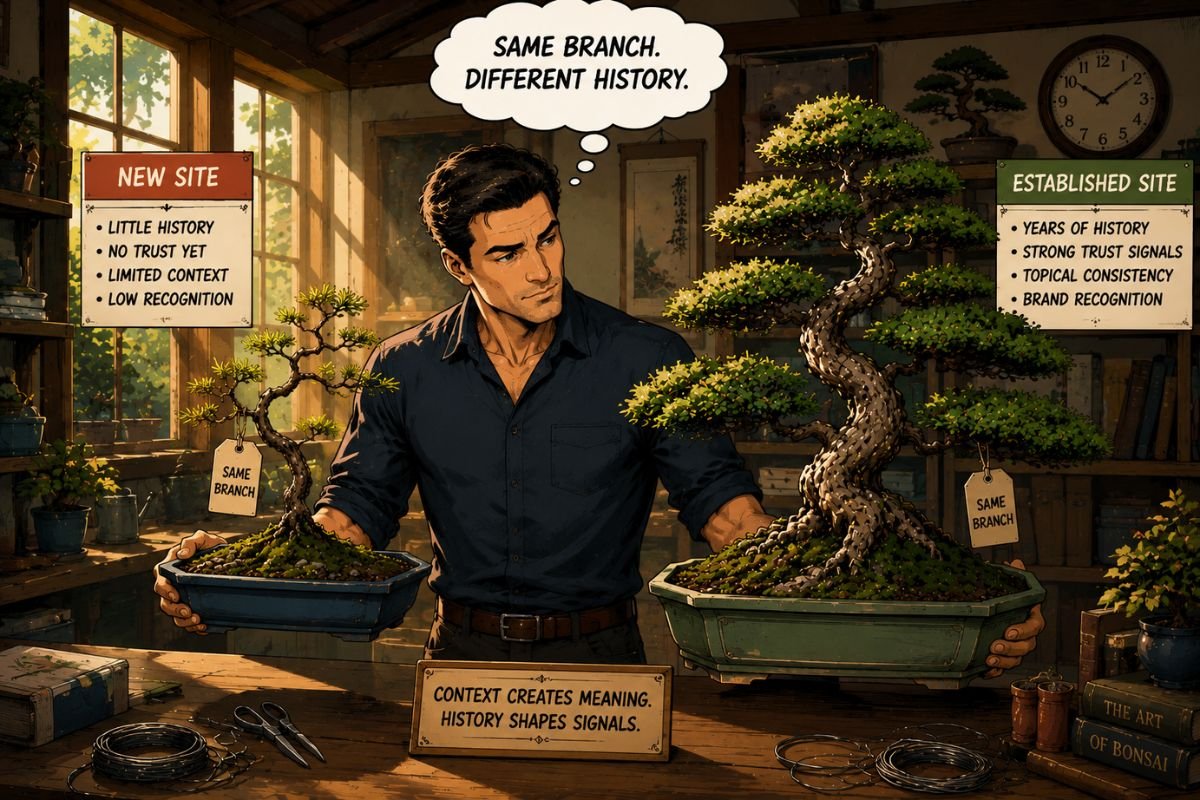

Anchor text distribution can look different on a new website compared with an existing one, even when some backlinks use the same clickable wording. One major reason is that a new site often has fewer backlinks, so each new link can represent a much larger part of the overall distribution.
Anchor text is the clickable wording used in a link. Its distribution describes the mix of that wording across a backlink profile (the collection of links from other websites pointing to a site or page).
Imagine a new site with ten backlinks. If four use similar anchor text, that wording represents 40 percent of the profile. Add the same four links to a site with hundreds of existing backlinks and their proportional effect becomes much smaller.
| New Website | Existing Website | |
|---|---|---|
| Example backlink profile | 10 backlinks | 500 backlinks |
| Similar new anchors added | 4 | 4 |
| Effect on the distribution | Large | Much smaller |
| How quickly can the mix change? | Very quickly | Usually more gradually |
The important difference is not simply whether a website is new or old. It is how much backlink history already exists behind those numbers.
This does not mean Google gives older websites special treatment. It means the size and history of the backlink profile can change what the same group of links represents.
Why Can a New Site’s Distribution Change So Quickly?
When a website has only a small number of backlinks, every new link has more power to change the percentages.
For example, adding five similarly worded backlinks to a profile containing ten existing links can noticeably change its distribution. Adding those five links to a profile containing hundreds of links may barely change the overall percentages.
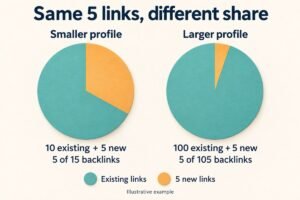
This is also why anchor distributions can evolve during link acquisition. The original backlinks do not need to change. New links can change the proportions simply by becoming part of the profile.
Why Might an Existing Site Show More Anchor Variation?
An existing website may have received links from different people, websites, and contexts. One writer might use the brand name, another a descriptive phrase, and someone else the URL.
As more of these different linking situations occur, the anchor text mix can become broader. A brand that becomes more widely referenced may also begin receiving more links using its name or URL rather than descriptive wording.
But age alone does not create that diversity. An old site with few backlinks can still have a small and concentrated profile. What matters is the linking history accumulated during that time.
This difference helps explain why anchor text distribution can influence ranking interpretation and why natural anchor distributions cannot be understood from percentages alone.
Does an Older Site Make Repetitive Anchor Text Safe?
No. A larger or older backlink profile does not make manipulated anchor text safe.
Google’s spam policies identify links created primarily to manipulate rankings as link spam and include certain uses of optimized anchor text among their examples. An established site does not receive an exemption simply because it has existed longer.
What can differ is the proportion. Ten similarly worded links would be highly visible in a profile that previously contained only ten backlinks, while the same ten links would represent a much smaller portion of a profile containing thousands.
That difference comes from the composition of the backlink profile, not immunity created by age. This is why comparing anchor types across a link profile requires looking beyond a single percentage.
Site Age and Link History Are Not the Same Thing
An old domain can have very few backlinks, while a younger website can attract many independent links in a short period. Site age tells us how long the domain has existed. Link history tells us what has actually accumulated around it.
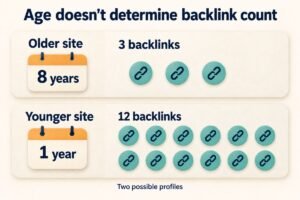
For anchor text analysis, that second distinction is more useful. A new site often starts with a smaller backlink profile, so a handful of new links can reshape its distribution quickly. An established site may already have enough links that the same addition changes very little.
That is why the maturity of a website should not be treated as a simple question of age. When examining anchor text distribution, the more useful question is what kind of backlink history sits behind the numbers.