
Sunday, March 15, 2026
BacklinkSense
  • Anchor Text
    • Anchor Text Context
    • Anchor Text Distribution
    • Anchor Text Strategy
    • Types of Anchor Text
  • Backlink Quality and Analysis
    • Authority and Trust Signals
    • Backlink Analysis Tools
    • Link Context
    • Link Placement
    • Link Quality Signals
    • Link Relevance
  • Link Building Basics
    • How Google Ranks Links
    • Types of Backlinks
    • What Are Backlinks
    • Why Backlinks Matter
  • Link Building Methods
    • Asset-Based Link Building
    • Content-Based Link Building
    • Digital PR and Authority Mentions
    • Passive Link Acquisition
    • Resource and Reference Links
  • Link Building Risks
    • Link Penalties
    • Link Velocity
    • Low-Quality Backlinks
    • Over-Optimized Anchor Text
    • Unnatural Link Patterns
  • Link Outreach
    • Finding Outreach Targets
    • Follow Up in Outreach
    • Outreach Email Strategies
    • Outreach Personalization
    • Relationship Based Outreach
No Result
View All Result
  • Anchor Text
    • Anchor Text Context
    • Anchor Text Distribution
    • Anchor Text Strategy
    • Types of Anchor Text
  • Backlink Quality and Analysis
    • Authority and Trust Signals
    • Backlink Analysis Tools
    • Link Context
    • Link Placement
    • Link Quality Signals
    • Link Relevance
  • Link Building Basics
    • How Google Ranks Links
    • Types of Backlinks
    • What Are Backlinks
    • Why Backlinks Matter
  • Link Building Methods
    • Asset-Based Link Building
    • Content-Based Link Building
    • Digital PR and Authority Mentions
    • Passive Link Acquisition
    • Resource and Reference Links
  • Link Building Risks
    • Link Penalties
    • Link Velocity
    • Low-Quality Backlinks
    • Over-Optimized Anchor Text
    • Unnatural Link Patterns
  • Link Outreach
    • Finding Outreach Targets
    • Follow Up in Outreach
    • Outreach Email Strategies
    • Outreach Personalization
    • Relationship Based Outreach
No Result
View All Result
BacklinkSense
No Result
View All Result
ADVERTISEMENT
Which Tool Is Best for Backlinks?

Which Tool Is Best for Backlinks?

Backlink Sense by Backlink Sense
February 8, 2026
in Backlink Analysis Tools
Reading Time: 4 mins read
0
Share on FacebookShare on Twitter

Page Contents

  • 1 Understanding What Backlink Tools Actually Do
  • 2 Use Case 1: Competitive Research
  • 3 Related Posts
  • 4 How to Analyze Backlinks Using SEO Tools
  • 5 How to Audit Your Link Profile for Risk?
  • 6 Which Website Has the Most Backlinks?
  • 7 Use Case 2: Link Monitoring and Alerts
  • 8 Use Case 3: Risk Assessment
  • 9 Use Case 4: Outreach and Prospecting
  • 10 Why There Is No Absolute Winner
  • 11 How to Choose the “Best” Backlink Tool
  • 12 Limitations to Keep in Mind
  • 13 A Balanced Perspective

There isn’t one single tool that is universally “best” for backlinks. The answer depends on what you are trying to accomplish, how deep you need the data to go, and what your focus is. Different tools rely on different data models, and that shapes their effectiveness in specific situations.

So the question “Which tool is best for backlinks?” usually requires a follow-up: best for what purpose?

Understanding What Backlink Tools Actually Do

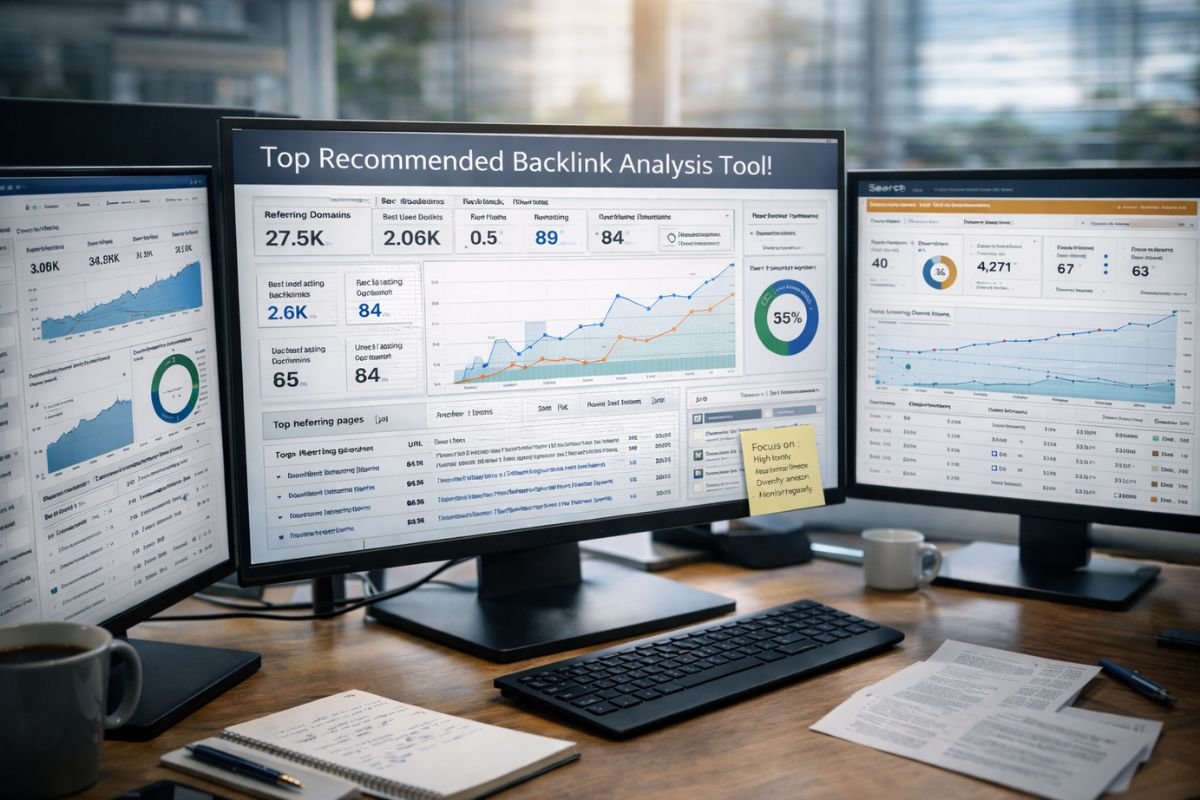
Backlink tools do not have access to the entire web. Each tool operates its own crawling infrastructure and builds its own index based on what it discovers. This means:

No tool sees every backlink.
Every tool has blind spots.
Every tool measures slightly different signals.

Most backlink tools provide data such as:

  • Referring domains
  • Anchor text distribution
  • Link growth over time
  • Top linked pages
  • Toxicity indicators
  • Competitor comparisons

The real differences lie in index size, update frequency, and how authority or risk is modeled.

“Best” is therefore contextual.

Use Case 1: Competitive Research

If your goal is competitor backlink analysis, you typically need:

  • Large index coverage
  • Filtering capabilities
  • Domain-level analysis
  • Historical growth data

In this context, tools with broader crawling infrastructure tend to be more useful. The focus is less on individual links and more on patterns, authority clusters, and acquisition strategies.

Common limitations include:

Related Posts

How to Analyze Backlinks Using SEO Tools

March 7, 2026

How to Audit Your Link Profile for Risk?

March 2, 2026
Which Website Has the Most Backlinks?

Which Website Has the Most Backlinks?

February 8, 2026
  • Incomplete historical visibility
  • Delays in discovering new links
  • Overreliance on proprietary authority metrics

No tool perfectly represents reality. Cross-checking data between tools often improves accuracy.

Use Case 2: Link Monitoring and Alerts

If the question is about monitoring, the requirements shift.

You may need:

  • Alerts for new or lost links
  • Anchor text tracking
  • Link velocity tracking
  • Domain-level changes

Here, update frequency may matter more than raw index size. A tool with faster refresh cycles can be more useful for monitoring purposes.

Limitations in this use case include:

  • Delayed link detection
  • False positives for lost links
  • Noise from low-influence domains

Monitoring platforms are not always optimized for deep research.

Use Case 3: Risk Assessment

Another major use case involves backlink risk evaluation.

This may include:

  • Identifying suspicious domains
  • Detecting unnatural anchor patterns
  • Spotting link clusters
  • Evaluating potentially manipulative behavior

Some tools provide toxicity or spam scores. These can be useful starting points but should not be treated as definitive judgments.

Limitations include:

  • Scoring systems may misclassify both legitimate and manipulative links
  • Flags are pattern-based, not intent-based
  • Overreliance on numerical metrics may lead to unnecessary disavowal decisions

Human review often remains necessary.

Use Case 4: Outreach and Prospecting

For outreach strategies, backlink tools assist with:

  • Identifying competitor backlinks
  • Finding broken link opportunities
  • Filtering domains by topical relevance
  • Discovering potential prospects

In outreach scenarios, segmentation and filtering are often more important than authority scores.

Common limitations include:

  • Outdated contact information
  • Imperfect topical filters
  • Large lists that do not guarantee editorial placement

Backlink tools support discovery, but they do not replace editorial judgment.

Why There Is No Absolute Winner

Each backlink tool differs in:

  • Crawling speed
  • Index size
  • Metric models
  • Interface design
  • Refresh cycles

Because of these differences, two tools may report different backlink counts for the same domain. That does not mean one is correct and the other is wrong. It reflects variations in data collection and modeling.

How to Choose the “Best” Backlink Tool

The best tool depends entirely on your objective.

  • If your goal is competitor gap analysis, one platform may be better suited.
  • If your goal is ongoing monitoring, another may perform better.
  • If your goal is risk evaluation, a different feature set may be more useful.

The evaluation process begins with defining your purpose.

Limitations to Keep in Mind

All backlink tools share structural limitations:

  • They cannot see private or blocked links.
  • They cannot interpret nuance the way a human can.
  • Authority metrics are proprietary and not direct ranking factors.
  • Data delays create temporary discrepancies.

A backlink tool is a model of the web, not the web itself. Recognizing that prevents overconfidence in any single metric.

A Balanced Perspective

When asking “Which tool is best for backlinks?”, the more accurate question is “Best for what?”

There is no universal winner because backlink evaluation has multiple dimensions. A practical approach is to rely on one primary platform and validate key findings with a secondary source.

Backlink tools are analytical instruments. Their effectiveness depends on how precisely they match your goal.

ShareTweetPin

Related Posts

Types of Anchor Text

What is Image Anchor Text?

by Backlink Sense
March 15, 2026
0

Image anchor text is a type of link wherein the anchor is not text...

Read moreDetails

How to Analyze Anchor Text Distribution in a Backlink Profile

March 15, 2026

How Much Branded Anchor Text Is Natural?

March 13, 2026

Anchor Text Patterns That Can Trigger Link Spam Signals

March 13, 2026
  • About Us
  • Terms of Use
  • Use of Cookies
  • Affiliate Disclosure
  • Contact
  • Privacy Policy
2026 BacklinkSense © All rights reserved.

Welcome Back!

Login to your account below

Forgotten Password?

Retrieve your password

Please enter your username or email address to reset your password.

Log In

Accessibility Toolbar

  • Powered with favoriteLove by Codenroll
No Result
View All Result
  • Anchor Text
    • Anchor Text Context
    • Anchor Text Distribution
    • Anchor Text Strategy
    • Types of Anchor Text
  • Backlink Quality and Analysis
    • Authority and Trust Signals
    • Backlink Analysis Tools
    • Link Context
    • Link Placement
    • Link Quality Signals
    • Link Relevance
  • Link Building Basics
    • How Google Ranks Links
    • Types of Backlinks
    • What Are Backlinks
    • Why Backlinks Matter
  • Link Building Methods
    • Asset-Based Link Building
    • Content-Based Link Building
    • Digital PR and Authority Mentions
    • Passive Link Acquisition
    • Resource and Reference Links
  • Link Building Risks
    • Link Penalties
    • Link Velocity
    • Low-Quality Backlinks
    • Over-Optimized Anchor Text
    • Unnatural Link Patterns
  • Link Outreach
    • Finding Outreach Targets
    • Follow Up in Outreach
    • Outreach Email Strategies
    • Outreach Personalization
    • Relationship Based Outreach

2026 BacklinkSense © All rights reserved.

This website uses cookies to improve your experience and analyze site performance. By continuing to browse, you agree to our Privacy and Cookie Policy.