Sunday, March 15, 2026
BacklinkSense
  • Anchor Text
    • Anchor Text Context
    • Anchor Text Distribution
    • Anchor Text Strategy
    • Types of Anchor Text
  • Backlink Quality and Analysis
    • Authority and Trust Signals
    • Backlink Analysis Tools
    • Link Context
    • Link Placement
    • Link Quality Signals
    • Link Relevance
  • Link Building Basics
    • How Google Ranks Links
    • Types of Backlinks
    • What Are Backlinks
    • Why Backlinks Matter
  • Link Building Methods
    • Asset-Based Link Building
    • Content-Based Link Building
    • Digital PR and Authority Mentions
    • Passive Link Acquisition
    • Resource and Reference Links
  • Link Building Risks
    • Link Penalties
    • Link Velocity
    • Low-Quality Backlinks
    • Over-Optimized Anchor Text
    • Unnatural Link Patterns
  • Link Outreach
    • Finding Outreach Targets
    • Follow Up in Outreach
    • Outreach Email Strategies
    • Outreach Personalization
    • Relationship Based Outreach
No Result
View All Result
  • Anchor Text
    • Anchor Text Context
    • Anchor Text Distribution
    • Anchor Text Strategy
    • Types of Anchor Text
  • Backlink Quality and Analysis
    • Authority and Trust Signals
    • Backlink Analysis Tools
    • Link Context
    • Link Placement
    • Link Quality Signals
    • Link Relevance
  • Link Building Basics
    • How Google Ranks Links
    • Types of Backlinks
    • What Are Backlinks
    • Why Backlinks Matter
  • Link Building Methods
    • Asset-Based Link Building
    • Content-Based Link Building
    • Digital PR and Authority Mentions
    • Passive Link Acquisition
    • Resource and Reference Links
  • Link Building Risks
    • Link Penalties
    • Link Velocity
    • Low-Quality Backlinks
    • Over-Optimized Anchor Text
    • Unnatural Link Patterns
  • Link Outreach
    • Finding Outreach Targets
    • Follow Up in Outreach
    • Outreach Email Strategies
    • Outreach Personalization
    • Relationship Based Outreach
No Result
View All Result
BacklinkSense
No Result
View All Result
ADVERTISEMENT
Difference Between Branded Anchor Text and Exact Match

What Is the Difference Between Branded Anchor Text and Exact Match Anchor Text?

Backlink Sense by Backlink Sense
February 11, 2026
in Anchor Text Strategy
Reading Time: 4 mins read
0
Share on FacebookShare on Twitter

Page Contents

  • 1 What Is Branded Anchor Text?
  • 2 What Is Exact Match Anchor Text?
  • 3 Core Distinction
  • 4 How They Are Interpreted Algorithmically
  • 5 Related Posts
  • 6 How Much Branded Anchor Text Is Natural?
  • 7 Anchor Text Patterns That Can Trigger Link Spam Signals
  • 8 Signs Your Anchor Text Profile Looks Manipulative
  • 9 How to select anchor text based on context, not keywords?
  • 10 When Is Branded Anchor Text Natural?
  • 11 When Is Exact Match Anchor Text Natural?
  • 12 Branded vs Exact Match in Context

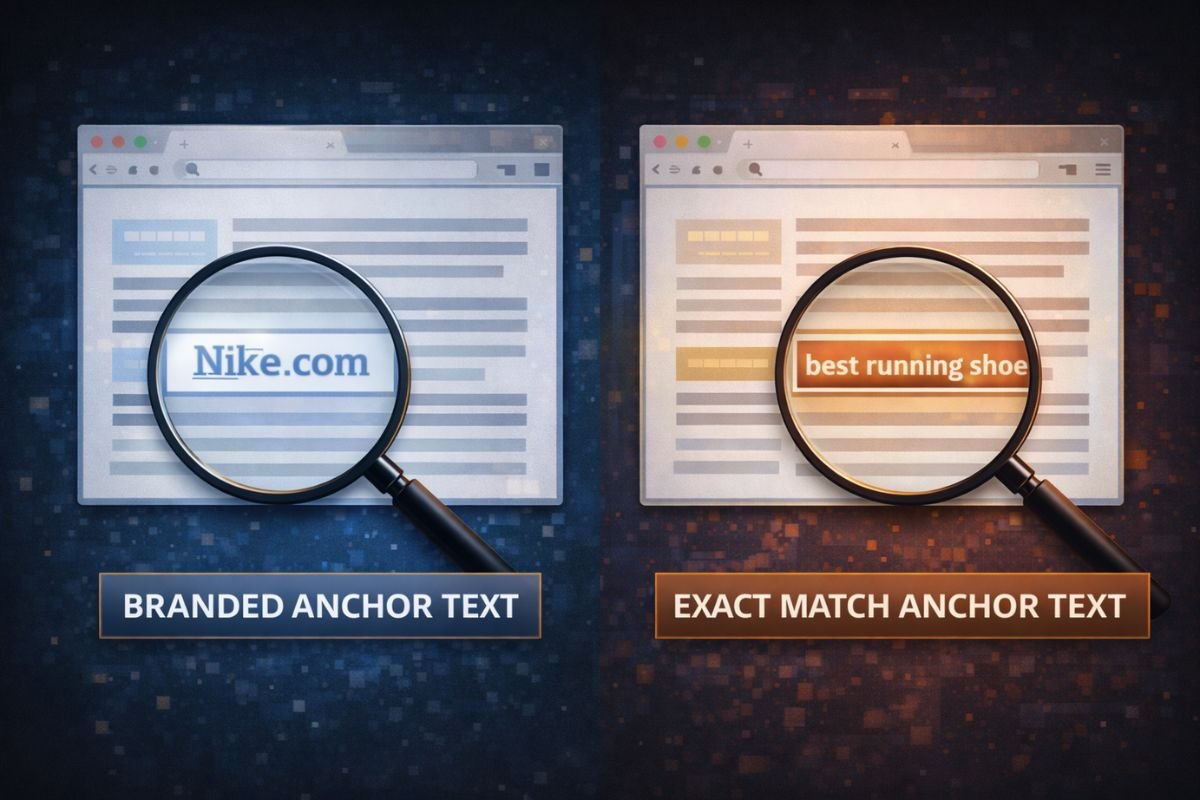
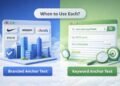
The difference between Branded Anchor Text and Exact Match Anchor Text lies in wording and representation. Branded Anchor Text uses a brand name as the anchor, while Exact Match Anchor Text uses the precise keyword a page is targeting.

What Is Branded Anchor Text?

Branded Anchor Text occurs when the anchor consists of a brand name.

For example, if the anchor is “BacklinkSense” and it links to the homepage, it is branded anchor text.

This type of anchor does not reference a keyword or search phrase. Instead, it signals recognition of an entity. In most cases, branded anchors indicate familiarity with a company, product, or organization rather than a topic.

What Is Exact Match Anchor Text?

Exact Match Anchor Text occurs when the anchor is identical to the primary keyword the destination page targets.

For example, if a page targets the phrase “link building strategies,” and the anchor text is exactly “link building strategies,” that is exact match anchor text.

Here, the wording directly reflects the topic the page is optimized around.

Core Distinction

The difference between Branded Anchor Text and Exact Match Anchor Text lies in what each represents.

Branded anchor text points to identity, while exact match anchor text points to the topic, and this distinction clarifies how each functions within a link profile. Even when both lead to the same destination, they communicate different signals.

How They Are Interpreted Algorithmically

Both types of anchor text are interpreted as signals about the linked page. The interpretation depends on the wording and how it aligns with the context.
Related Posts

How Much Branded Anchor Text Is Natural?

March 13, 2026

Anchor Text Patterns That Can Trigger Link Spam Signals

March 13, 2026

Signs Your Anchor Text Profile Looks Manipulative

February 26, 2026

How to select anchor text based on context, not keywords?

February 13, 2026

Branded anchors tend to reinforce entity recognition.

Exact match anchors tend to reinforce topical association.

They are not interchangeable. One communicates who is being referenced. The other communicates what the page is about.

When Is Branded Anchor Text Natural?

Branded anchor text appears natural in situations such as:

  • Referencing a company as a source
  • Mentioning a tool or service by name
  • Citing an organization within an article

In these cases, the brand name functions as a reference point rather than a keyword target.

When Is Exact Match Anchor Text Natural?

Exact match anchor text can appear natural when:

The link is embedded within descriptive content
The surrounding sentence genuinely reflects the keyword phrase

For example, in a paragraph discussing “link building strategies”, linking that exact phrase may read naturally if it fits the sentence flow.

The key factor is readability. If the anchor appears inserted purely to match a keyword, it becomes noticeable.

Branded vs Exact Match in Context

The difference is not about superiority but about implication. Branded anchor text signals association with an entity, while exact match anchor text signals alignment with a specific topic.

Understanding this difference helps clarify how links communicate meaning across sources. Even when both forms lead to the same page, they frame that page differently.

Tags: anchor text comparisonbranded anchor textexact match anchor textlink terminology
ShareTweetPin

Related Posts

Anchor Text Strategy

How Much Branded Anchor Text Is Natural?

by Backlink Sense
March 13, 2026
0

Branded anchor text is the anchor text used in a link that contains the...

Read moreDetails

What Is Branded Anchor Text?

March 9, 2026

How Much Exact Match Is Too Much?

March 3, 2026
What Is a Nofollow Backlink?

What Is a Nofollow Backlink?

February 17, 2026
  • About Us
  • Terms of Use
  • Use of Cookies
  • Affiliate Disclosure
  • Contact
  • Privacy Policy
2026 BacklinkSense © All rights reserved.

Welcome Back!

Login to your account below

Forgotten Password?

Retrieve your password

Please enter your username or email address to reset your password.

Log In

Accessibility Toolbar

  • Powered with favoriteLove by Codenroll
No Result
View All Result
  • Anchor Text
    • Anchor Text Context
    • Anchor Text Distribution
    • Anchor Text Strategy
    • Types of Anchor Text
  • Backlink Quality and Analysis
    • Authority and Trust Signals
    • Backlink Analysis Tools
    • Link Context
    • Link Placement
    • Link Quality Signals
    • Link Relevance
  • Link Building Basics
    • How Google Ranks Links
    • Types of Backlinks
    • What Are Backlinks
    • Why Backlinks Matter
  • Link Building Methods
    • Asset-Based Link Building
    • Content-Based Link Building
    • Digital PR and Authority Mentions
    • Passive Link Acquisition
    • Resource and Reference Links
  • Link Building Risks
    • Link Penalties
    • Link Velocity
    • Low-Quality Backlinks
    • Over-Optimized Anchor Text
    • Unnatural Link Patterns
  • Link Outreach
    • Finding Outreach Targets
    • Follow Up in Outreach
    • Outreach Email Strategies
    • Outreach Personalization
    • Relationship Based Outreach

2026 BacklinkSense © All rights reserved.

This website uses cookies to improve your experience and analyze site performance. By continuing to browse, you agree to our Privacy and Cookie Policy.