
Thursday, July 16, 2026
BacklinkSense
  • Anchor Text
    • Anchor Text Context
    • Anchor Text Distribution
    • Anchor Text Strategy
    • Types of Anchor Text
  • Backlink Quality and Analysis
    • Authority and Trust Signals
    • Backlink Analysis Tools
    • Link Context
    • Link Placement
    • Link Quality Signals
    • Link Relevance
  • Link Building Basics
    • How Google Ranks Links
    • Types of Backlinks
    • What Are Backlinks
    • Why Backlinks Matter
  • Link Building Methods
    • Asset-Based Link Building
    • Content-Based Link Building
    • Digital PR and Authority Mentions
    • Passive Link Acquisition
    • Resource and Reference Links
  • Link Building Risks
    • Link Penalties
    • Link Velocity
    • Low-Quality Backlinks
    • Over-Optimized Anchor Text
    • Unnatural Link Patterns
  • Link Outreach
    • Finding Outreach Targets
    • Follow Up in Outreach
    • Outreach Email Strategies
    • Outreach Personalization
    • Relationship Based Outreach
No Result
View All Result
  • Anchor Text
    • Anchor Text Context
    • Anchor Text Distribution
    • Anchor Text Strategy
    • Types of Anchor Text
  • Backlink Quality and Analysis
    • Authority and Trust Signals
    • Backlink Analysis Tools
    • Link Context
    • Link Placement
    • Link Quality Signals
    • Link Relevance
  • Link Building Basics
    • How Google Ranks Links
    • Types of Backlinks
    • What Are Backlinks
    • Why Backlinks Matter
  • Link Building Methods
    • Asset-Based Link Building
    • Content-Based Link Building
    • Digital PR and Authority Mentions
    • Passive Link Acquisition
    • Resource and Reference Links
  • Link Building Risks
    • Link Penalties
    • Link Velocity
    • Low-Quality Backlinks
    • Over-Optimized Anchor Text
    • Unnatural Link Patterns
  • Link Outreach
    • Finding Outreach Targets
    • Follow Up in Outreach
    • Outreach Email Strategies
    • Outreach Personalization
    • Relationship Based Outreach
No Result
View All Result
BacklinkSense
No Result
View All Result

Home - Link Building Basics - How Google Ranks Links - How Does Google Interpret Link Relationships?

How Does Google Interpret Link Relationships?

Backlink Sense by Backlink Sense
June 27, 2026
in How Google Ranks Links
Reading Time: 3 mins read
Share On FacebookShare On Reddit

Page Contents

  • 1 Links Establish More Than Just a Path Between Web Addresses
  • 2 Relationships Are Often Shaped By the Surrounding Information Context
  • 3 Related Posts
  • 4 Why Google Uses Multiple Link Signals
  • 5 How Similar Backlinks Create Different Ranking Signals
  • 6 Reasons Why Some Backlinks Transmit More Signals Than Others
  • 7 Surrounding Context Gives Additional Clues to Interpret Links
  • 8 Intentions Behind Linking Can Influence Its Interpretation
  • 9 Relationships Become More Obvious in the Presence of Repetitive Patterns
  • 10 Search Engines Analyze Connections, Not Individual Signals
  • 11 Connections Exist Within a Broader Informational Network
  • 12 Understanding the Meaning Is More Important Than Recognizing the Connection

Google does not understand link relationships from the mere presence of a link.

A link creates a connection, but a search engine is trying to comprehend the nature of this connection. Pages can be connected to refer, navigate, cite, explain, attribute, or access resources. The challenge is not recognizing the presence of the connection but understanding the reason for establishing it and the message this connection carries.

This is the reason why the term link relationships is used in the context of overall page interpretation rather than a single SEO signal.

Links Establish More Than Just a Path Between Web Addresses

At the most basic level, a hyperlink creates a path between two objects. However, a link can carry additional meaning beyond that.

When one page cites another page, it establishes an association. Search engines are probably trying to comprehend whether this association represents a reference, an informational dependency, a citation, or some other type of relationship.

The link itself creates the connection, but the context provides additional clues about its nature.

Relationships Are Often Shaped By the Surrounding Information Context

Pages do not exist in isolation.

A page is often part of a topic, content hub, documentation, resource library, or learning center. In these contexts, the relationship between pages becomes more comprehensible because of the additional context.

Two pages covering related aspects of the same topic establish a different kind of connection compared to two pages linked primarily for navigation purposes.

It is safe to assume that search engines analyze these additional contextual patterns when interpreting link relationships.

Related Posts

Illustration showing why Google uses multiple link signals, with a team evaluating site credibility, topical fit, content environment, source strength, and position value before making a final backlink assessment.

Why Google Uses Multiple Link Signals

July 12, 2026
Illustration showing how similar backlinks create different ranking signals when the same backlink appears in high authority and low quality content environments.

How Similar Backlinks Create Different Ranking Signals

July 11, 2026

Reasons Why Some Backlinks Transmit More Signals Than Others

June 28, 2026

Surrounding Context Gives Additional Clues to Interpret Links

It becomes easier to establish relationships when multiple supporting signals are present.

Common elements across multiple pages include:

  • related concepts
  • recurring entities
  • referencing connections
  • discussion overlaps
  • informational objectives

These common features make the relationship between pages appear more intentional and easier to understand.

Without the surrounding context, the link will still exist, but its purpose will be less obvious.

Intentions Behind Linking Can Influence Its Interpretation

Not all links are established for the same reasons.

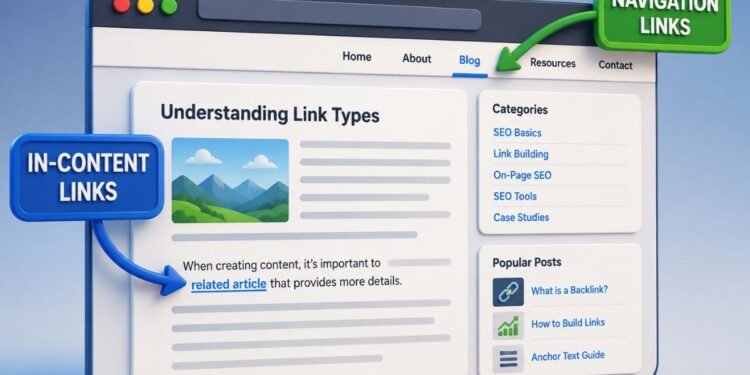
There are citations that indicate a reference to a source. There are supporting information links. There are navigation links, and there are links that establish relationships between resources.

Thus, comprehending a link involves understanding the intention behind it.

A citation and a navigational link mean different things. A supporting citation and a recommendation of a resource mean different things as well.

A search engine tries to distinguish between these different types of associations when analyzing pages together.

Relationships Become More Obvious in the Presence of Repetitive Patterns

A single link provides limited information.

However, it becomes much easier to understand the relationship between pages when the same pattern repeats across multiple pages and websites.

If many references are established between similar topics, entities, or resources, the relationship becomes more apparent because of the repeating surrounding evidence.

However, this does not mean that more links increase value. Rather, repetition helps explain how pages relate within the broader information context.

Search Engines Analyze Connections, Not Individual Signals

Most SEO discussions revolve around signals such as authority and relevance.

While these factors are significant, relationship analysis involves a slightly different process.

The question is:

What makes these two pages connected?

The answer requires analyzing the broader association rather than an individual signal.

A link can connect pages with common objectives. It can connect pages that are conceptually related. It can also connect pages within the same area of a broader topic.

Thus, analyzing relationships involves examining how pages relate to one another rather than focusing solely on their individual properties.

Connections Exist Within a Broader Informational Network

The web is a network of linked information, not a collection of isolated pages.

Every new link creates a new connection.

Search engines try to interpret these connections not only on the individual page level but also across patterns that emerge among multiple sites, topics, and entities.

This may explain why link relationships are so important. The goal is not only to identify connections but also to understand the information patterns those connections describe.

Understanding the Meaning Is More Important Than Recognizing the Connection

A link creates a relationship automatically, but understanding that relationship requires additional interpretation.

Search engines focus on why pages are connected, the meaning of the connection, and the type of relationship involved. Contextual clues, linking intentions, references, and broader information patterns help provide that understanding.

A hyperlink creates the connection. Context provides the meaning.

Tags: Contextual backlinksLink RelationshipsSearch Engine AnalysisSite architecture
ShareShareShareShareSend

Related Posts

Anchor Text Distribution

Understanding Anchor Text Distribution Interpretation

by Backlink Sense
May 9, 2026
Resource Page Backlinks
Resource and Reference Links

Examples of Resource Page Backlinks

by Backlink Sense
March 30, 2026
Magnifying glass examining webpage content to illustrate a contextual backlink and why link placement matters within relevant surrounding content.
Link Context

What Is a Contextual Backlink and Why Does the Placement Matter?

by Backlink Sense
February 9, 2026
Digital illustration showing how structural context affects link placement, using a gear fitting correctly into a larger mechanism.
Link Placement

Why Structural Context Makes a Difference in Link Placement Interpretation

by Backlink Sense
June 22, 2026
Backlink Analysis Tools

How Backlink Crawlers Discover Links

by Backlink Sense
June 3, 2026
Load More
  • About Us
  • Terms of Use
  • Use of Cookies
  • Affiliate Disclosure
  • Contact
  • Privacy Policy
2026 BacklinkSense © All rights reserved.

Welcome Back!

Login to your account below

Forgotten Password?

Retrieve your password

Please enter your username or email address to reset your password.

Log In

Accessibility Toolbar

  • Powered with favoriteLove by Codenroll
No Result
View All Result
  • Anchor Text
    • Anchor Text Context
    • Anchor Text Distribution
    • Anchor Text Strategy
    • Types of Anchor Text
  • Backlink Quality and Analysis
    • Authority and Trust Signals
    • Backlink Analysis Tools
    • Link Context
    • Link Placement
    • Link Quality Signals
    • Link Relevance
  • Link Building Basics
    • How Google Ranks Links
    • Types of Backlinks
    • What Are Backlinks
    • Why Backlinks Matter
  • Link Building Methods
    • Asset-Based Link Building
    • Content-Based Link Building
    • Digital PR and Authority Mentions
    • Passive Link Acquisition
    • Resource and Reference Links
  • Link Building Risks
    • Link Penalties
    • Link Velocity
    • Low-Quality Backlinks
    • Over-Optimized Anchor Text
    • Unnatural Link Patterns
  • Link Outreach
    • Finding Outreach Targets
    • Follow Up in Outreach
    • Outreach Email Strategies
    • Outreach Personalization
    • Relationship Based Outreach

2026 BacklinkSense © All rights reserved.

This website uses cookies to improve your experience and analyze site performance. By continuing to browse, you agree to our Privacy and Cookie Policy.