
There are websites that seem to be everywhere on the internet.
You read an article and find a link to YouTube. A reference sends you to Wikipedia. Another page points to Google, Facebook, or another website used by millions of people.
After seeing the same names appear again and again, a natural question comes up:
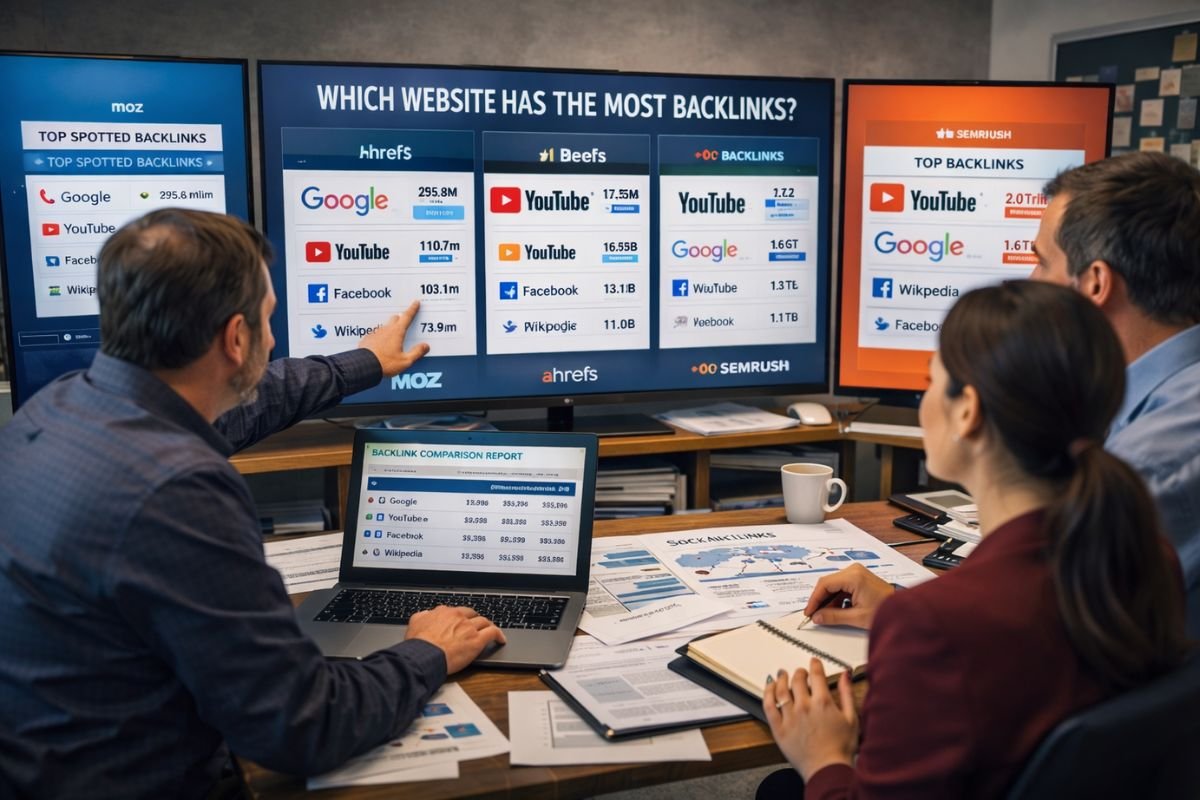
Which website actually has the most backlinks?
You might expect there to be a giant leaderboard somewhere with one website sitting permanently at number one. The problem is that backlinks are not counted by one central system.
SEO tools discover and record their own backlink data. Because those tools do not all discover exactly the same links, there is no single universally accepted backlink count that can tell us which website has the most backlinks across the entire web.
That makes the question more interesting, because before we can compare websites, we need to understand what is actually being counted.
Why Can’t We Just Count Every Backlink on the Web?
A backlink is simply a link from one website to another.
If Website A links to YouTube, YouTube has received a backlink. If another page links to the same YouTube URL, that can create another backlink.
Now imagine trying to count links across the entire web.
Pages are constantly being created, changed, moved, and deleted. Links appear and disappear with them.
SEO companies therefore use automated programs called crawlers to visit pages and discover links. The backlinks a tool reports depend on the pages its crawler has found and processed.
This means an SEO tool is not looking at a perfect master list of every backlink on the internet. It is showing you the backlinks available in its own database.
That distinction is central to understanding how backlink analysis tools collect and present backlink data.
Can Two Tools Give Different Backlink Counts for the Same Website?
Yes.
One tool may have discovered a page containing a backlink while another has not reached that page yet. A backlink that was recently removed might also remain in one database until the page is visited again.
The tools can therefore examine the same website and report different backlink totals.
Neither number has to represent the complete backlink history of that website.
This is also why comparing the backlink counts reported by different tools as though they came from one shared database can be misleading.
The same issue appears when you compare competitor backlinks using SEO tools.
What About Websites Like Google, YouTube, Facebook, and Wikipedia?
This is where the scale of the web becomes easier to picture.
Websites such as Google, YouTube, Facebook, and Wikipedia contain enormous numbers of pages and are referenced from websites around the world.
A YouTube video can be linked from a blog post. A Wikipedia article can be cited as a reference. A business may link visitors to its Facebook page. A tutorial may link to a Google service.
When this happens repeatedly across a huge number of pages, backlinks can accumulate on an enormous scale.
But naming these websites does not give us enough evidence to declare one of them the permanent backlink champion.
The answer can change depending on which backlink database is being examined and when the measurement is taken.
Backlinks and Referring Domains Are Not the Same Thing
There is another number that can easily cause confusion because one website could link to YouTube from 500 different pages, creating many backlinks that all come from the same source, while 500 different websites could each link to YouTube only once and produce a similar backlink count from hundreds of separate sources.
This difference is why SEO tools also report referring domains, with each unique website containing at least one backlink to another website counting as one referring domain.
| Backlinks | Referring Domains | |
|---|---|---|
| What are we counting? | Individual links | Different websites providing those links |
| Simple example | One website links to you from 100 pages | That website still counts as one referring domain |
| Can one website create many of them? | Yes | No, the same website is counted once |
| What does the number help you understand? | How many links the tool has recorded | How many different websites those links come from |
So a website having an enormous number of backlinks does not mean the same number of different websites are linking to it.
The two measurements answer different questions.
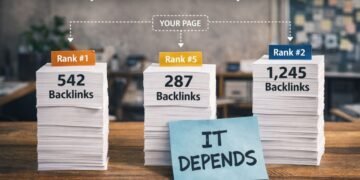
Does Having the Most Backlinks Mean a Website Should Rank First?
No.
Backlinks are relevant to Google Search, but Google does not rank pages simply by putting the website with the largest backlink count first.
Google says its ranking systems use many factors and signals, and its link analysis systems examine how pages link to one another as part of determining what pages are about and which may be helpful for a search.
PageRank remains part of Google’s core ranking systems, but modern ranking is not a global backlink-count competition.
That distinction matters because “Which website has the most backlinks?” and “Which website should rank highest?” are completely different questions.
So Which Website Has the Most Backlinks?
There is no single verified answer for the entire web.
Major platforms such as Google, YouTube, Facebook, and Wikipedia can accumulate backlinks at enormous scale because they are widely used and referenced, but the exact totals depend on the backlink database doing the counting.
One SEO tool may report one ordering while another records something different.
So if you encounter a claim that a particular website has “the most backlinks in the world,” the next question should be:
According to which backlink database?