
Page Contents
Why the Answer Depends on the Tool
Backlink tools rely on their own crawling systems to discover and index links. Each tool operates with an independent crawler, its own storage infrastructure, and proprietary filtering systems. As a result:
No tool can see every backlink.
Index sizes vary between tools.
Update frequency differs.
Filtering and processing methods differ.
Spam filtering and de-duplication logic vary.
Some tools prioritize index size. Others prioritize freshness or data cleanliness. These architectural decisions influence the reported totals for any given domain.
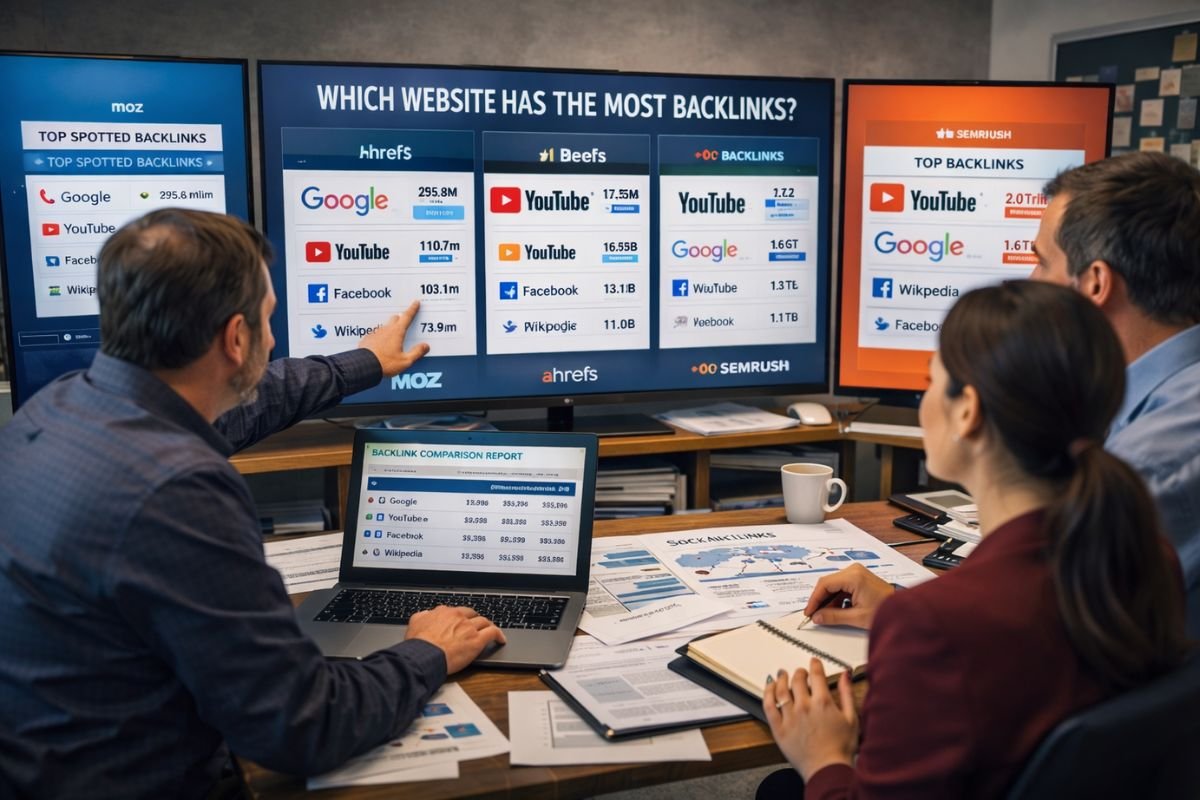
When comparing two backlink tools, the reported numbers for the same domain may vary significantly. One tool may show hundreds of billions of backlinks, while another reports a slightly lower or higher figure. The discrepancy does not imply inaccuracy. It reflects differences in crawl depth, recrawl cadence, and data modeling.
Because of these structural differences, the website reported as having the most backlinks may vary depending on the tool used.
Across most prominent backlink analysis tools, the domains that consistently rank at the top include:
- YouTube.com
- Facebook.com
- Wikipedia.org
- Google.com
- BBC.com and other major global news platforms
These sites accumulate backlinks at scale due to how the internet functions.
- Wikipedia is cited in informational content.
- YouTube is referenced in blogs and media coverage.
- Google is referenced in documentation and online resources.
Their scale ensures a continuous accumulation of backlinks.
Why These Sites Accumulate So Many Links
Websites with the most backlinks typically share several core characteristics:

Global Utility
They provide services or information that large portions of the internet rely on.
High Brand Recognition
They are frequently referenced because they are widely recognized and trusted.
Content Volume
Large content libraries increase the probability of earning links.
Network Effect
The more a site is referenced, the more it becomes a default source, reinforcing further references.
This creates compounding backlink growth over time.
Total Backlinks vs. Referring Domains
It is also important to distinguish between total backlinks and referring domains. A site may have trillions of backlinks, but that does not mean it has trillions of unique referring domains. Many backlinks can originate from the same domains.
Backlink analysis tools typically report both metrics separately. Some tools emphasize referring domains as a stronger indicator of link diversity, while others highlight raw backlink volume. The interpretation of “most backlinks” can therefore change depending on which metric a tool prioritizes in its interface and reporting structure.
Understanding how backlink tools define and display these metrics is essential before drawing conclusions about dominance.
A Clear Conclusion
So, which website has the most backlinks?
Based on data from major backlink tools, globally dominant platforms such as Google, YouTube, Facebook, and Wikipedia consistently rank at the top. The exact order varies depending on the index used, the crawling scope, and the metric selected.
There is no single universal number across all tools. However, there is broad consensus that the most prominent and widely used websites accumulate the highest backlink counts due to scale, utility, and global reach.