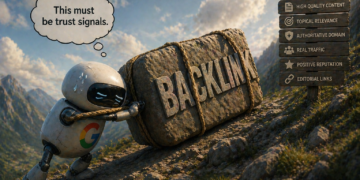


Analyzing backlinks using SEO tools means examining the links pointing to a website and understanding the structure of that link environment. SEO platforms collect data about backlinks and present it in a way that helps users observe patterns across domains, anchors, and link types.
The purpose of backlink analysis is not simply to count links. It is to understand how a website is being referenced across the web and how those references are distributed.
SEO tools make this process possible by gathering link data from large indexes of crawled pages.
Viewing the Total Number of Backlinks
One of the first metrics SEO tools display is the total number of backlinks pointing to a website or page.
However, the number alone does not tell the full story. Some websites may accumulate many links from a small group of pages, while others receive links from a wider range of sources.
This is why backlink analysis usually begins with the overall count and then moves deeper into the structure behind those links.
Understanding Referring Domains
Referring domains represent the number of unique websites linking to a page or domain.
Instead of counting individual links, this metric focuses on how many different sites provide those links.
A backlink profile can include many links from the same domain. For example, a blog might link to another site several times across multiple articles.
Referring domain data helps analysts understand how widely the site is referenced across different websites.
SEO tools display lists of referring domains so users can see which sites are linking to them and how often those references appear.
This view helps reveal whether links originate from a broad network of sources or from a smaller group of sites.
Examining Anchor Text
Another key element visible in SEO tools is anchor text.
Anchor text refers to the clickable phrase used in a link. Tools collect anchor phrases across backlinks and present them as a list or distribution.
By reviewing anchor text data, users can see how different sites refer to the page being linked.
Some anchors may contain brand names. Others may describe the topic of the page or use general reference phrases.
Seeing the anchor language across many links helps reveal how the site is described within external content.
SEO tools usually group identical anchor phrases together so patterns can be observed more easily, although the way those patterns are presented may vary from one platform to another.
Observing Authority Metrics
Most SEO platforms provide authority metrics that estimate the strength or reputation of linking domains.
These metrics are calculated using the tool’s own model of the web. They often consider factors such as link relationships, domain connectivity, and reference patterns across the index.
While these scores are not part of search engine algorithms, they help users compare domains within the tool’s dataset.
When analyzing backlinks, these metrics can provide a quick way to understand how widely referenced certain domains appear to be.
The scores serve as indicators within the tool’s analysis environment rather than direct measures used by search engines.
Identifying Link Types
SEO tools also categorize links by type.
Common link types include:
- dofollow links that pass standard link signals
- nofollow links that contain attributes modifying how search engines interpret them
- image links where the clickable element is an image
- text links embedded within written content
These classifications help users understand how links appear across different pages.
For example, some links may appear inside articles while others may exist within navigation elements or image based links.
By observing link types, analysts can better understand the structural variety within a backlink profile.
Using Tools to Observe Link Patterns
The main advantage of SEO tools is their ability to organize backlink data into searchable reports.
Users can sort links by domain, filter anchor text phrases, or examine links discovered during specific time periods. These features make it easier to observe patterns that would be difficult to detect manually.
For example, a report may reveal clusters of links from certain domains or repeated anchor phrases across multiple pages.
These patterns provide insight into how a site is referenced across the web and can help identify toxic backlink signals within the profile.
The tools themselves do not determine the meaning of those patterns. Instead, they present the data in a way that allows users to interpret the link environment.
you may also want to explore:
Understanding the Structure of a Backlink Profile
When backlink data from SEO tools is viewed collectively, it reveals the structure of a website’s link profile.
The number of links shows how frequently the site is referenced. Referring domains show how widely those references are distributed across different websites. Anchor text reveals the language used to describe the site. Authority metrics provide comparative indicators within the tool’s dataset, and link types show how the links appear within different page elements.
Together, these elements create a picture of how the website is connected to the broader web.
SEO tools make this structure visible, allowing users to examine how links accumulate and how they are organized across different sources.
Additional interpretation can also be found in: