

Monday, September 21, 2026
BacklinkSense
  • Anchor Text
    • Anchor Text Context
    • Anchor Text Distribution
    • Anchor Text Strategy
    • Types of Anchor Text
  • Backlink Quality and Analysis
    • Authority and Trust Signals
    • Backlink Analysis Tools
    • Link Context
    • Link Placement
    • Link Quality Signals
    • Link Relevance
  • Link Building Basics
    • How Google Ranks Links
    • Types of Backlinks
    • What Are Backlinks
    • Why Backlinks Matter
  • Link Building Methods
    • Asset-Based Link Building
    • Content-Based Link Building
    • Digital PR and Authority Mentions
    • Passive Link Acquisition
    • Resource and Reference Links
  • Link Building Risks
    • Link Penalties
    • Link Velocity
    • Low-Quality Backlinks
    • Over-Optimized Anchor Text
    • Unnatural Link Patterns
  • Link Outreach
    • Finding Outreach Targets
    • Follow Up in Outreach
    • Outreach Email Strategies
No Result
View All Result
  • Anchor Text
    • Anchor Text Context
    • Anchor Text Distribution
    • Anchor Text Strategy
    • Types of Anchor Text
  • Backlink Quality and Analysis
    • Authority and Trust Signals
    • Backlink Analysis Tools
    • Link Context
    • Link Placement
    • Link Quality Signals
    • Link Relevance
  • Link Building Basics
    • How Google Ranks Links
    • Types of Backlinks
    • What Are Backlinks
    • Why Backlinks Matter
  • Link Building Methods
    • Asset-Based Link Building
    • Content-Based Link Building
    • Digital PR and Authority Mentions
    • Passive Link Acquisition
    • Resource and Reference Links
  • Link Building Risks
    • Link Penalties
    • Link Velocity
    • Low-Quality Backlinks
    • Over-Optimized Anchor Text
    • Unnatural Link Patterns
  • Link Outreach
    • Finding Outreach Targets
    • Follow Up in Outreach
    • Outreach Email Strategies
No Result
View All Result
BacklinkSense
No Result
View All Result

Home - Internal Linking - Internal Link Anchor Text: What Should You Use?

Internal Link Anchor Text: What Should You Use?

Backlink Sense by Backlink Sense
September 16, 2026
in Internal Linking
Reading Time: 3 mins read
Share On FacebookShare On Reddit

Page Contents

  • 1. First Determine the Content of the Destination Page
  • 2. Let the Context of the Sentence Define the Anchor
  • 3. Related Posts
  • 4. Internal Link Relevance: When Two Pages Should Connect
  • 5. What Is Internal Link Equity?
  • 6. How Internal Links Help Search Engines Find Pages Crawlers Haven’t Seen
  • 7. Make Sure the Anchor Text Matches the Expectations of the Reader
  • 8. Use Keywords as Natural Anchor Text
  • 9. Descriptive Does Not Mean Excessive
  • 10. Good Anchor Text Predicts the Click

The anchor text of your internal links should tell the reader a thing or two about the content of the destination page. You don’t necessarily have to use the exact title of the page or target keyword. The anchor text should be able to fit into the sentence naturally while accurately reflecting the destination.

This makes selecting anchor text for internal links a bit of a linguistic task. While it should make sense where it is placed, the link itself should make sense after clicking it.

First Determine the Content of the Destination Page

Prior to choosing the words for the link, you need to figure out what the destination page talks about.

So imagine that the current page contains a mention of certain pages that get links yet have difficulties ranking. If it is an internal link equity page you are linking to, then the anchor “how value moves between internal pages” gives the reader information about the destination page.

Meanwhile, “read more” gives them practically nothing.

The words do not necessarily have to contain every bit of information about the destination page. They should contain only the information relevant to the current situation.

It is in this way that vague anchors sometimes turn into problems. Phrases like “here”, “this page” or “more information” do offer a path to the destination page, but say very little about the page.

Let the Context of the Sentence Define the Anchor

Anchor text does not exist in a vacuum. It exists in the context of the sentence.

Because of this, you have more options.

Imagine the sentence talks about how value can move between pages via internal links. Instead of the anchor “internal link equity” you can use something like “value distributed between pages” and it will fit into the sentence nicely, while providing information about the destination.

Related Posts

Internal Link Relevance: When Two Pages Should Connect

September 16, 2026

What Is Internal Link Equity?

September 9, 2026

How Internal Links Help Search Engines Find Pages Crawlers Haven’t Seen

September 9, 2026

You do not need to force yourself to repeat the same wording.

The sentence and the anchor can complement each other. One part of the context comes from the words, while the other part comes from the surrounding context.

Make Sure the Anchor Text Matches the Expectations of the Reader

Anchor text allows for continuity from the current page to the destination page.

When you link “internal linking strategy”, readers expect a page about managing internal links. When the destination page turns out to be a definition of internal links, there is a mismatch, despite both topics being related.

However, such things are easy to overlook.

Topical relevance is not enough. You need to make sure the anchor text is about the exact information contained on the destination page.

A person who follows the link should not have to wonder why these words were used.

Use Keywords as Natural Anchor Text

Keywords are usually descriptive, so there is nothing wrong with using them as anchor text.

If the destination page explains internal link equity and that exact phrase fits into the sentence, linking to it is absolutely fine.

The problem starts if the sentence is built around the keyword and not around the user.

No matter how accurately the phrase reflects the keyword, it is not right if it sounds awkward. It would be easier to use a slight variation.

In the case of internal link anchor text, keyword usage is defined by context. Exact wording is right if it belongs in the sentence. There is no need to create it just for the sake of it.

Descriptive Does Not Mean Excessive

More words do not always mean that the anchor text is more informative.

The anchor “our complete detailed guide explaining everything about internal link equity” tells the user about the destination page, but most of the words are useless.

Sometimes fewer words do the job just as well.

It is important to know whether removing a word makes the destination unclear. If it does not, the word should not be included in the anchor.

It keeps internal anchors readable as part of the sentence, rather than creating blocks of text optimized specifically for keywords.

Good Anchor Text Predicts the Click

Selecting internal anchor text boils down to telling the reader about the next page without ruining the current one.

The destination defines what the anchor needs to say. The context of the sentence defines which wording works best. Finally, reader expectation serves as the last factor: would the destination make sense for the person clicking on the link based only on those words and their context?

When it does, the anchor does its job. It provides meaning for the link even before it is clicked on.

Tags: anchor text basicsContent StructureOn Page SEOSearch Engine OptimizationSEO Basics
ShareShareShareShareSend

Related Posts

A side by side comparison of trusted and low authority websites shows why High Authority Backlinks Matter More, with the same backlink carrying different levels of trust and SEO impact.
Why Backlinks Matter

Why Do High Authority Backlinks Matter More?

by Backlink Sense
May 4, 2026
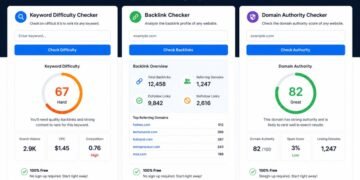
Free tools become the best type of linkable asset by giving users practical SEO insights through keyword, backlink, and domain authority analysis.
Asset-Based Link Building

Are Free Tools the Best Type of Linkable Asset?

by Backlink Sense
March 19, 2026
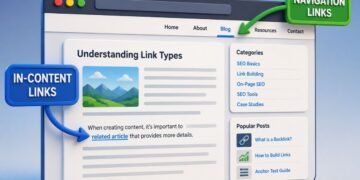
Stylized 3D illustration comparing in content links with navigation links by showing links inside an article and within a website menu.
Link Placement

In-Content Links vs Navigation Links

by Backlink Sense
May 20, 2026
Internal Linking

Difference Between Internal Links and Backlinks in SEO

by Backlink Sense
September 9, 2026
Anchor Text Context

How Paragraph Structure Influences Link Relevance

by Backlink Sense
March 9, 2026
Load More
  • About Us
  • Terms of Use
  • Use of Cookies
  • Affiliate Disclosure
  • Contact
  • Privacy Policy
2026 BacklinkSense © All rights reserved.

Welcome Back!

Login to your account below

Forgotten Password?

Retrieve your password

Please enter your username or email address to reset your password.

Log In

Accessibility Toolbar

  • Powered with favoriteLove by Codenroll
No Result
View All Result
  • Anchor Text
    • Anchor Text Context
    • Anchor Text Distribution
    • Anchor Text Strategy
    • Types of Anchor Text
  • Backlink Quality and Analysis
    • Authority and Trust Signals
    • Backlink Analysis Tools
    • Link Context
    • Link Placement
    • Link Quality Signals
    • Link Relevance
  • Link Building Basics
    • How Google Ranks Links
    • Types of Backlinks
    • What Are Backlinks
    • Why Backlinks Matter
  • Link Building Methods
    • Asset-Based Link Building
    • Content-Based Link Building
    • Digital PR and Authority Mentions
    • Passive Link Acquisition
    • Resource and Reference Links
  • Link Building Risks
    • Link Penalties
    • Link Velocity
    • Low-Quality Backlinks
    • Over-Optimized Anchor Text
    • Unnatural Link Patterns
  • Link Outreach
    • Finding Outreach Targets
    • Follow Up in Outreach
    • Outreach Email Strategies

2026 BacklinkSense © All rights reserved.

This website uses cookies to improve your experience and analyze site performance. By continuing to browse, you agree to our Privacy and Cookie Policy.