
Thursday, September 10, 2026
BacklinkSense
  • Anchor Text
    • Anchor Text Context
    • Anchor Text Distribution
    • Anchor Text Strategy
    • Types of Anchor Text
  • Backlink Quality and Analysis
    • Authority and Trust Signals
    • Backlink Analysis Tools
    • Link Context
    • Link Placement
    • Link Quality Signals
    • Link Relevance
  • Link Building Basics
    • How Google Ranks Links
    • Types of Backlinks
    • What Are Backlinks
    • Why Backlinks Matter
  • Link Building Methods
    • Asset-Based Link Building
    • Content-Based Link Building
    • Digital PR and Authority Mentions
    • Passive Link Acquisition
    • Resource and Reference Links
  • Link Building Risks
    • Link Penalties
    • Link Velocity
    • Low-Quality Backlinks
    • Over-Optimized Anchor Text
    • Unnatural Link Patterns
  • Link Outreach
    • Finding Outreach Targets
    • Follow Up in Outreach
    • Outreach Email Strategies
No Result
View All Result
  • Anchor Text
    • Anchor Text Context
    • Anchor Text Distribution
    • Anchor Text Strategy
    • Types of Anchor Text
  • Backlink Quality and Analysis
    • Authority and Trust Signals
    • Backlink Analysis Tools
    • Link Context
    • Link Placement
    • Link Quality Signals
    • Link Relevance
  • Link Building Basics
    • How Google Ranks Links
    • Types of Backlinks
    • What Are Backlinks
    • Why Backlinks Matter
  • Link Building Methods
    • Asset-Based Link Building
    • Content-Based Link Building
    • Digital PR and Authority Mentions
    • Passive Link Acquisition
    • Resource and Reference Links
  • Link Building Risks
    • Link Penalties
    • Link Velocity
    • Low-Quality Backlinks
    • Over-Optimized Anchor Text
    • Unnatural Link Patterns
  • Link Outreach
    • Finding Outreach Targets
    • Follow Up in Outreach
    • Outreach Email Strategies
No Result
View All Result
BacklinkSense
No Result
View All Result

Home - Internal Linking - Internal Linking in SEO: What It Really Means

Internal Linking in SEO: What It Really Means

Backlink Sense by Backlink Sense
September 1, 2026
in Internal Linking
Reading Time: 3 mins read
Share On FacebookShare On Reddit

Page Contents

  • 1. What Is an Internal Link?
  • 2. An Internal Link vs. Internal Linking
  • 3. Related Posts
  • 4. What Is Internal Link Equity?
  • 5. How Internal Links Help Search Engines Find Pages Crawlers Haven’t Seen
  • 6. Difference Between Internal Links and Backlinks in SEO
  • 7. Internal Links Provide Visitors with Paths to Related Pages
  • 8. Internal Linking Is Used Beyond Articles
  • 9. Internal Linking Is Built on Connections Between Pages

Internal linking in SEO is a method of establishing a connection between one website page and another page of the same website using hyperlinks. When someone reads one article and follows a link that leads to another article on the same domain, they use an internal link.

The notion seems straightforward, but sometimes it is confused by terminology. An internal link is just the connection itself, while internal linking is the usage of internal links.

What Is an Internal Link?

The source and the destination of an internal link should belong to the same website.

For example, a website published an article that explains different types of backlinks. There is a link in this article to another page explaining editorial backlinks. Since both pages belong to the same website, the link is internal.

A link that points from this article to another website is an external link.

Internal links can connect any number of different types of pages: articles to articles, category pages to their relevant content, and navigation menus to important parts of the website.

In all these cases, the basic relationship stays the same: a page establishes a link to another page from the same website.

An Internal Link vs. Internal Linking

There is a clear differentiation between an internal link and the process of internal linking.

An internal link is just a connection.

For example:

Related Posts

What Is Internal Link Equity?

September 9, 2026

How Internal Links Help Search Engines Find Pages Crawlers Haven’t Seen

September 9, 2026

Difference Between Internal Links and Backlinks in SEO

September 9, 2026

Article A → Article B

Internal linking is the process that emerges when these connections exist on multiple pages.

Article A can connect to Article B. Article B can connect to Article C, while Article C establishes a connection to another relevant page. By adding more connections, you build up a network of links between pages of your website.

This distinction is important since internal linking is not just a single hyperlink. It is rather the process of establishing links between different pages.

Internal Links Provide Visitors with Paths to Related Pages

Without links, pages will be completely independent destinations. Someone will come to one page, read it, and find themselves needing to find another page to continue.

Internal links provide direct paths.

For instance, someone reads an article about backlink quality. While reading it, they will meet the term “referring domains.” If your website has an article explaining referring domains, you can establish an internal link from the first article to the second one. It will provide a direct path for the reader to find the explanation.

It gives a practical advantage. The reader will not need to go somewhere else, use the search engine on your website, or manually find the needed page.

This is one of the most basic features of internal linking on a website: providing a path to related content from your content.

Internal Linking Is Used Beyond Articles

It may seem that internal linking is used only to add links into the content of articles, but a website has many more places where links can be added.

Navigation menus are the most common example. Other examples can be category pages, breadcrumbs, related content sections, and any other navigational elements that can contain links to pages on the same website.

These links perform different tasks. Navigation menus provide access to different sections of the website, while contextual links in articles connect two related pieces of information.

Nevertheless, these are still internal links.

That is why internal linking in SEO cannot be reduced to a special type of link or a place on the website where links are established. It is rather the process of creating connections between pages of the website.

Internal Linking Is Built on Connections Between Pages

The simplest way of thinking about internal linking is the creation of connections between pages of the website.

One page has a link. This link points to another page on the same website. Over many pages, these individual connections create paths that can be used by visitors while navigating the content.

Of course, there are more profound questions about how internal links can be used in SEO, but this distinction should be made first.

An internal link is one connection between pages, while internal linking in SEO is the process of establishing connections between pages of the website.

Tags: Internal linking structureOn Page SEOSEO BasicsSEO structure
ShareShareShareShareSend

Related Posts

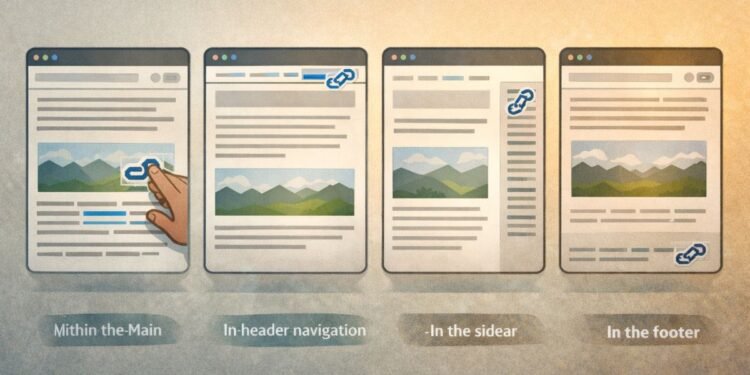
Different placements within a webpage illustrate how link position can affect rankings, comparing links in main content, navigation, sidebars, and footers.
How Google Ranks Links

Does Link Position Affect Rankings?

by Backlink Sense
February 17, 2026
A network of backlinks feeds into an authority meter and comparison scale, showing how Backlinks Affect Website Authority through the quality and value of incoming links.
Why Backlinks Matter

Do Backlinks Affect Website Authority?

by Backlink Sense
March 21, 2026
Why Backlinks Matter

Why Are Backlinks Important for SEO?

by Backlink Sense
June 17, 2026
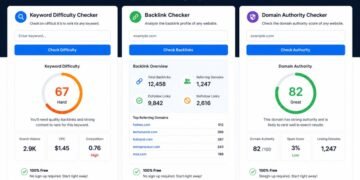
Free tools become the best type of linkable asset by giving users practical SEO insights through keyword, backlink, and domain authority analysis.
Asset-Based Link Building

Are Free Tools the Best Type of Linkable Asset?

by Backlink Sense
March 19, 2026
Internal Linking

Internal Links for SEO: What Makes Them Important

by Backlink Sense
September 5, 2026
Load More
  • About Us
  • Terms of Use
  • Use of Cookies
  • Affiliate Disclosure
  • Contact
  • Privacy Policy
2026 BacklinkSense © All rights reserved.

Welcome Back!

Login to your account below

Forgotten Password?

Retrieve your password

Please enter your username or email address to reset your password.

Log In

Accessibility Toolbar

  • Powered with favoriteLove by Codenroll
No Result
View All Result
  • Anchor Text
    • Anchor Text Context
    • Anchor Text Distribution
    • Anchor Text Strategy
    • Types of Anchor Text
  • Backlink Quality and Analysis
    • Authority and Trust Signals
    • Backlink Analysis Tools
    • Link Context
    • Link Placement
    • Link Quality Signals
    • Link Relevance
  • Link Building Basics
    • How Google Ranks Links
    • Types of Backlinks
    • What Are Backlinks
    • Why Backlinks Matter
  • Link Building Methods
    • Asset-Based Link Building
    • Content-Based Link Building
    • Digital PR and Authority Mentions
    • Passive Link Acquisition
    • Resource and Reference Links
  • Link Building Risks
    • Link Penalties
    • Link Velocity
    • Low-Quality Backlinks
    • Over-Optimized Anchor Text
    • Unnatural Link Patterns
  • Link Outreach
    • Finding Outreach Targets
    • Follow Up in Outreach
    • Outreach Email Strategies

2026 BacklinkSense © All rights reserved.

This website uses cookies to improve your experience and analyze site performance. By continuing to browse, you agree to our Privacy and Cookie Policy.