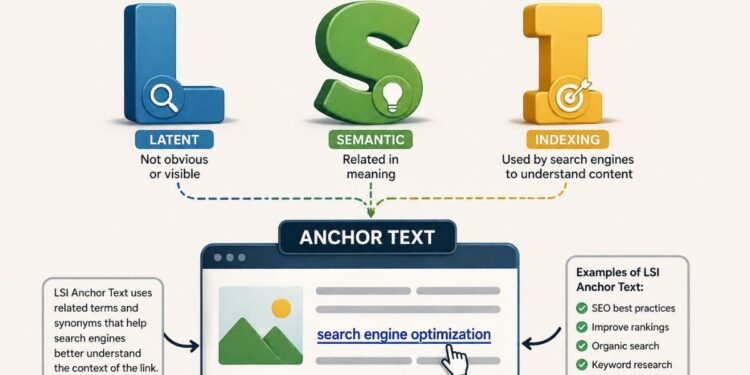



Search engines interpret context probabilistically because contextual meanings are rarely fully unambiguous, isolated or consistently stable across the web.
Most contexts exist within environments characterized by ambiguity, partially related ideas, alternative interpretations and incomplete evidence. Instead of interpreting contexts through simple yes-or-no logic, search systems appear to evaluate probabilities associated with potential interpretations of a specific page, link or topical relationship.
This probabilistic approach makes contextual understanding flexible enough to account for uncertain situations where absolute semantic clarity may not exist.
Contextual Meaning Usually Isn’t Completely Isolated
One common misconception about contextual interpretation is the idea that relevance operates as a simple binary attribute.
However, contextual understanding appears to involve overlapping meanings in many situations.
For example, a page discussing SEO techniques may also reference digital marketing, website analytics, web crawling, machine learning technologies or web development principles. A backlink embedded inside a specific article may initially appear highly relevant while other parts of the text simultaneously introduce partially unrelated information.
Therefore, search systems seem to analyze contextual associations within broader semantic environments rather than through isolated signals alone.
Probabilistic analysis allows multiple interpretations to coexist simultaneously.
Linguistic Ambiguities Generate Interpretive Uncertainty
Uncertainty is a natural feature of language because of its complexity and flexibility.
Words often carry multiple meanings depending on surrounding context, topic framing, entity references and the nature of the document itself. As a result, even pages carefully optimized for strong topical relevance may still contain sections that introduce semantic ambiguity.

Under such conditions, contextual conclusions can rarely become fully reliable because language itself does not guarantee complete clarity of communication.
Instead, search systems appear to assess how strongly one interpretation is reinforced by contextual evidence compared to alternative possibilities.
Contextual Interpretation Is Incremental
A probabilistic approach to contextual analysis also helps explain gradual contextual understanding.
For example, a search engine may initially interpret a document with a certain level of confidence and later either reinforce or weaken that interpretation using additional signals.
These signals may include:
- repeated topical associations
- consistent internal linking
- alignment with surrounding content
- broader behavioral patterns across the site
The important point is that interpretation does not appear completely fixed during the first interaction. It can evolve through additional evidence over time.
Probabilistic Interpretation Accounts for Partial Associations
Probabilistic models of contextual interpretation provide more flexibility than binary evaluation methods when dealing with contradictory semantic data.
For example, a link may appear relevant according to certain contextual metrics while appearing partially irrelevant according to others. At the same time, another page may demonstrate strong topical association overall while still containing fragments with weaker topical framing.
Under these conditions, binary interpretation methods struggle because they force contextual classification into rigid categories such as:
- relevant
- irrelevant
- natural
- unnatural
Probabilistic systems provide more flexibility when handling partially associated semantic elements.
Interpretation Appears Influenced by Surrounding Context
Context rarely exists in isolation because its meaning depends heavily on broader semantic environments.
Interpretation appears strongly affected by surrounding signals such as:
- terminology
- consistent semantics
- topical coherence
- entity associations
- overall topical framing
- surrounding text structures
These signals help reduce interpretive uncertainty in many situations. However, even highly coherent pages may still contain fragments introducing ambiguity or contradiction.
This is one reason why probabilistic contextual interpretation appears effective under such conditions.
Partially Incomplete Context Is Natural Given the Nature of the Web
The nature of the web itself contributes to partial contextual understanding because web environments constantly change.
Pages are frequently updated. Topics often intersect with one another. Different websites may use completely different terminology to describe identical concepts. In addition, different content types may exhibit varying degrees of semantic organization and structure.
Under such circumstances, contextual evaluation becomes more about estimating the reliability of meanings rather than establishing absolute semantic certainty.
Probabilistic interpretation appears well-suited for dealing with these conditions.
Reduced Dependence on Single Signals
One of the major advantages of probabilistic interpretation is reduced dependence on isolated signals.
If contextual interpretation relied entirely on a single signal, manipulation would become significantly easier. By contrast, probabilistic systems distribute interpretation across multiple semantic elements simultaneously.
As a result, isolated signals often carry far less interpretive influence on their own.
Explore how different contextual environments influence link interpretation.
Final Thoughts
Search systems rely on probabilistic contextual interpretation because contextual meanings across the Internet are ambiguous, overlapping and constantly changing.
Search engines appear to evaluate probabilities associated with potential contextual meanings instead of relying on rigid binary judgments. Linguistic ambiguity, overlapping associations, partial reinforcement and conflicting semantic signals all contribute to imperfect interpretive environments.
Rather than eliminating uncertainty completely, probabilistic interpretation appears designed to operate effectively within it.