Sunday, March 15, 2026
BacklinkSense
  • Anchor Text
    • Anchor Text Context
    • Anchor Text Distribution
    • Anchor Text Strategy
    • Types of Anchor Text
  • Backlink Quality and Analysis
    • Authority and Trust Signals
    • Backlink Analysis Tools
    • Link Context
    • Link Placement
    • Link Quality Signals
    • Link Relevance
  • Link Building Basics
    • How Google Ranks Links
    • Types of Backlinks
    • What Are Backlinks
    • Why Backlinks Matter
  • Link Building Methods
    • Asset-Based Link Building
    • Content-Based Link Building
    • Digital PR and Authority Mentions
    • Passive Link Acquisition
    • Resource and Reference Links
  • Link Building Risks
    • Link Penalties
    • Link Velocity
    • Low-Quality Backlinks
    • Over-Optimized Anchor Text
    • Unnatural Link Patterns
  • Link Outreach
    • Finding Outreach Targets
    • Follow Up in Outreach
    • Outreach Email Strategies
    • Outreach Personalization
    • Relationship Based Outreach
No Result
View All Result
  • Anchor Text
    • Anchor Text Context
    • Anchor Text Distribution
    • Anchor Text Strategy
    • Types of Anchor Text
  • Backlink Quality and Analysis
    • Authority and Trust Signals
    • Backlink Analysis Tools
    • Link Context
    • Link Placement
    • Link Quality Signals
    • Link Relevance
  • Link Building Basics
    • How Google Ranks Links
    • Types of Backlinks
    • What Are Backlinks
    • Why Backlinks Matter
  • Link Building Methods
    • Asset-Based Link Building
    • Content-Based Link Building
    • Digital PR and Authority Mentions
    • Passive Link Acquisition
    • Resource and Reference Links
  • Link Building Risks
    • Link Penalties
    • Link Velocity
    • Low-Quality Backlinks
    • Over-Optimized Anchor Text
    • Unnatural Link Patterns
  • Link Outreach
    • Finding Outreach Targets
    • Follow Up in Outreach
    • Outreach Email Strategies
    • Outreach Personalization
    • Relationship Based Outreach
No Result
View All Result
BacklinkSense
No Result
View All Result
ADVERTISEMENT
What Is a Nofollow Backlink?

What Is a Nofollow Backlink?

Backlink Sense by Backlink Sense
February 17, 2026
in Types of Backlinks
Reading Time: 4 mins read
0
Share on FacebookShare on Twitter

Page Contents

  • 1 The Technical Meaning of a Nofollow Backlink
  • 2 Why the Nofollow Attribute Exists
  • 3 Related Posts
  • 4 What Is a Sponsored or UGC Link?
  • 5 What Is a Dofollow Backlink?
  • 6 Editorial vs Guest Post Backlinks: What’s the Difference?
  • 7 What Are the Different Types of Backlinks in SEO?
  • 8 How Search Engines Interpret Nofollow
  • 9 Where Nofollow Backlinks Commonly Appear
  • 10 What a Nofollow Backlink Is Not
  • 11 A Structural Clarification

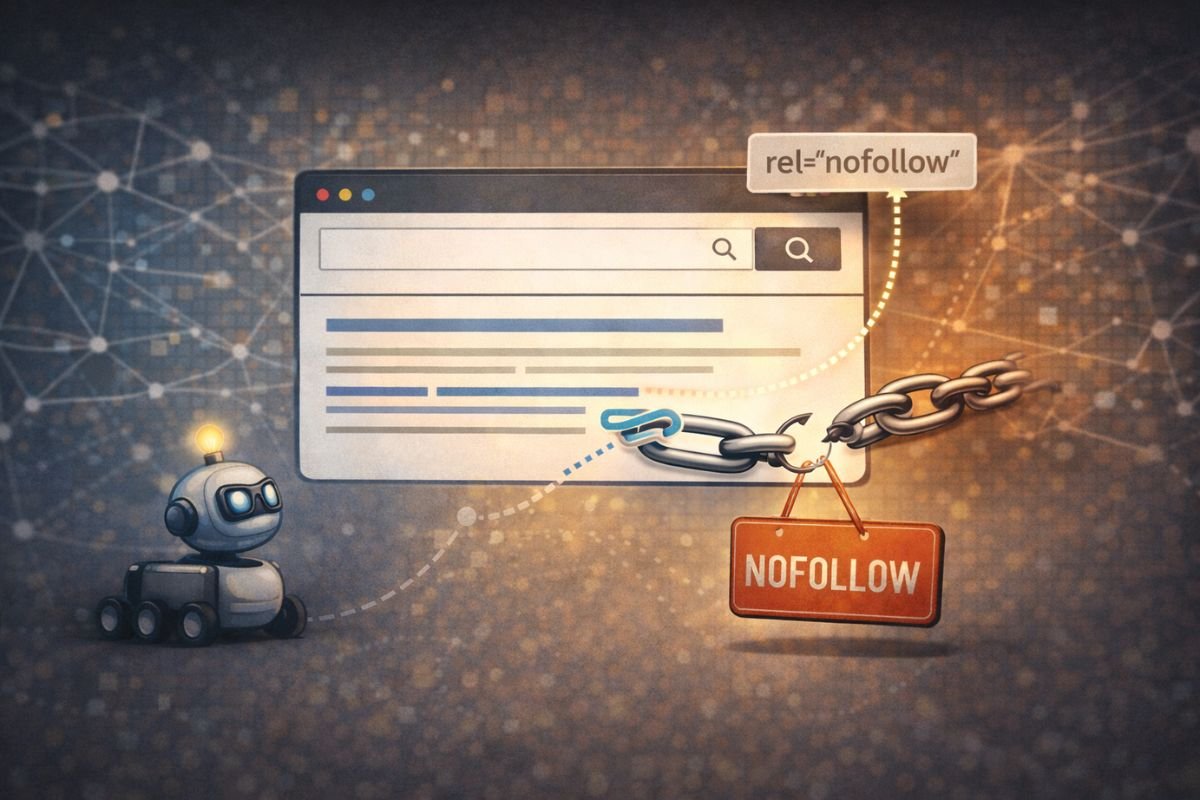
A nofollow backlink is a backlink that contains an attribute which prevents search engines from using the link in ranking calculations. It does not block crawling. It does not remove the link from the web.

The only difference introduced by the nofollow attribute is how search engines treat the link in ranking systems.

The Technical Meaning of a Nofollow Backlink

The nofollow attribute is part of a link’s HTML code. Its format is:

rel=”nofollow”

This attribute can be added to signal that the link should not be used in ranking calculations.

For example:

<a href=”https://example.com” rel=”nofollow”>Example</a>

The link remains visible to users.
Users can still click it.
The distinction exists only in how search engines interpret it.

Why the Nofollow Attribute Exists

The nofollow attribute was introduced to provide context about the relationship between linked pages.

It was primarily used in situations such as:
Related Posts

What Is a Sponsored or UGC Link?

What Is a Sponsored or UGC Link?

February 17, 2026
What Is a Dofollow Backlink?

What Is a Dofollow Backlink?

February 17, 2026
Editorial vs Guest Post Backlinks

Editorial vs Guest Post Backlinks: What’s the Difference?

February 17, 2026

What Are the Different Types of Backlinks in SEO?

February 17, 2026
  • User-generated content

  • Comment sections

  • Paid links

Its purpose was to indicate that certain links should not transfer ranking signals in the same way as standard links.

You May Also Like:

  • What Is a Dofollow Backlink?
  • What Is a Sponsored or UGC Link?

How Search Engines Interpret Nofollow

Originally, the nofollow attribute functioned as a clear directive: the link would not be used in ranking calculations.

Over time, interpretation evolved. Modern search systems may treat nofollow as a signal or hint rather than an absolute command, depending on broader evaluation systems.

Still, the presence of the nofollow attribute distinguishes the link from a standard hyperlink.

The attribute describes intent. It affects treatment.

Where Nofollow Backlinks Commonly Appear

No-follow backlinks are commonly found in:

  • Blog comments

  • Forum posts

  • Social media profiles

  • Sponsored content

  • User-submitted listings

The attribute exists to encourage transparency in how links are presented and interpreted.

What a Nofollow Backlink Is Not

A nofollow backlink is not:

  • A low-quality link

  • Invisible to search engines

  • A definition of page quality

  • A definition of link existence within the web

  • A limitation on traffic potential

The attribute does not define a value. It defines treatment.

A Structural Clarification

When answering the question “What is a nofollow backlink?” the essential point is this:

It is a link attribute that carries a specific instruction affecting how the link is processed.

It does not define:

  • The source of the link

  • The quality of the link

  • The traffic potential of the link

It defines behavior within ranking systems.

Tags: link attributeslink terminologySearch signalsSEO fundamentals
ShareTweetPin

Related Posts

Types of Anchor Text

What is Image Anchor Text?

by Backlink Sense
March 15, 2026
0

Image anchor text is a type of link wherein the anchor is not text...

Read moreDetails

How to Analyze Anchor Text Distribution in a Backlink Profile

March 15, 2026

How Much Branded Anchor Text Is Natural?

March 13, 2026

Anchor Text Patterns That Can Trigger Link Spam Signals

March 13, 2026

Leave a Reply Cancel reply

Your email address will not be published. Required fields are marked *

  • About Us
  • Terms of Use
  • Use of Cookies
  • Affiliate Disclosure
  • Contact
  • Privacy Policy
2026 BacklinkSense © All rights reserved.

Welcome Back!

Login to your account below

Forgotten Password?

Retrieve your password

Please enter your username or email address to reset your password.

Log In

Accessibility Toolbar

  • Powered with favoriteLove by Codenroll
No Result
View All Result
  • Anchor Text
    • Anchor Text Context
    • Anchor Text Distribution
    • Anchor Text Strategy
    • Types of Anchor Text
  • Backlink Quality and Analysis
    • Authority and Trust Signals
    • Backlink Analysis Tools
    • Link Context
    • Link Placement
    • Link Quality Signals
    • Link Relevance
  • Link Building Basics
    • How Google Ranks Links
    • Types of Backlinks
    • What Are Backlinks
    • Why Backlinks Matter
  • Link Building Methods
    • Asset-Based Link Building
    • Content-Based Link Building
    • Digital PR and Authority Mentions
    • Passive Link Acquisition
    • Resource and Reference Links
  • Link Building Risks
    • Link Penalties
    • Link Velocity
    • Low-Quality Backlinks
    • Over-Optimized Anchor Text
    • Unnatural Link Patterns
  • Link Outreach
    • Finding Outreach Targets
    • Follow Up in Outreach
    • Outreach Email Strategies
    • Outreach Personalization
    • Relationship Based Outreach

2026 BacklinkSense © All rights reserved.

This website uses cookies to improve your experience and analyze site performance. By continuing to browse, you agree to our Privacy and Cookie Policy.