Sunday, March 15, 2026
BacklinkSense
  • Anchor Text
    • Anchor Text Context
    • Anchor Text Distribution
    • Anchor Text Strategy
    • Types of Anchor Text
  • Backlink Quality and Analysis
    • Authority and Trust Signals
    • Backlink Analysis Tools
    • Link Context
    • Link Placement
    • Link Quality Signals
    • Link Relevance
  • Link Building Basics
    • How Google Ranks Links
    • Types of Backlinks
    • What Are Backlinks
    • Why Backlinks Matter
  • Link Building Methods
    • Asset-Based Link Building
    • Content-Based Link Building
    • Digital PR and Authority Mentions
    • Passive Link Acquisition
    • Resource and Reference Links
  • Link Building Risks
    • Link Penalties
    • Link Velocity
    • Low-Quality Backlinks
    • Over-Optimized Anchor Text
    • Unnatural Link Patterns
  • Link Outreach
    • Finding Outreach Targets
    • Follow Up in Outreach
    • Outreach Email Strategies
    • Outreach Personalization
    • Relationship Based Outreach
No Result
View All Result
  • Anchor Text
    • Anchor Text Context
    • Anchor Text Distribution
    • Anchor Text Strategy
    • Types of Anchor Text
  • Backlink Quality and Analysis
    • Authority and Trust Signals
    • Backlink Analysis Tools
    • Link Context
    • Link Placement
    • Link Quality Signals
    • Link Relevance
  • Link Building Basics
    • How Google Ranks Links
    • Types of Backlinks
    • What Are Backlinks
    • Why Backlinks Matter
  • Link Building Methods
    • Asset-Based Link Building
    • Content-Based Link Building
    • Digital PR and Authority Mentions
    • Passive Link Acquisition
    • Resource and Reference Links
  • Link Building Risks
    • Link Penalties
    • Link Velocity
    • Low-Quality Backlinks
    • Over-Optimized Anchor Text
    • Unnatural Link Patterns
  • Link Outreach
    • Finding Outreach Targets
    • Follow Up in Outreach
    • Outreach Email Strategies
    • Outreach Personalization
    • Relationship Based Outreach
No Result
View All Result
BacklinkSense
No Result
View All Result
ADVERTISEMENT
What Is a Sponsored or UGC Link?

What Is a Sponsored or UGC Link?

Backlink Sense by Backlink Sense
February 17, 2026
in Types of Backlinks
Reading Time: 3 mins read
0
Share on FacebookShare on Twitter

Page Contents

  • 1 The Evolution Beyond Nofollow
  • 2 What Is a Sponsored Link?
  • 3 Related Posts
  • 4 What Is a Nofollow Backlink?
  • 5 What Is a Dofollow Backlink?
  • 6 Editorial vs Guest Post Backlinks: What’s the Difference?
  • 7 What Are the Different Types of Backlinks in SEO?
  • 8 What Is a UGC Link?
  • 9 How Search Engines Interpret These Attributes
  • 10 Why the Policy Shift Matters
  • 11 What Sponsored and UGC Links Are Not
  • 12 A Structural Understanding

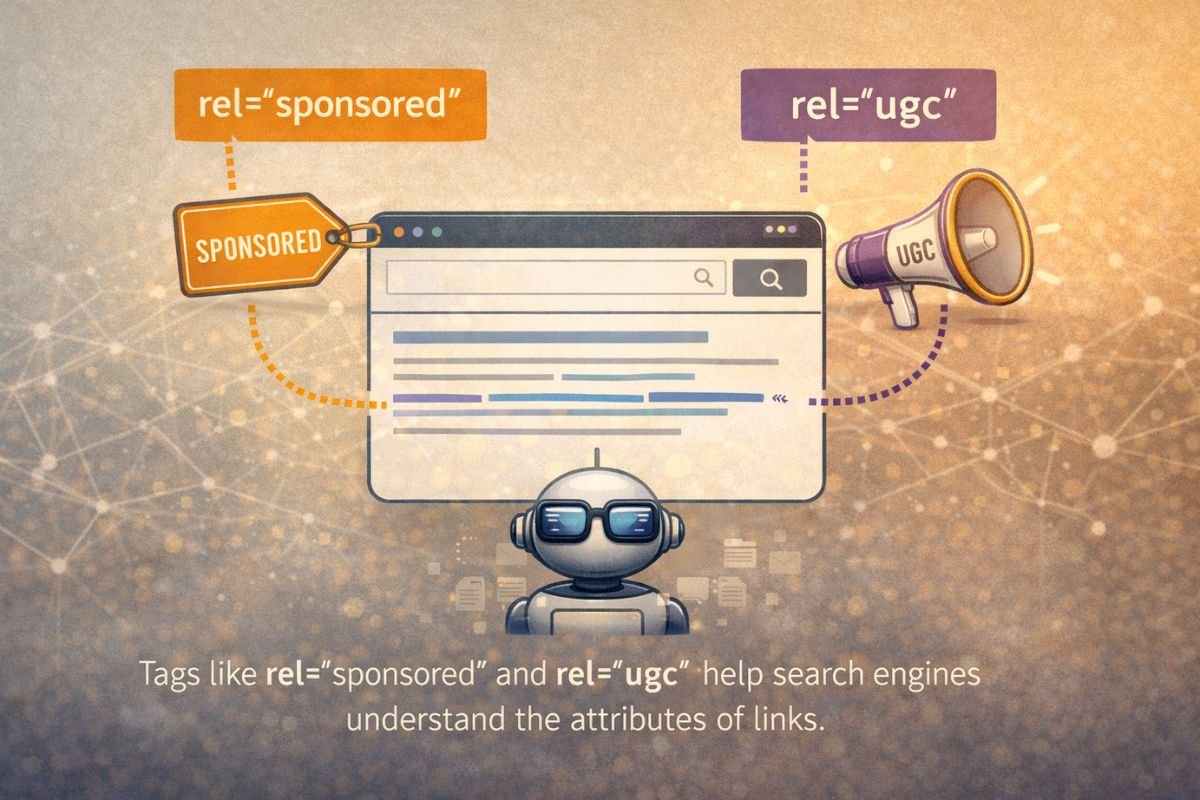
A sponsored or UGC link is a link that carries a specific attribute. These attributes help search engines understand the nature of the link and provide context about how it should be interpreted.

They are not link types in terms of source. They are classifications at the attribute level.

The Evolution Beyond Nofollow

The attribute rel=”nofollow” was originally used to indicate that a link should not pass ranking signals. Over time, search engines recognized that not all non-editorial links are identical.

A paid placement is different from a user comment.
A forum post is different from a sponsored article.

As a result, classification evolved.

Two additional attributes were introduced:

  • rel=”sponsored”

  • rel=”ugc”

What Is a Sponsored Link?

A sponsored link contains the attribute:

rel=”sponsored”

Related Posts

What Is a Nofollow Backlink?

What Is a Nofollow Backlink?

February 17, 2026
What Is a Dofollow Backlink?

What Is a Dofollow Backlink?

February 17, 2026
Editorial vs Guest Post Backlinks

Editorial vs Guest Post Backlinks: What’s the Difference?

February 17, 2026

What Are the Different Types of Backlinks in SEO?

February 17, 2026

This attribute indicates that the link is part of advertising, compensation, or some form of paid placement. Compensation defines it. If money, products, services, or another exchange is involved, the link should carry this attribute.

The purpose is transparency. It signals that the placement is promotional rather than editorial. Search engines treat sponsored links differently because they are classified as promotional signals.

What Is a UGC Link?

A UGC link contains the attribute:

rel=”ugc”

UGC stands for user-generated content.

This attribute is typically used for links created by users in environments such as:

  • Blog comments

  • Forum posts

  • Community discussions

  • Public profile pages

In these cases, the publisher did not create the link directly. It exists because of user interaction.

The attribute indicates that the publisher does not fully endorse the linked content, even if it appears on their platform.

You May Also Like:

  • What Is a Nofollow Backlink?
  • What Is a Dofollow Backlink?

How Search Engines Interpret These Attributes

Sponsored and UGC links do not create penalties by default. Instead, they provide context.

They allow search engines to distinguish between:

  • Editorial links

  • Sponsored links

  • User-generated content

Modern link evaluation systems analyze links within broader patterns. The presence of rel=”sponsored” or rel=”ugc” removes ambiguity regarding intent.

Why the Policy Shift Matters

The introduction of sponsored and UGC attributes reflects a shift toward more precise link classification. Not all non-editorial links are treated the same; context matters.

This policy evolution demonstrates a move toward refined interpretation rather than broad categorization.

What Sponsored and UGC Links Are Not

A sponsored link is not defined by visual appearance. To users, it can look identical to any other link.

A sponsored link is not inherently harmful to credibility. The attribute does not reduce the authority of the hosting site.

A Structural Understanding

When asking, “What is a sponsored or UGC link?”, the answer centers on attribute-based classification.

These links are defined by:

  • Compensation in the case of sponsored links

  • User creation in the case of UGC links

They represent a refinement in how links are described, not a new backlink source.

Tags: backlink terminologylink attributesSEO fundamentals
ShareTweetPin

Related Posts

Types of Anchor Text

What is Image Anchor Text?

by Backlink Sense
March 15, 2026
0

Image anchor text is a type of link wherein the anchor is not text...

Read moreDetails

How to Analyze Anchor Text Distribution in a Backlink Profile

March 15, 2026

How Much Branded Anchor Text Is Natural?

March 13, 2026

Anchor Text Patterns That Can Trigger Link Spam Signals

March 13, 2026

Leave a Reply Cancel reply

Your email address will not be published. Required fields are marked *

  • About Us
  • Terms of Use
  • Use of Cookies
  • Affiliate Disclosure
  • Contact
  • Privacy Policy
2026 BacklinkSense © All rights reserved.

Welcome Back!

Login to your account below

Forgotten Password?

Retrieve your password

Please enter your username or email address to reset your password.

Log In

Accessibility Toolbar

  • Powered with favoriteLove by Codenroll
No Result
View All Result
  • Anchor Text
    • Anchor Text Context
    • Anchor Text Distribution
    • Anchor Text Strategy
    • Types of Anchor Text
  • Backlink Quality and Analysis
    • Authority and Trust Signals
    • Backlink Analysis Tools
    • Link Context
    • Link Placement
    • Link Quality Signals
    • Link Relevance
  • Link Building Basics
    • How Google Ranks Links
    • Types of Backlinks
    • What Are Backlinks
    • Why Backlinks Matter
  • Link Building Methods
    • Asset-Based Link Building
    • Content-Based Link Building
    • Digital PR and Authority Mentions
    • Passive Link Acquisition
    • Resource and Reference Links
  • Link Building Risks
    • Link Penalties
    • Link Velocity
    • Low-Quality Backlinks
    • Over-Optimized Anchor Text
    • Unnatural Link Patterns
  • Link Outreach
    • Finding Outreach Targets
    • Follow Up in Outreach
    • Outreach Email Strategies
    • Outreach Personalization
    • Relationship Based Outreach

2026 BacklinkSense © All rights reserved.

This website uses cookies to improve your experience and analyze site performance. By continuing to browse, you agree to our Privacy and Cookie Policy.