



Page Contents
- 1 Why Anchor Text Variation Matters
- 2 Variation of Anchor Text
- 3 Different Ways Anchor Variation Naturally Appears
- 4 Related Posts
- 5 How to Analyze Anchor Text Distribution in a Backlink Profile
- 6 How to Fix an Unnatural Anchor Text Distribution
- 7 How Much Exact Match Is Too Much?
- 8 What is anchor text distribution, and why is it significant?
- 9 Creating Natural Variation in Anchor Language
- 10 Allowing Language Differences Across Sources
- 11 Avoiding Repeating Anchor Templates
- 12 Diversification as a Long Term Process
- 13 Maintaining Natural Anchor Diversity
Anchor text diversification is the process of letting links point to your site using varying types of language. Instead of having links point to your site with the same anchor phrase, a natural linking environment should have varying types of language.
This is important because search engines check the patterns of many backlinks. When the pattern of the anchor text becomes repetitive, the pattern becomes suspicious. Diversifying your anchor text can reduce this risk.
Why Anchor Text Variation Matters
In the real world, people don’t usually use the same anchor text when referring to the same site. Some people might refer to the brand name, while others might refer to the topic. Some people might include the anchor text in a general reference phrase.
This is because people have different writing styles.
If the anchor text becomes repetitive, there is no diversity. It becomes structured rather than organic.
Variation of Anchor Text
Variation of anchor text shows diversity in how links refer to a page.
It shows that the links are coming from different places rather than from a single environment.
Different Ways Anchor Variation Naturally Appears
Anchor variation occurs when there are varying types of references.
There are several types of anchor text, including:
- Brand references, where the brand name is used
- descriptive phrases, which describe the topic of the page being linked to
- generic reference phrases, such as “this article” or “source”
- raw URL, where the URL itself is used as the anchor text
Each of these types represents a different way of referencing the information.
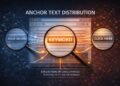
Because authors are likely to use multiple types of references, backlink profiles with multiple types of anchor text tend to resemble real profiles.
Diversification occurs when these types of references accumulate over time.
Creating Natural Variation in Anchor Language
Natural diversity occurs when anchor phrases are derived from the sentence where the link appears.
Writers include links when explaining a topic, mentioning a reference, or mentioning a brand. In these situations, the anchor phrase often already exists in the sentence.
Sometimes the phrase appears when mentioning a brand. In other cases it appears when explaining a topic. At other times, it may simply be the raw URL.
Because anchor phrases originate from the sentence itself, they naturally vary from one sentence to another, creating a natural pattern of anchor text distribution.
This variation occurs naturally and does not require deliberate changes.
Allowing Language Differences Across Sources
Another reason for anchor diversity is language differences between authors.
Different writers describe the same topic in different ways. Some prefer short references, while others prefer descriptive phrases. Some platforms may favor brand mentions, while others use broader language.
When links originate from multiple sources, these differences create diversity.
Over time, the backlink profile begins to reflect the diversity of the voices referencing the page.
Avoiding Repeating Anchor Templates
One of the biggest risks during diversification is repeating anchor templates.
When links are placed using the same template, the anchor language begins to repeat. Even if the phrases differ slightly, the underlying structure may still look similar.
For example, anchors may follow the same wording pattern or sentence structure across different pages.
Search engines analyze language patterns within backlinks. If anchors repeatedly follow the same structure, the links may appear coordinated.
Allowing anchor phrases to develop naturally from context reduces the likelihood of repeating templates.
Diversification as a Long Term Process
Anchor variation does not appear immediately. It develops gradually as new links emerge from different contexts.
Each new reference adds another phrase to the pool of anchor texts. As more links appear across articles, websites, and discussions, the range of anchor phrases expands.
Over time, this creates a distribution of different reference styles.
Instead of relying on a single phrase, the backlink profile begins to reflect multiple ways of referencing the same content.
Maintaining Natural Anchor Diversity
The goal of anchor diversification is to allow the anchor language to evolve naturally.
Because links originate from different contexts and authors, the phrases used to reference a page vary.
Some anchors refer to the brand, others refer to the content, and some appear as generic references or URLs.
As a result, the backlink profile does not revolve around a single dominant phrase but reflects the natural diversity of how content is referenced across the web.